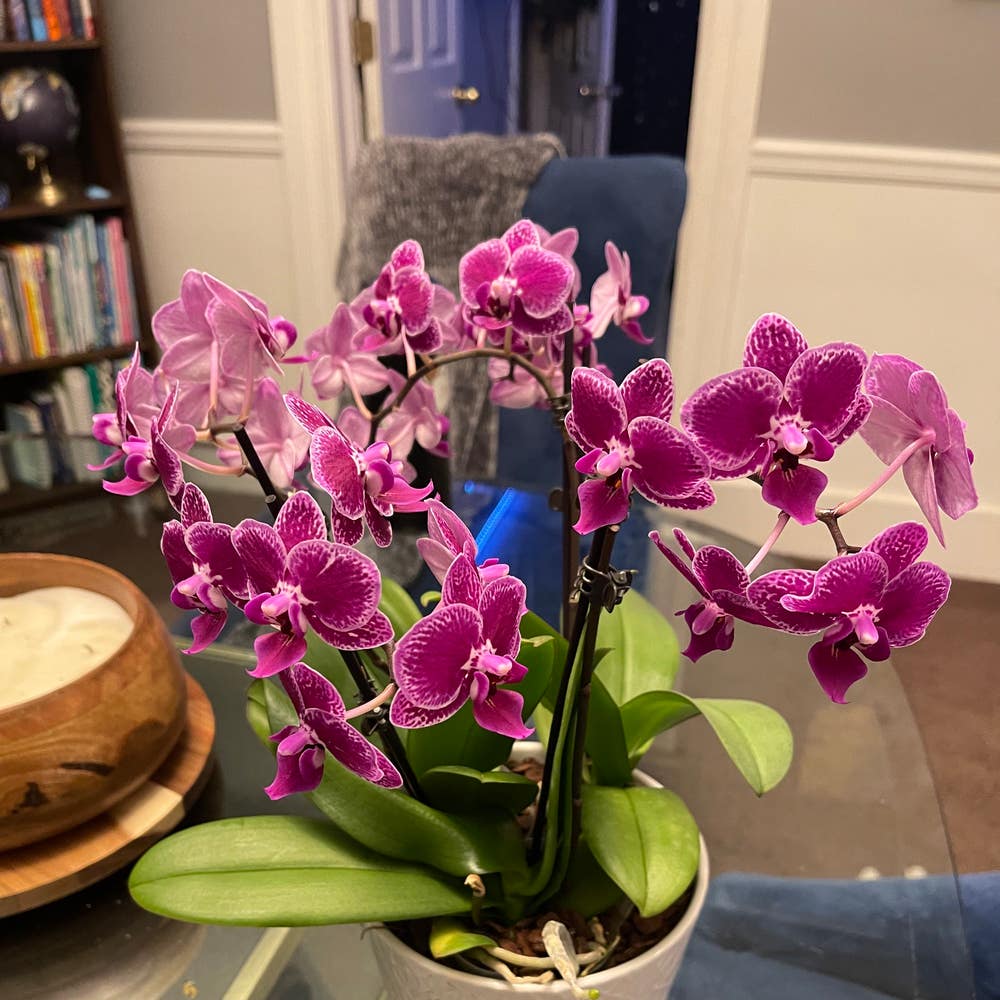
🌙 My Moon Orchid's Sunlight Needs
Phalaenopsis amabilis
By the Greg Editorial Team
Jun 18, 2024•3 min read
This article was created with the help of AI so we can cover more plants for you. May contain errors. See one? Report it here.
- Bright, indirect sunlight is best for Moon Orchids; avoid direct sun.
- East or west-facing windows indoors provide optimal light conditions.
- Adjust light for blooms: 13 hours daily and tweak intensity, day length.
Basking in the Right Outdoor Glow
🌿 Ideal Outdoor Light Conditions for Moon Orchids
Moon Orchids crave bright, indirect sunlight. Direct sun is their nemesis, akin to a vampire at a beach party—it's a definite no-go. To keep your Moon Orchid happy, position it where it can luxuriate in the light without suffering from the sun's harsh midday intensity. Think of it as the Goldilocks zone—not too hot, not too cold.
🌅 Adapting to the Sun's Schedule
Your Moon Orchid will adore the gentle morning or late afternoon sun. These rays are like a soft serenade compared to the midday sun's heavy metal concert. By aligning with the sun's schedule, you're mimicking the natural light cycle of the orchid's native habitat, which can encourage healthier growth and even coax out those coveted blooms.

Setting Up the Perfect Indoor Light Oasis
🌿 Choosing the Best Spot Indoors
Finding the right spot for your Moon Orchid indoors isn't rocket science. East or west-facing windows are your go-to zones. These windows offer the Goldilocks of sunlight—not too harsh, not too dim, just right for your leafy friend.
Sheer curtains are the unsung heroes in the plant world. They take the bite out of the sun's rays, providing a softened light that your Moon Orchid will soak up gratefully. Think of them as sunglasses for your plant—chic and practical.
💡 Supplementing with Grow Lights
When your windows just won't cut it, it's time to talk grow lights. They're like a personal trainer for your orchid, ensuring it gets its daily dose of light, no matter the weather outside.
Choosing a grow light is like picking a favorite ice cream flavor—options matter. Fluorescent and LED lights are your best bets, offering the red and blue light spectrum your Moon Orchid craves for its complex reproductive shindig.
Setting up is a breeze. Ensure your grow light is close to a power source and position it so it bathes your orchid in light without giving it a sunburn. A grow light reflector can be a game-changer, focusing the light right where it's needed. Remember, it's not just about the light—it's about the right light. Adjust the intensity, duration, and positioning to mimic the natural day cycle, and watch your Moon Orchid thrive.

Ensuring Your Moon Orchid Blooms
💡 Light's Role in Moon Orchid Flowering
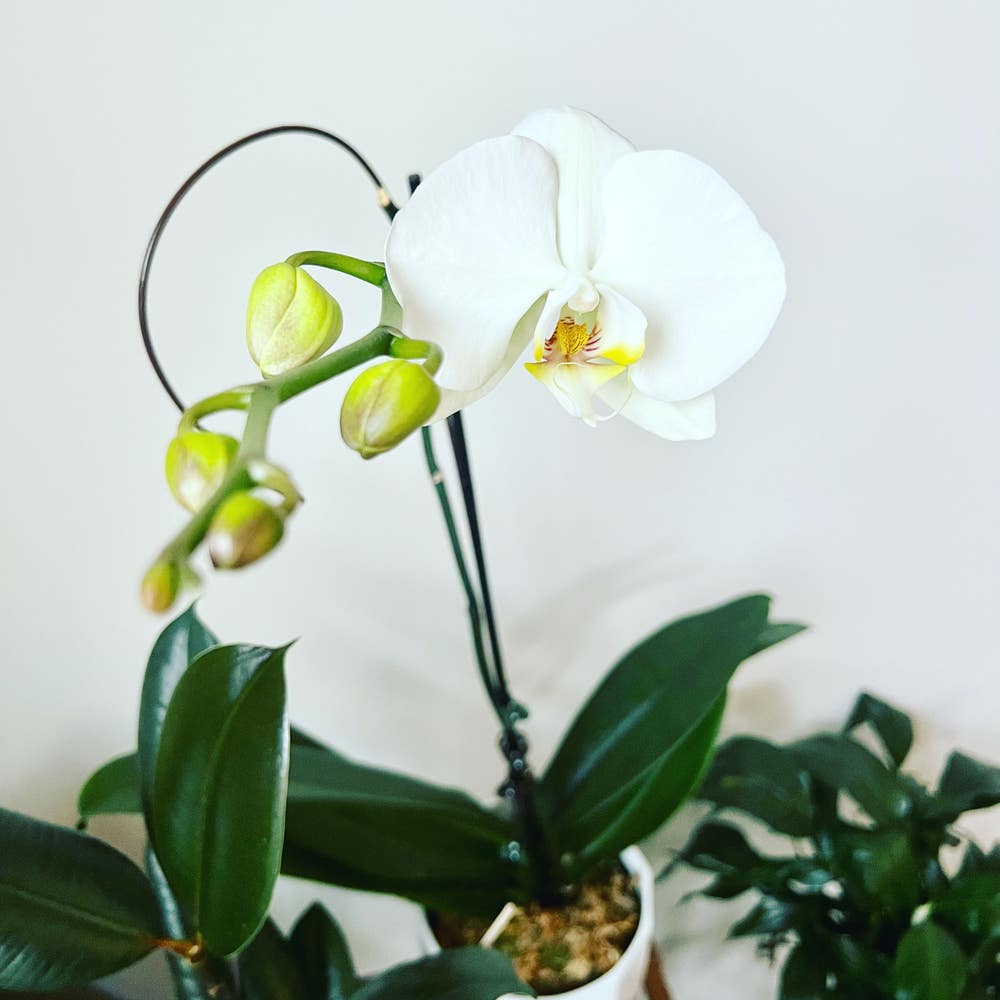
Moon Orchids are divas of the plant world when it comes to their blooms. They require a specific amount of light—13 hours daily—to strut their stuff. Without this, their flowering potential remains backstage, unseen.
Adjusting light for flowering is like tuning an instrument; it's essential for the perfect performance. For Moon Orchids, this means tweaking both intensity and day length as their buds begin to form. It's a delicate dance between too much and too little, with the prize being those coveted, stunning blooms.
💡 Adjusting Light for Flowering: Intensity and Day Length Tweaks
To hit the sweet spot, consider the intensity of the light. Moon Orchids aren't sunbathers; they prefer the indirect spotlight. Direct sun is their nemesis, likely to cause more harm than good.
When it comes to day length, mimic the natural rhythms of their native tropics. As the seasons change, so should your light schedule. Longer light periods in the summer and shorter in the winter encourage the natural flowering cycle.
Supplementing with grow lights could be your backstage pass to success. If your home can't provide the natural light these stars need, red-spectrum grow lights can be the stand-in to prompt blooming. Just remember, like any good tech rehearsal, introduce changes gradually to avoid shocking your plant's system.

⚠️ Safety First
This content is for general information and may contain errors, omissions, or outdated details. It is not medical, veterinary advice, or an endorsement of therapeutic claims.
Always consult a qualified healthcare professional before using any plant as food, medicine, or supplement.
Never eat any plant (or feed one to pets) without confirming its identity with at least two trusted sources.
If you suspect poisoning, call Poison Control (800) 222-1222, the Pet Poison Helpline (800) 213-6680, or your local emergency service immediately.
Spotted an error? Please report it here.
Ensure your Moon Orchids get their ideal sunlight recipe 🌞 with Greg's custom reminders tailored to your home's light conditions, for blooms that truly shine.