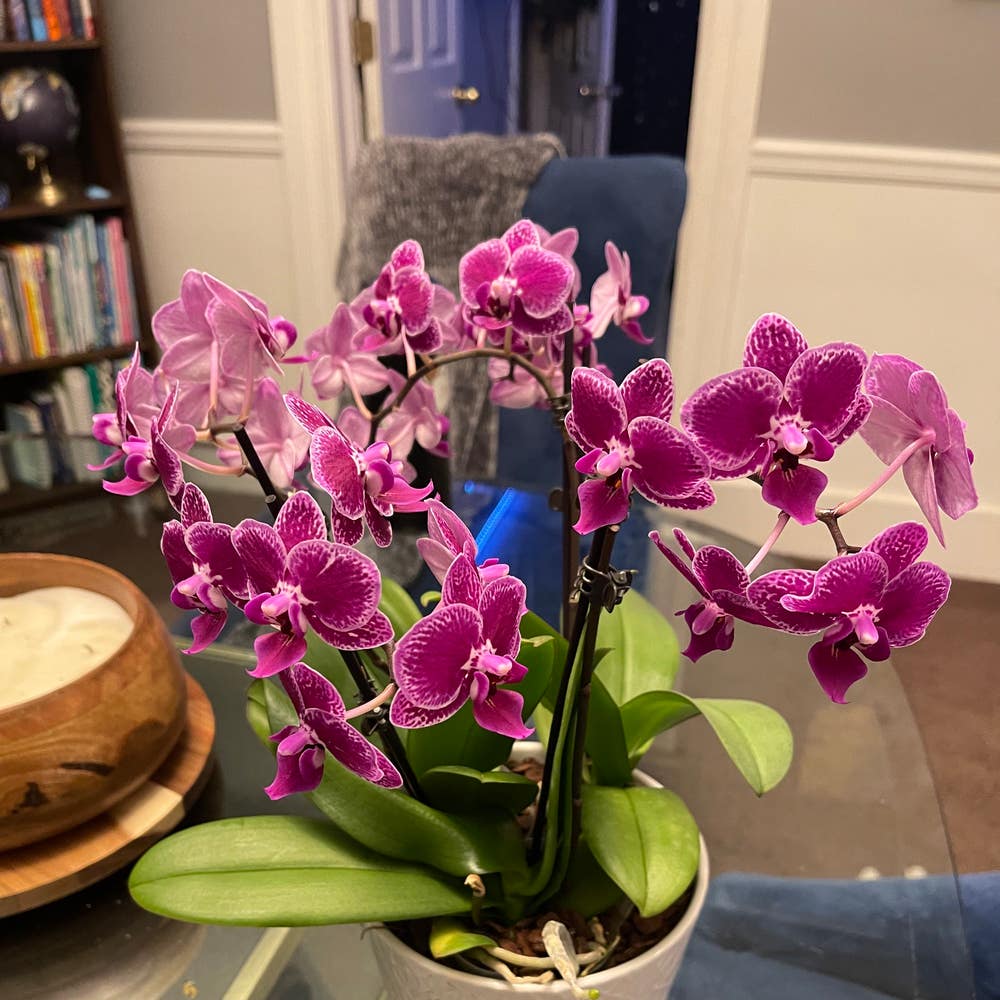
What Are The Bugs on My Moon Orchid?
Phalaenopsis amabilis
By the Greg Editorial Team
Jun 18, 2024•3 min read
This article was created with the help of AI so we can cover more plants for you. May contain errors. See one? Report it here.
- Spider mites and scale insects disguise as yellow spots and bumps.
- Neem oil and water blasts effectively combat pesky orchid invaders.
- Regular monitoring and cleanliness are key to preventing infestations.
Spotting the Culprits: Common Moon Orchid Pests
🕷️ Spider Mites
Tiny but mighty, spider mites are the ninjas of the orchid world. Look for yellow spots on the tops of leaves and a silvery hue underneath. Their calling card? Silken webs that connect leaf to leaf. If you see these, it's time to play detective with a magnifying glass.
🛡️ Scale Insects
Scale insects are the masters of disguise, masquerading as harmless bumps on your orchid's stems and leaves. They're tough, they're stubborn, and they come in shades of brown that blend in too well. Spot them and you'll likely find sticky honeydew or sooty mold close by.
🦟 Fungus Gnats and Fruit Flies
If you're seeing tiny dark flies, you've got fungus gnats or fruit flies. These pests are a sign that your soil is too moist. They're more annoying than destructive, but they signal that it's time to check your watering habits.
🐛 Mealybugs
Mealybugs look like they've rolled in powdered sugar and decided to camp out at the base of your orchid. These white, fluffy masses are a clear sign that your plant is under siege. They're not just unsightly; they're sap-sucking menaces.
🦗 Thrips and Aphids
Thrips and aphids are the gossips of the pest world, clustering and whispering on the undersides of leaves. Thrips leave behind a silvery mess, while aphids are all about that sticky residue. If you see them, it's time for some pest control gossip of your own.

Battling the Bugs: Effective Remedies
🐜 Natural and Chemical Controls
When your Moon Orchid is under siege by pests, neem oil and insecticidal soap are your first line of defense. These remedies are tough on bugs but gentle on plants, making them ideal for sensitive orchids. For a more hands-on approach, a dab of rubbing alcohol can make quick work of mealybugs. Always ensure the treatment is appropriate for the pest you're dealing with.
🌊 Physical Interventions
Sometimes, the best approach is a direct one. A strong blast of water can dislodge stubborn pests like aphids and spider mites. For flying nuisances such as fungus gnats, sticky traps can be an effective way to cut down their numbers. Physical removal, whether by hand or with water, is a quick and environmentally friendly method to keep your orchids pest-free.

Keeping the Critters at Bay: Prevention Strategies
🌿 Environmental Adjustments
Humidity and airflow are your stealth operatives in the war against orchid pests. Keep humidity levels between 60%-75% to deter mites, and maintain temperatures from 20ºC (68ºF) to 25ºC (78ºF) for optimal orchid health. Over-fertilizing is like sending pests an engraved invitation; go easy on the nitrogen and potassium.
Ventilation is your secret weapon. Crack a window or let a fan run to keep the air from going stale. It's a simple move, but it's effective. Remember, cleanliness is your plant's best friend. Regularly remove fallen leaves and debris to tell pests the party's over.
🔍 Regular Monitoring
Think of yourself as the Sherlock Holmes of orchid care. Inspect your plants regularly, looking for the slightest sign of pest activity. Early detection is key—like finding the wire to cut before the bomb goes off.
Tools like sticky traps and pheromone baits aren't just for catching pests; they're your intel for what's lurking around. And when you water, be precise. Overwatering is the root of all evil in the plant world, creating a playground for pests.
Keep your eyes peeled and your watering can in check, and you'll be the master of pest prevention in no time.

⚠️ Safety First
This content is for general information and may contain errors, omissions, or outdated details. It is not medical, veterinary advice, or an endorsement of therapeutic claims.
Always consult a qualified healthcare professional before using any plant as food, medicine, or supplement.
Never eat any plant (or feed one to pets) without confirming its identity with at least two trusted sources.
If you suspect poisoning, call Poison Control (800) 222-1222, the Pet Poison Helpline (800) 213-6680, or your local emergency service immediately.
Spotted an error? Please report it here.
Keep your moon orchid blooming beautifully 🌸 by using Greg to monitor its environment and get timely tips to prevent those pesky pests from settling in.