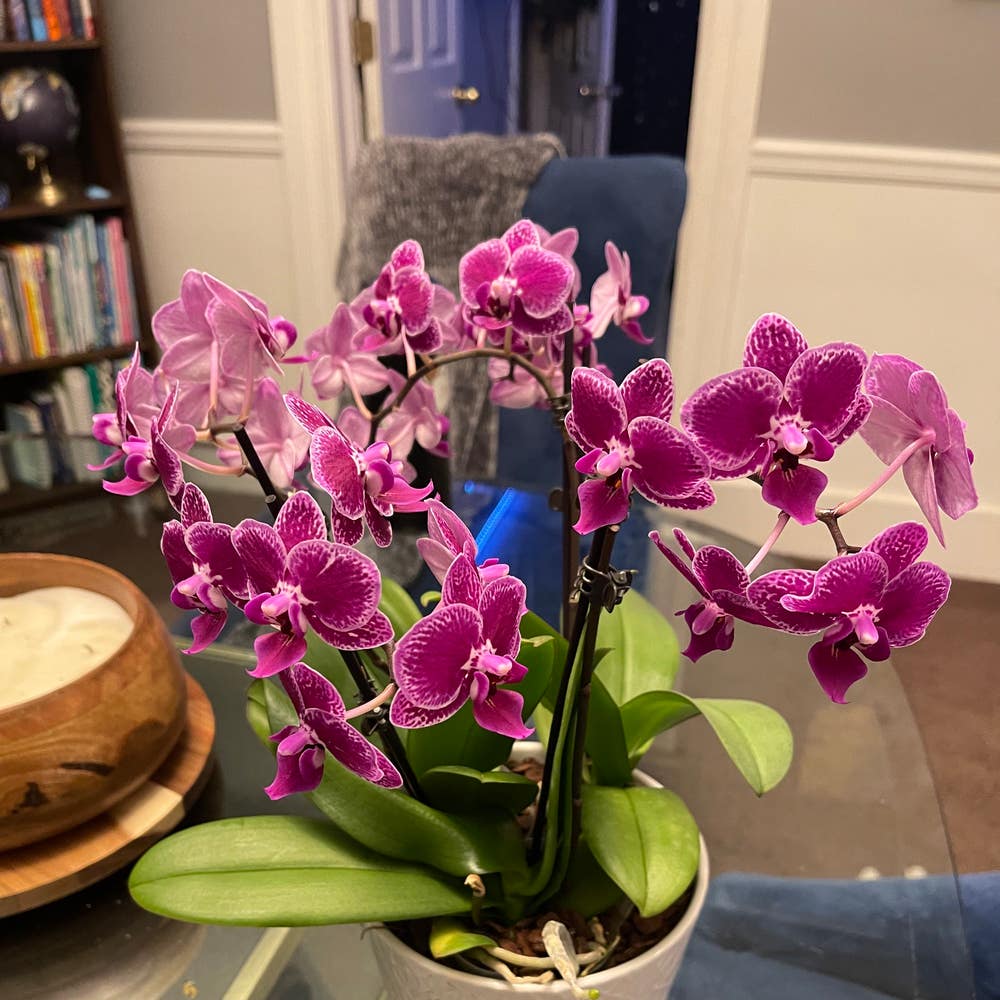
🌙 Step-by-Step Guide to Growing Moon Orchid Indoors
Phalaenopsis amabilis
By the Greg Editorial Team
Sep 30, 2024•6 min read
This article was created with the help of AI so we can cover more plants for you. May contain errors. See one? Report it here.
- 🌞 Moon orchids need bright, indirect sunlight; aim for 1000-2000 foot-candles.
- 💧 Water every 1-2 weeks, allowing the medium to dry slightly between waterings.
- 🌬️ Maintain humidity levels of 50-70% to prevent leaf curling and brown tips.
Light Requirements
Optimal Indoor Light Levels 🌞
For your moon orchid to thrive, it needs bright, indirect sunlight. Aim for light exposure around 1000-2000 foot-candles to keep your plant happy and healthy.
If your orchid isn't getting enough light, you'll notice signs like stretched stems, smaller blooms, and yellowing leaves. These indicators are your plant's way of saying, "I need more light!"
Role of Grow Lights 💡
Grow lights play a crucial role in maintaining your orchid's health, especially during low-light seasons. They supplement natural light, ensuring your plant receives the brightness it craves.
The benefits are clear: grow lights provide consistent light levels, which is particularly important during the winter months when daylight is scarce.
Choosing the Best Grow Light 🛠️
When selecting grow lights, you have options like LED and fluorescent. Each type has its pros and cons, but full-spectrum lights that mimic natural sunlight are generally recommended.
For optimal results, position your grow lights 12-18 inches above the plant. This distance helps prevent overheating while ensuring your orchid gets the light it needs to flourish.
With the right light conditions, your moon orchid can thrive indoors, setting the stage for vibrant blooms and lush foliage. Next, let’s dive into the watering needs to keep your plant hydrated and healthy!
Watering Needs
Frequency and Method of Watering 🌊
Watering your moon orchid is crucial for its health. Generally, aim to water every 1-2 weeks, allowing the potting medium to dry slightly between waterings.
For the best results, water thoroughly until it drains from the bottom. This ensures that the roots receive adequate moisture without sitting in water, which can lead to root rot.
Signs of Overwatering and Underwatering 🚨
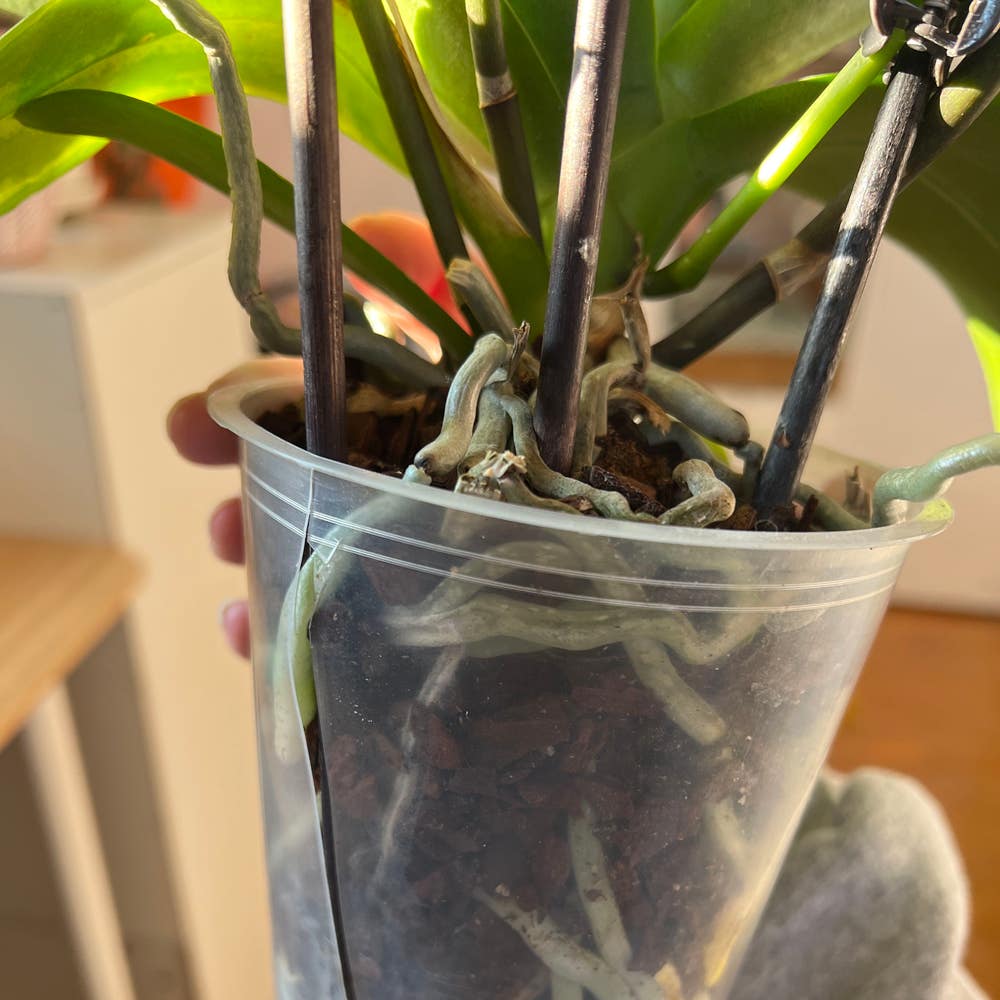
Recognizing the signs of overwatering is essential. Look for yellowing leaves, mushy roots, and even mold growth, which indicate that your orchid is getting too much water.
On the flip side, underwatering can also harm your plant. Wrinkled leaves, dry roots, and wilting are clear indicators that your orchid needs more moisture to thrive.
Understanding these watering needs will help you keep your moon orchid healthy and vibrant. Next, let’s explore the ideal humidity and temperature conditions for optimal growth.
Humidity and Temperature
🌧️ Ideal Humidity Levels
Maintaining the right humidity is crucial for your moon orchid's health. Aim for a humidity level between 50-70% to promote optimal growth.
If humidity drops too low, you might notice leaf curling and brown tips. These signs indicate your orchid is struggling, so it's essential to monitor the environment closely.
🌡️ Temperature Preferences
Your moon orchid thrives in a temperature range of 20°C to 30°C (68°F to 86°F). This warmth mimics its natural habitat and encourages healthy growth.
At night, slightly cooler temperatures of around 15°C to 20°C (59°F to 68°F) are ideal. This drop helps the plant rest and rejuvenate.
💧 Humidity Control Methods
To maintain the right humidity levels, consider using a humidity tray. Simply fill a shallow tray with water and pebbles, placing your orchid pot on top. This setup allows for gentle evaporation, increasing moisture in the air.
Misting the leaves lightly can also help, but be cautious not to soak the flowers. Excess moisture can lead to issues like mold.
For a more consistent solution, use a room humidifier. This device can effectively maintain the desired humidity levels, especially during dry seasons.
With the right humidity and temperature, your moon orchid will flourish beautifully. Next, let’s explore the best soil and fertilization practices to keep your plant thriving.
Soil and Fertilization
Best Soil Type 🌱
Choosing the right potting medium is crucial for your moon orchid's health. A well-draining orchid mix, typically composed of bark, perlite, and charcoal, is ideal.
Proper drainage prevents root rot, which can be a common issue for indoor orchids. This mix allows air to circulate around the roots, promoting healthy growth.
Fertilization Schedule and Types 🌼
Fertilizing your moon orchid is essential for vibrant blooms and robust growth. Aim to fertilize every 2-4 weeks during the growing season.
A balanced orchid fertilizer, such as a 30-10-10 blend, works wonders. Remember to dilute the fertilizer to half strength before applying it during watering to avoid overwhelming your plant.
With the right soil and fertilization routine, your moon orchid will thrive beautifully. Next, let’s explore how to tackle common issues that may arise in your indoor gardening journey.
Common Issues and Solutions
🐛 Pests and Prevention Strategies
Indoor moon orchids can attract pests like mealybugs, aphids, and spider mites. Regular inspections are crucial; check the undersides of leaves and around the roots.
To prevent infestations, maintain cleanliness around your plants. Using insecticidal soap can effectively manage any pests that do appear.
🦠 Common Diseases and Treatments
Root rot is a significant concern for orchid owners. Symptoms include wilting and yellowing leaves, which indicate that the roots are compromised.
If you suspect root rot, repot your orchid immediately and remove any affected roots. Leaf spot, often caused by fungal infections, can also plague your plant. Improve air circulation and consider using fungicides to treat this issue.
🛠️ Troubleshooting Growth Issues
If your moon orchid isn't blooming, it might be due to insufficient light or improper fertilization. Assess your light conditions and adjust your feeding schedule accordingly.
Leaf drop can signal stress from temperature fluctuations or overwatering. Monitor your plant's environment to ensure it remains stable and healthy.
By staying vigilant and proactive, you can keep your moon orchid thriving and beautiful. Next, let’s explore the best placement and maintenance practices to ensure your orchid flourishes indoors.
Placement and Maintenance
Best Locations for Indoor Growth 🌞
Finding the right spot for your moon orchid is crucial. Place it near east or west-facing windows where it can soak up filtered light without being scorched.
Avoid drafts by steering clear of air conditioning vents and heaters. Orchids thrive in stable environments, and sudden temperature changes can stress them out.
Tips for Maintaining Appearance 🧼
Regular cleaning is essential for your orchid's health. Wipe the leaves with a damp cloth to remove dust and allow the plant to breathe.
Pruning is another key aspect of maintenance. Remove any dead or yellowing leaves to encourage new growth and keep your plant looking vibrant.
Seasonal Care Adjustments 🌦️
As seasons change, so should your care routine. In winter, reduce watering frequency and ensure your orchid gets enough light to survive the shorter days.
During summer, increase humidity levels and keep an eye out for pests. This proactive approach will help your moon orchid flourish year-round.
With the right placement and maintenance, your moon orchid can thrive beautifully indoors. Next, let's explore the essential soil and fertilization needs to keep your plant healthy and blooming.
⚠️ Safety First
This content is for general information and may contain errors, omissions, or outdated details. It is not medical, veterinary advice, or an endorsement of therapeutic claims.
Always consult a qualified healthcare professional before using any plant as food, medicine, or supplement.
Never eat any plant (or feed one to pets) without confirming its identity with at least two trusted sources.
If you suspect poisoning, call Poison Control (800) 222-1222, the Pet Poison Helpline (800) 213-6680, or your local emergency service immediately.
Spotted an error? Please report it here.
Transform your indoor space with a thriving moon orchid 🌙 by using Greg's tailored care reminders and expert tips to ensure it gets the perfect light, humidity, and nutrients for stunning blooms!