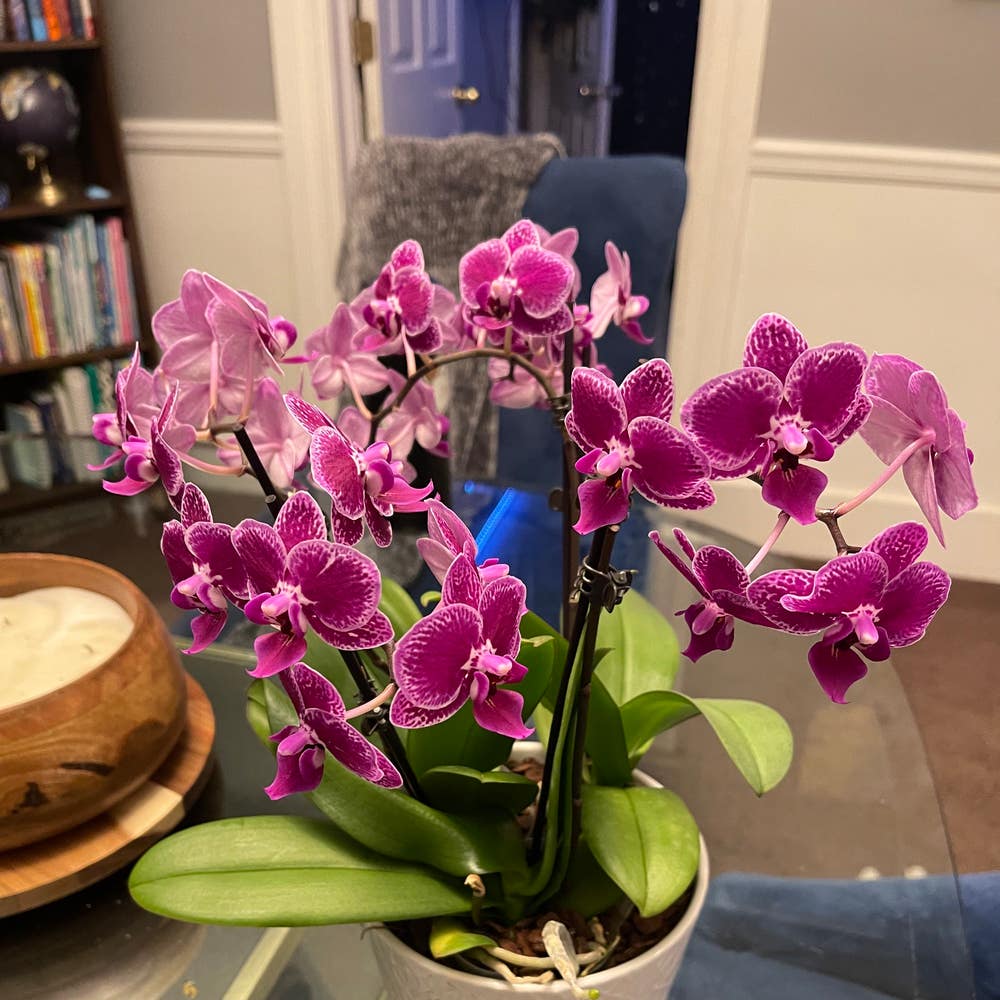
🌜 Why Are My Moon Orchid Leaves Curling?
Phalaenopsis amabilis
By the Greg Editorial Team
Jun 18, 2024•5 min read
This article was created with the help of AI so we can cover more plants for you. May contain errors. See one? Report it here.
- 🌿 Curling leaves signal distress; may include yellowing or brown edges.
- 💧 Balance watering and drainage to prevent underwatering and overwatering effects.
- 🌡️🔍 Adjust environment and inspect for pests to maintain healthy leaves.
Spotting the Signs: When Your Moon Orchid Tells You It's Unhappy
Leaf curling in Moon Orchids is more than a cosmetic issue; it's a distress signal. When the usually broad and flat leaves begin to twist or roll, it's time to play plant detective.
🚩 Recognizing the Red Flags
Curling leaves are the main event, but keep an eye out for yellowing, brown edges, or a general lack of rigidity. These symptoms often accompany the curl and can indicate a range of issues from environmental stress to pest infestations.
🚨 Quick Tips for Severity Assessment
To gauge how serious the situation is, check for:
- Speed of onset: Swift changes are usually more dire.
- Leaf texture: Crispy or limp leaves each tell a different story.
- Overall plant demeanor: If it's just the leaves or the whole plant seems off.
Remember, your Moon Orchid's leaves are like mood rings, subtly reflecting its health and happiness.

The Usual Suspects: Pinpointing the Culprits Behind Curly Leaves
💡 Environmental Stressors
Moon Orchids are like Goldilocks' plants; they prefer everything just right. Temperature and humidity swings can turn leaves into a botanical rollercoaster. Too hot and they're a crispy snack, too cold and they're shivering like they've been left out in the snow.
🚰 Thirsty Roots or Drowning? Watering Woes
Underwatering makes your Moon Orchid's leaves curl up in a desperate hug for moisture. Overdo it, and you've got a sopping mess—overwatering leads to the same sad, curly fate. It's about balance, like walking a tightrope with a watering can.
🌊 Proper Drainage
Without proper drainage, your Moon Orchid's roots might as well be fish. Ensure your pot doesn't trap water like a dam. Good drainage keeps roots aerated and leaves unfurled.
🍽️ Hungry for Nutrients: Feeding Your Moon Orchid Right
Nutrient deficiencies make leaves curl up as if they're trying to leave for a better-fed life. Yellowing leaves scream for nitrogen, while crispy tips are begging for potassium. It's like a plant's version of a balanced diet—too much or too little, and it's not fitting into its pot anymore.
💚 Fertilization Balance
Fertilize with a gentle hand; too much and you're force-feeding, too little and it's a starvation diet. Find the sweet spot to keep your Moon Orchid's leaves flat and content.

Uninvited Guests: Pests and Diseases Crashing the Party
🕵️ Identifying the Culprits
Mealybugs, spider mites, and a host of fungal issues are like those guests who overstay their welcome, and they're not leaving without a fight. These pests suck the life out of your Moon Orchid, causing leaves to curl as a distress signal. Fungal diseases are no different; they spread their misery by discoloring leaves and making them twist into unnatural shapes.
🚪 Evicting Pests
To deal with these freeloaders, you'll need to be both detective and bouncer. Spot them with regular inspections—look for sticky residues, webbing, or the bugs themselves. Once you've found them, it's time for action. A spray-down with neem oil or insecticidal soap can be an effective eviction notice. Remember, it's about control, not annihilation; you want to protect your plant, not douse it in chemicals.
💊 Treating Diseases
When it comes to diseases, think of your Moon Orchid as a patient needing a cure. Yellowing leaves and funky patterns are symptoms of a deeper issue. Adjust your watering habits to prevent over-moist conditions that breed fungal parties. If needed, organic fungicides can help clear up infections. But prevention is your best weapon—keep those leaves dry and the air moving.
🛡️ Prevention is Key
Finally, don't let your guard down. Regular preventative measures can save you a lot of trouble. Keep the air circulation good and the humidity in check. Inspect your Moon Orchid often, because catching these party crashers early means less headache for you and your plant.

Turning Over a New Leaf: Solutions and Preventative Measures
🌿 Fine-Tuning the Environment
Adjusting your Moon Orchid's habitat is like tweaking a recipe to perfection. Temperature and humidity should be as stable as your favorite coffee shop's Wi-Fi—aim for 65-75°F (18-24°C) during the day with a slight dip at night. Keep the air moving; a gentle fan can ward off stagnant, pest-friendly conditions. And light? Think bright but indirect, like the best spot on the couch, away from the glare of the TV.
💧 Watering Wisdom: Quenching Thirst Without the Flood
Watering is an art—too much, and you're drowning; too little, and you're parching. Let the top inch of the potting mix dry out before giving your orchid a drink. Drainage is non-negotiable; those roots should never sit in water. It's a delicate balance, like not overdoing the cream in your coffee.
🍽️ A Balanced Diet: Nutrient Management for Lush Leaves
Feed your Moon Orchid with a balanced fertilizer, but don't overdo it. It's like vitamins—necessary, but in moderation. During the growing season, stick to the label's instructions, and remember, the potting mix is already pretty nutrient-rich. Overfeeding is like overeating during the holidays; it feels good at the moment but isn't exactly beneficial.
🛡️ Keeping the Baddies at Bay: Pest and Disease Prevention
Pests and diseases are like that one uninvited guest at a party—they show up when you least expect them. Keep your eyes peeled for any signs of trouble and act fast. Cleanliness is your shield; remove any fallen debris to avoid giving pests a five-star hotel. Isolate new plants like you would a sneezing friend—better safe than sorry. Regular health checks are as essential as your morning scroll through the news.
⚠️ Safety First
This content is for general information and may contain errors, omissions, or outdated details. It is not medical, veterinary advice, or an endorsement of therapeutic claims.
Always consult a qualified healthcare professional before using any plant as food, medicine, or supplement.
Never eat any plant (or feed one to pets) without confirming its identity with at least two trusted sources.
If you suspect poisoning, call Poison Control (800) 222-1222, the Pet Poison Helpline (800) 213-6680, or your local emergency service immediately.
Spotted an error? Please report it here.
Revitalize your Moon Orchid by tackling leaf curl with Greg's customized reminders 🌿, ensuring your plant gets the perfect balance of water, nutrients, and care.