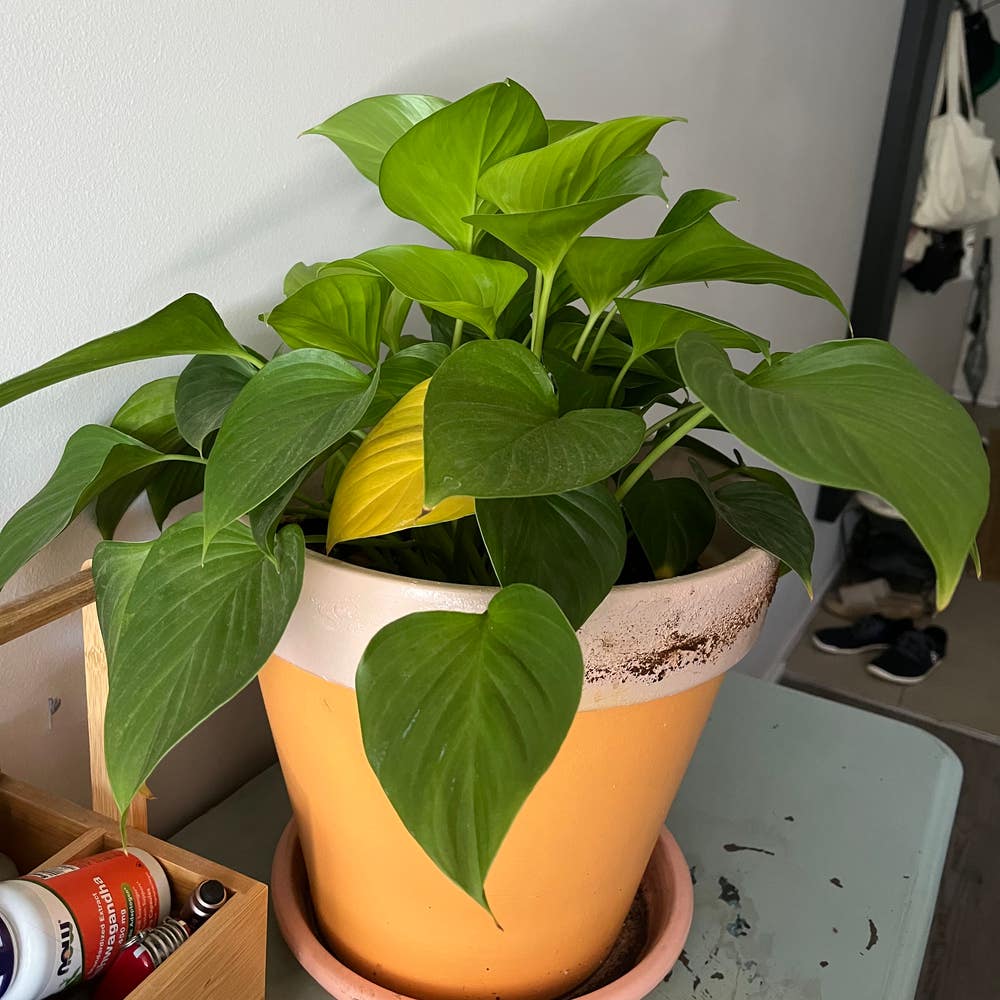
Why Are My Homalomena rubescens Leaves Curling?
Homalomena rubescens
By the Greg Editorial Team
Apr 07, 2024•5 min read
This article was created with the help of AI so we can cover more plants for you. May contain errors. See one? Report it here.
- 🌱 Curling leaves signal distress; watch for discoloration and texture changes.
- 💧 Water deeply, let soil dry between waterings for optimal moisture balance.
- 🌡️🌿 Maintain 65-85°F and 40-60% humidity; avoid direct sunlight for plant health.
Spotting the Signs: Leaf Curling Symptoms
🚨 Visual Clues of Curling Leaves
When your Homalomena rubescens starts looking like it's holding onto its leaves for dear life, take note. Leaves curling into themselves or edges rolling up are your plant's version of flashing hazard lights. This isn't a quirky plant behavior—it's a cry for help.
🕰 When to Worry: Normal vs. Problematic Curling
Not all curling is a sign of the plantpocalypse. A gentle, uniform curve as new leaves unfurl is normal. But when you see leaves tighter than a rolled-up yoga mat, it's time to spring into action. Discoloration, crispy edges, or a texture that's gone from lush to lackluster are all red flags. If your plant's leaves look more like crumpled receipts than nature's artwork, you've got a problem on your hands.
Thirsty Roots or Drowning? Watering Woes Unraveled
💧 The Balancing Act: Proper Watering Techniques
Watering your Homalomena rubescens is less about sticking to a strict schedule and more about understanding its needs. Overwatering can drown its roots and lead to rot, while underwatering can cause leaves to curl and brown. The trick is to water deeply, then allow the soil to dry out between sessions. Think of it like a hydration marathon, not a sprint.
🌱 Soil Sleuthing: Assessing Moisture Levels
Forget the watering guesswork. Use your fingers to test the soil moisture; if the top inch is dry, it's time to water. If it's damp, give it a break. For a more high-tech approach, a moisture meter can be your plant's best friend, providing precise readings to guide your watering decisions. And remember, good drainage is crucial—your plant's roots should be moist, not swimming.
It's Not You, It's the Climate: Environmental Stress
🌡️ The Goldilocks Zone: Ideal Temperature and Humidity
Homalomena rubescens thrives in a climate that's just right. Temperature consistency is key; think 65-85°F (18-29°C), avoiding the extremes. Humidity plays a sidekick role, aiming for a comfortable 40-60%. This mimics their native tropical habitat, minus the mosquitoes.
💡 Let There Be Light: But Not Too Much!
Bright, indirect light is the mantra here. Direct sunlight is a no-go—it's the equivalent of putting your plant in a tanning bed. If your space is more cave than greenhouse, consider a grow light to hit that sweet spot of luminosity. Remember, we're not growing vampires here; light is non-negotiable.
Unwanted Guests: Tackling Pest Problems
🐛 Common Culprits: Identifying Pests
Pests are the party crashers of the plant world, and Homalomena rubescens is no exception. Aphids, spider mites, and mealybugs top the list of usual suspects. They're tiny but mighty, with the ability to wreak havoc on your plant's health. To catch them, turn detective and inspect the undersides of leaves and the nooks of stems. Look for telltale signs like sticky residue or fine webbing. Spotting these signs early can mean the difference between a minor annoyance and a full-blown infestation.
🚪 Show Them the Door: Effective Pest Control
Once you've identified the pests, it's time for eviction. A strong spray of water can dislodge the less tenacious bugs. For those clinging on, insecticidal soap or neem oil can be a green thumbscrew. Apply with vigilance, ensuring you cover all affected areas. If the situation escalates, consider introducing natural predators like ladybugs into the mix. They're the bouncers of the bug world, keeping the riff-raff in check. And remember, cleanliness is next to pest-free-ness; keep your Homalomena rubescens debris-free and well-groomed to prevent future uninvited guests.
Fending Off Fungal Foes and Other Disorders
🚨 Spotting Trouble: Signs of Disease
Black or brown lesions on Homalomena rubescens leaves are like red flags waving frantically, signaling a potential fungal invasion. If you notice such discoloration, it's time to play detective and get to the root of the issue. Yellowing leaves can also be a distress signal from your plant, often pointing to a deeper problem that may require intervention.
💪 Green Recovery: Disease Prevention and Treatment
Preventing plant disease is like setting up a good defense for your favorite sports team; it's all about strategy. Good air circulation is non-negotiable, think of it as your plant's personal space that needs respect. Avoid overwatering like you'd avoid overfeeding a goldfish—it's a kindness that can kill. When watering, aim for the soil, not the leaves, because wet foliage is a party invitation for fungal pathogens.
If your Homalomena rubescens does catch something nasty, don't just stand there—act fast. Remove the affected leaves with the precision of a surgeon using sterilized shears. If necessary, bring out the big guns: fungicides. But remember, these are not to be used willy-nilly. Read the label like it's a top-secret document and follow it to the letter. And please, for the love of greenery, don't compost the diseased leaves unless you want to turn your compost pile into a fungal frat house.
Remember, keeping your Homalomena rubescens healthy is a bit like caring for a pet; it requires attention, quick thinking, and a whole lot of love.
⚠️ Safety First
This content is for general information and may contain errors, omissions, or outdated details. It is not medical, veterinary advice, or an endorsement of therapeutic claims.
Always consult a qualified healthcare professional before using any plant as food, medicine, or supplement.
Never eat any plant (or feed one to pets) without confirming its identity with at least two trusted sources.
If you suspect poisoning, call Poison Control (800) 222-1222, the Pet Poison Helpline (800) 213-6680, or your local emergency service immediately.
Spotted an error? Please report it here.
Revive your Homalomena rubescens and keep it thriving 🌿 with Greg's custom care plan and a community of experts to guide you through every curl and crisp edge!