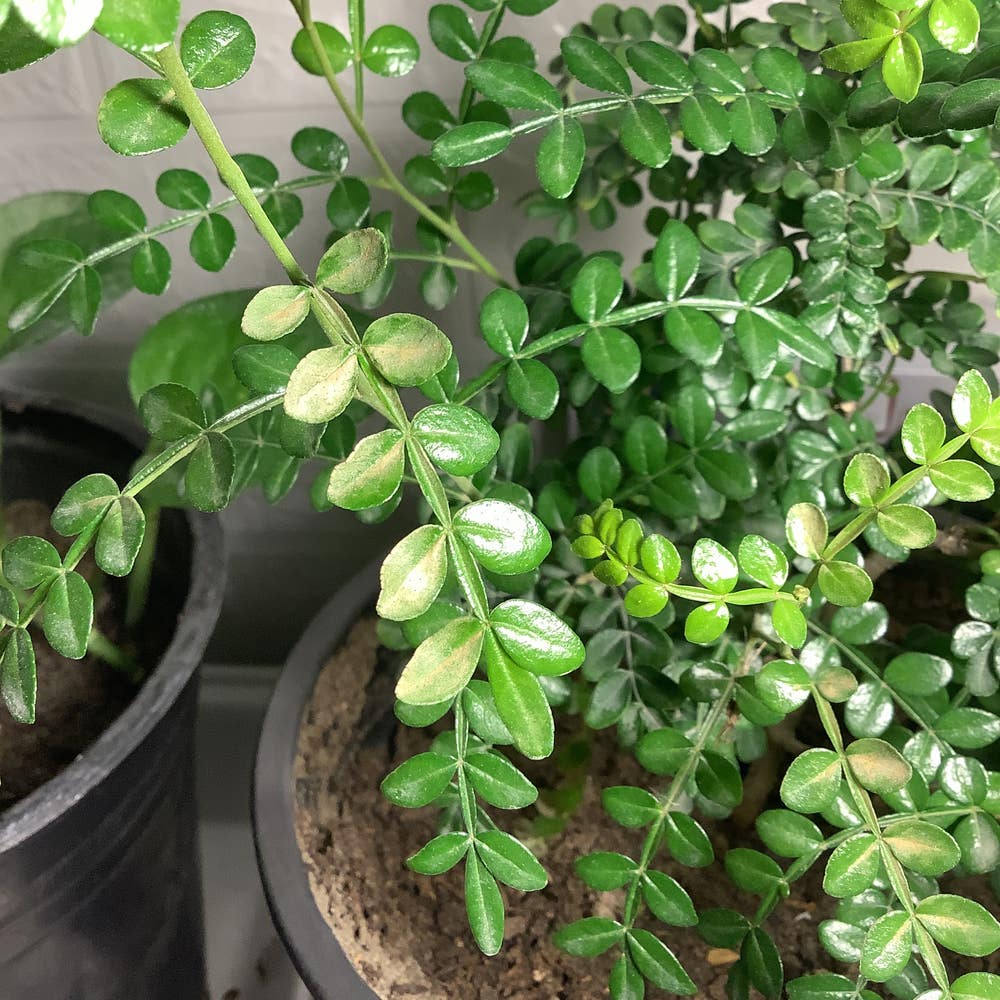
💧 Humidity Needs for Your Fagara
Zanthoxylum rhoifolium
By the Greg Editorial Team
Nov 26, 2024•6 min read
This article was created with the help of AI so we can cover more plants for you. May contain errors. See one? Report it here.
- 🌬️ Maintain humidity between 60%-80% for optimal Fagara growth and health.
- 📏 Use hygrometers to accurately monitor humidity levels around your Fagara.
- 🌱 Adjust humidity management based on local conditions for thriving Fagara plants.
Relative and Absolute Humidity
Definition of Relative Humidity 🌧️
Relative humidity is the percentage of moisture in the air compared to the maximum amount of moisture the air can hold at a specific temperature. For Fagara, maintaining relative humidity levels between 60% and 80% is crucial for its health and growth.
Measuring Relative Humidity 📏
To measure relative humidity accurately, you can use tools like hygrometers and digital humidity monitors. Place these devices near your Fagara to get precise readings that reflect the plant's immediate environment.
Definition of Absolute Humidity 💧
Absolute humidity refers to the actual amount of water vapor present in a given volume of air, measured in grams per cubic meter. While relative humidity gives a percentage, absolute humidity provides a concrete measure, both of which are important for understanding Fagara care.
Understanding these concepts will help you create the ideal environment for your Fagara, ensuring it thrives in your home. Next, let’s explore the optimal humidity levels that will keep your plant happy and healthy.
Ideal Humidity Levels for Fagara
Optimal Humidity Range 🌴
For your Fagara to thrive, aim for a relative humidity level between 60% and 80%. This range closely resembles the plant's natural tropical habitat, where moisture is abundant and consistent.
Signs of Optimal Humidity 🌈
Healthy humidity levels can be spotted through vibrant leaf colors and robust growth. When your Fagara is happy, it shows no signs of stress, making it crucial to maintain these humidity levels consistently to avoid fluctuations that could upset your plant's well-being.
By keeping an eye on these indicators, you can ensure your Fagara remains in peak condition, ready to flourish in your care. Next, let’s explore the effects of low and high humidity on your plant's health.
Effects of Low and High Humidity
🌬️ Symptoms of Low Humidity
Low humidity can stress your Fagara, leading to noticeable symptoms. Common signs include leaf curling, browning at the edges, and stunted growth.
Prolonged exposure to low humidity can escalate these issues, potentially resulting in severe health problems for your plant. It's crucial to address these symptoms promptly to maintain your Fagara's vitality.
💧 Mitigation Strategies for Low Humidity
Regularly monitoring humidity levels is essential to prevent low humidity stress. Use hygrometers to keep an eye on the environment around your Fagara.
When low humidity is detected, take immediate action. Consider using humidifiers, grouping plants together, or placing pebble trays to boost moisture levels.
🌧️ Symptoms of High Humidity
On the flip side, excessive humidity can also harm your Fagara. Signs of high humidity include mold growth, leaf rot, and pest infestations.
High humidity creates a breeding ground for fungal diseases, which can quickly compromise your plant's health. It's vital to recognize these symptoms early to mitigate damage.
🌪️ Management Techniques for High Humidity
Balancing humidity levels is key to avoiding the negative effects of high humidity. Regular monitoring and adjustments can help maintain an ideal environment for your Fagara.
Consider enhancing air circulation and using dehumidifiers if necessary. These strategies will help you keep humidity levels in check, ensuring your plant thrives.
With an understanding of both low and high humidity effects, you can better care for your Fagara and create a thriving environment. Next, let’s explore local humidity considerations that can further inform your plant care strategy.
Local Humidity Considerations
Assessing Local Humidity Levels 🌧️
Understanding local humidity is crucial for the health of your Fagara. You can determine humidity levels through local weather reports, online resources, and personal hygrometers.
Using a hygrometer gives you real-time data, allowing you to tailor your care practices effectively. This knowledge helps ensure your Fagara thrives in its environment.
Seasonal Variations in Humidity 🌦️
Humidity levels fluctuate with the seasons, impacting your Fagara's growth. For instance, winter often brings drier air, while summer can increase humidity levels.
Adjust your care practices accordingly. During dry months, consider boosting humidity with a humidifier or misting, while in humid months, ensure proper ventilation to prevent mold.
Geographic Influences on Humidity 🗺️
Your geographic location plays a significant role in humidity levels. Coastal areas typically experience higher humidity, while inland regions may have drier air.
Adapting your Fagara care based on these local conditions is essential. Understanding your environment allows you to provide the best care, ensuring your plant remains healthy and vibrant.
With a solid grasp of local humidity factors, you can now explore effective strategies for managing humidity levels for your Fagara.
Strategies for Managing Humidity
🌧️ Boosting Humidity
To create a thriving environment for your Fagara, consider using humidifiers. Look for ultrasonic or evaporative models, which are effective and quiet.
For optimal performance, set your humidifier to maintain humidity levels between 60% and 80%. Regularly clean the device to prevent mold buildup and ensure it operates efficiently.
🌱 Grouping Plants Together
Clustering your plants can significantly enhance humidity levels. When grouped, they create a microenvironment that retains moisture better than isolated plants.
Be mindful of spacing; avoid overcrowding to ensure each plant receives adequate light and air circulation. This balance promotes healthy growth while boosting humidity.
🪨 Pebble Trays and Water Bowls
Creating pebble trays is a simple yet effective way to increase humidity. Fill a shallow tray with pebbles and add water, then place your Fagara pot on top, ensuring the pot's base isn't submerged.
Additionally, placing water bowls near your Fagara can help elevate local humidity. As the water evaporates, it adds moisture to the air, benefiting your plant.
💦 Misting Techniques
Misting your Fagara can be beneficial, but timing and technique matter. Aim to mist in the morning to allow leaves to dry before evening, reducing the risk of fungal issues.
Use distilled or rainwater for misting to avoid mineral buildup on leaves. While misting can boost humidity, it should complement other methods rather than replace them.
🌬️ Reducing Humidity
Proper air circulation is crucial to prevent excessive humidity. Stagnant air can lead to mold and pest problems, so ensure your Fagara has good airflow.
Open windows or use fans to enhance ventilation in the room. This simple step can make a significant difference in maintaining a healthy humidity balance.
💨 Dehumidifiers
If humidity levels are consistently high, consider investing in a dehumidifier. Look for models designed for indoor spaces that can efficiently manage moisture levels.
Set your dehumidifier to maintain humidity around 50% to 60%. Regular maintenance, such as emptying the water reservoir and cleaning filters, will keep it running smoothly.
By implementing these strategies, you can create an ideal humidity environment for your Fagara, ensuring it thrives and flourishes. Next, let’s explore local humidity considerations to further tailor your plant care.
⚠️ Safety First
This content is for general information and may contain errors, omissions, or outdated details. It is not medical, veterinary advice, or an endorsement of therapeutic claims.
Always consult a qualified healthcare professional before using any plant as food, medicine, or supplement.
Never eat any plant (or feed one to pets) without confirming its identity with at least two trusted sources.
If you suspect poisoning, call Poison Control (800) 222-1222, the Pet Poison Helpline (800) 213-6680, or your local emergency service immediately.
Spotted an error? Please report it here.
Keep your Fagara thriving 🌱 by using Greg's tailored humidity alerts and tips to maintain the ideal moisture levels for vibrant growth!