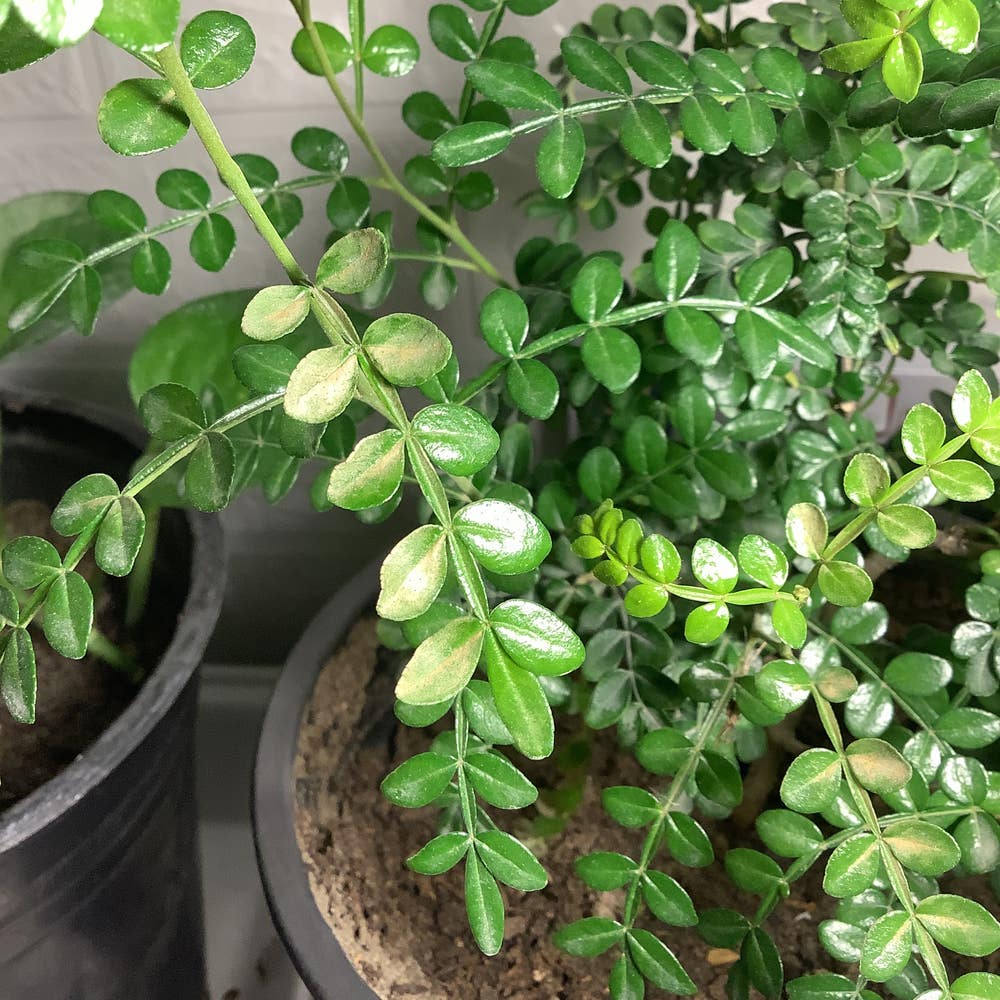
🔍 Managing Black Spots on Your Brazilian Pepper Tree Leaves
Zanthoxylum rhoifolium
By the Greg Editorial Team
Oct 25, 2024•6 min read
This article was created with the help of AI so we can cover more plants for you. May contain errors. See one? Report it here.
- 🌱 Identify black spot causes—fungal infections or pests—to treat effectively.
- 🧪 Soil testing reveals nutrient deficiencies; nitrogen, potassium, and magnesium are crucial.
- 🌿 Use organic treatments like neem oil and baking soda for eco-friendly management.
Diagnosis
Differentiating Fungal and Pest-Related Black Spots 🦠
Identifying the cause of black spots on your Brazilian pepper tree leaves is crucial. Fungal infections often present as distinct spore patterns and lead to noticeable leaf decay, while pest damage typically reveals itself through the presence of insects or fine webbing on the leaves.
To accurately diagnose the issue, start with a thorough visual inspection. If the problem remains unclear, consider laboratory testing for a more definitive analysis.
Identifying Nutrient Deficiencies Leading to Leaf Discoloration 🥦
Nutrient deficiencies can also cause leaf discoloration. Common culprits include nitrogen, potassium, and magnesium shortages, each displaying unique symptoms that can be easily recognized.
Soil testing is an effective way to assess nutrient levels in your garden. Look for visual cues such as changes in leaf color and growth patterns to identify potential deficiencies early on.
Treatment Options
🌱 Organic Treatments for Black Spots
Organic treatments are a fantastic way to combat black spots on your Brazilian pepper tree leaves without harming the environment.
Neem Oil: Application Methods and Frequency
Neem oil is a powerful natural fungicide. To use it effectively, mix one to two tablespoons of neem oil with a gallon of water and spray it on affected leaves every two weeks.
Baking Soda Solution: Recipe and Usage Instructions
A baking soda solution can also help. Combine one tablespoon of baking soda with a gallon of water and a few drops of dish soap, then spray it on the leaves weekly until the spots diminish.
Benefits of Using Organic Treatments
Using organic treatments not only protects your tree but also supports a healthier ecosystem. They are safer for beneficial insects and reduce chemical runoff into the soil.
⚗️ Chemical Fungicides: When and How to Use
Sometimes, organic methods may not suffice, and chemical fungicides become necessary.
Types of Fungicides: Systemic vs. Contact Fungicides
There are two main types of fungicides: systemic, which are absorbed by the plant, and contact, which act on the surface. Choose based on the severity of the infection and your tree's needs.
Application Guidelines: Timing, Dosage, and Safety Precautions
When applying fungicides, timing is crucial. Follow the label instructions for dosage and application frequency to ensure effectiveness and safety.
Importance of Following Label Instructions
Always adhere to label instructions for optimal results. Misapplication can lead to ineffective treatment or harm to your tree.
💧 Importance of Proper Watering and Drainage
Proper watering and drainage are essential for maintaining healthy Brazilian pepper trees.
Watering Techniques: Deep Watering vs. Frequent Shallow Watering
Deep watering encourages strong root growth, while frequent shallow watering can lead to weak roots. Aim for deep watering once a week, especially during dry spells.
Drainage Solutions: Improving Soil Drainage to Prevent Root Rot
Ensure your tree's soil drains well to prevent root rot. You can amend heavy soils with organic matter or consider raised beds for better drainage.
Monitoring Soil Moisture: Tools and Methods for Assessing Moisture Levels
Use moisture meters or simply stick your finger into the soil to check moisture levels. This helps you avoid overwatering, which can exacerbate black spots.
By implementing these treatment options, you can effectively manage black spots on your Brazilian pepper tree leaves. Next, let’s explore prevention strategies to keep your tree healthy and vibrant.
Prevention Strategies
🌳 Best Practices for Tree Care
Regular inspections are crucial for maintaining the health of your Brazilian pepper tree. By monitoring for early signs of issues, you can catch problems before they escalate.
Establishing a fertilization schedule is equally important. Focus on providing essential nutrients like nitrogen, potassium, and magnesium at the right times to promote optimal growth.
Mulching is another effective strategy. Organic mulch not only retains moisture but also enhances soil health, creating a better environment for your tree.
🍂 Seasonal Maintenance Tips to Prevent Black Spots
In spring, prepare your trees for the growing season. This includes checking for any winter damage and ensuring they have the nutrients needed to thrive.
During summer, keep an eye on humidity levels and pest activity. Regular monitoring can help you address any issues before they become serious.
As fall approaches, focus on pruning and preparing your tree for winter stressors. Proper fall care sets the stage for a healthier tree come spring.
By implementing these best practices and seasonal tips, you can significantly reduce the risk of black spots on your Brazilian pepper tree. This proactive approach not only enhances the tree's health but also contributes to its overall beauty and resilience.
Next, we’ll dive into pest management strategies to further protect your tree from potential threats.
Pest Management
Common Pests Affecting Brazilian Pepper Trees 🌳
Brazilian pepper trees can fall prey to several pests that threaten their health.
Aphids: Identification and Damage Signs
Aphids are small, soft-bodied insects that cluster on new growth. Look for curled leaves and sticky residue, known as honeydew, which can attract other pests.
Spider Mites: Symptoms and Control Measures
Spider mites are tiny, often invisible to the naked eye. They create fine webbing on leaves and cause yellowing or stippling, indicating a need for immediate action.
Scale Insects: How to Spot and Manage Infestations
Scale insects appear as small, raised bumps on stems and leaves. They suck sap, leading to weakened trees; manual removal or horticultural oils can help manage them.
Integrated Pest Management Strategies 🛠️
Integrated Pest Management (IPM) combines various strategies for effective pest control.
Cultural Controls: Practices to Reduce Pest Populations
Implementing good cultural practices can significantly reduce pest numbers. Regularly cleaning fallen debris and maintaining tree health through proper watering can deter infestations.
Biological Controls: Beneficial Insects and Their Roles
Encouraging beneficial insects, like ladybugs and lacewings, can naturally keep pest populations in check. These allies feed on aphids and other harmful pests, promoting a balanced ecosystem.
Chemical Controls: When to Consider Pesticides and Safe Application Methods
While chemical controls can be effective, they should be a last resort. If needed, choose targeted pesticides and follow label instructions carefully to minimize harm to beneficial insects and the environment.
By understanding these pests and employing IPM strategies, you can maintain the health of your Brazilian pepper trees. Next, let’s explore prevention strategies to keep these trees thriving.
⚠️ Safety First
This content is for general information and may contain errors, omissions, or outdated details. It is not medical, veterinary advice, or an endorsement of therapeutic claims.
Always consult a qualified healthcare professional before using any plant as food, medicine, or supplement.
Never eat any plant (or feed one to pets) without confirming its identity with at least two trusted sources.
If you suspect poisoning, call Poison Control (800) 222-1222, the Pet Poison Helpline (800) 213-6680, or your local emergency service immediately.
Spotted an error? Please report it here.
Keep your Brazilian pepper tree spot-free 🌿 by using Greg for personalized care tips and timely reminders that ensure your tree gets the nutrients and attention it needs!