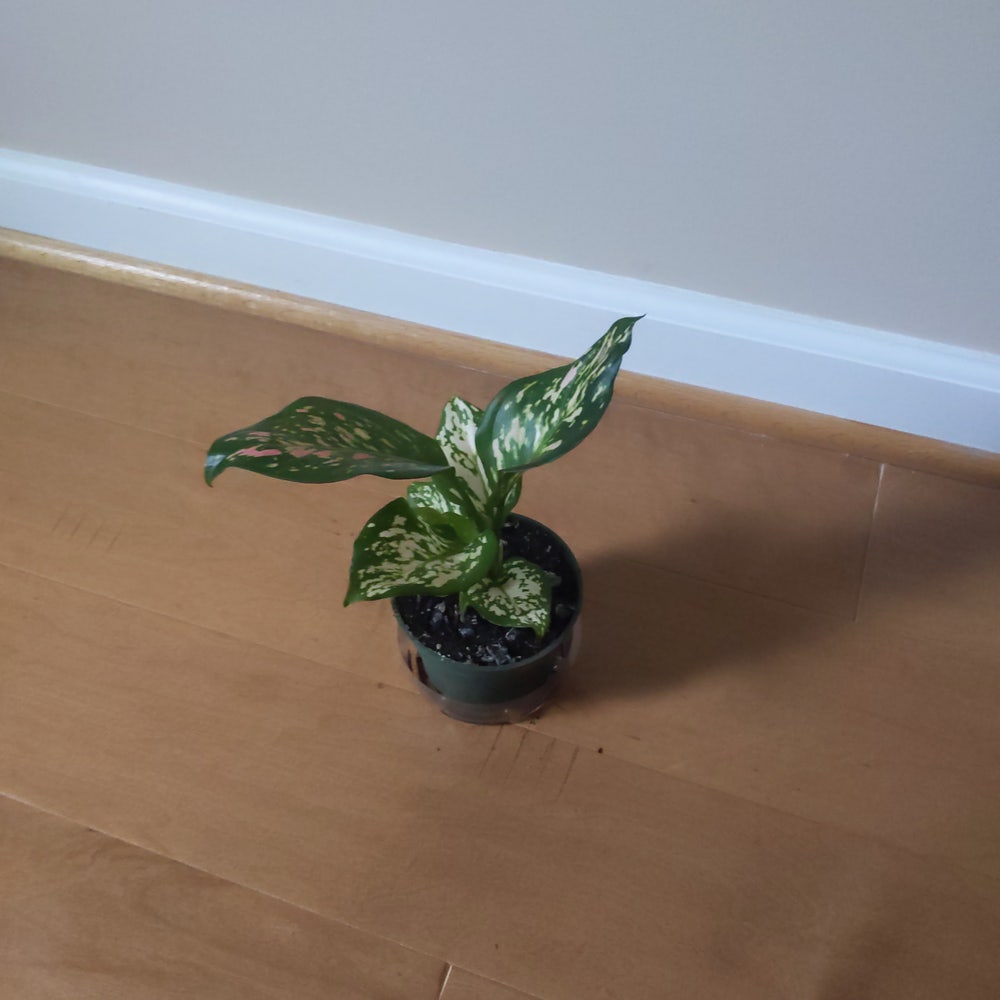
My Pink Dalmatian Aglaonema's Sunlight Needs 🐶
Aglaonema 'Pink Dalmatian'
By the Greg Editorial Team
Jun 18, 2024•3 min read
This article was created with the help of AI so we can cover more plants for you. May contain errors. See one? Report it here.
- Bright, indirect sunlight is key for growth and blooms.
- 🏡 East or north-facing windows are the plant's sweet spots.
- 🌞 Avoid direct sun with sheer curtains or protective coverings.
Best Practices for Indoor Lighting
🌞 Finding the Sweet Spot
Identifying the optimal spot for your Pink Dalmatian Aglaonema is like hitting the jackpot. It craves bright, indirect sunlight, the kind that bathes your plant in a warm glow without the harshness. East or north-facing windows are your allies here, or a few feet away from a south or west window where sunlight is more intense.
🛡️ Shielding from the Sun's Kiss
Direct sunlight is a no-go; it's the archenemy of your Aglaonema's delicate leaves. Sheer curtains are your best defense, softening the sun's rays to a gentle kiss. Think of them as sunglasses for your plant, protecting it from the glare while still letting it bask in the light.
💡 Grow Lights: A Ray of Hope?
When the sun plays hard to get, grow lights step in to save the day. They're perfect for those gloomy corners where natural light fears to tread. Full-spectrum LEDs are the MVPs here, offering a balanced light diet for your plant. Set them on a timer to mimic the sun's schedule, and watch your Aglaonema thrive.

Navigating Outdoor Light for Pink Dalmatian Aglaonema
🌳 Shady Business
Bright shade is the Pink Dalmatian Aglaonema's best friend when it comes to outdoor spots. It's like the plant's personal VIP lounge, away from the harsh sun's glare. To transition your leafy pal outdoors, start with a sheltered area. Gradually increase exposure to ambient light over a few weeks to avoid shocking the system.
☀️ Sunburn and Scorching: Prevention Tips
Midday sun is a no-go; it's the botanical equivalent of a beach without shade. To protect your Aglaonema, think like a strategist: place it under a tree or beside a building that casts afternoon shadows. If you're caught without natural cover, deploy protective coverings like shade cloth. Remember, leaf burn is real, and it's a silent scream for respite from the sun.

Light's Influence on Blooms
🌸 To Flower or Not to Flower?
Bright, indirect light is the sweet spot for the Pink Dalmatian Aglaonema when it comes to flowering. While this plant can survive in low light, its growth and potential to flower are significantly hampered.
Direct morning sunlight can be beneficial, but afternoon sunlight is a no-go—it's like playing with fire for the delicate leaves of your Aglaonema. If you're aiming for blooms, you'll want to ensure the plant is not in a state of stress, as this can sometimes trigger flowering as a distress signal.
🌞 Adjusting Light Conditions
To encourage your Pink Dalmatian Aglaonema to flower, consider its lighting conditions. If you're stuck with less-than-ideal natural light, grow lights could be your ally. Opt for full-spectrum options to mimic the sun's rays, which can coax the shy blooms out of hiding.
Remember, it's not about blasting your plant with as much light as possible. It's about finding that Goldilocks zone where the light is just right. Keep an eye out for new growth or a flower spike—these are your clues that you've hit the jackpot.

⚠️ Safety First
This content is for general information and may contain errors, omissions, or outdated details. It is not medical, veterinary advice, or an endorsement of therapeutic claims.
Always consult a qualified healthcare professional before using any plant as food, medicine, or supplement.
Never eat any plant (or feed one to pets) without confirming its identity with at least two trusted sources.
If you suspect poisoning, call Poison Control (800) 222-1222, the Pet Poison Helpline (800) 213-6680, or your local emergency service immediately.
Spotted an error? Please report it here.
Optimize your Pink Dalmatian Aglaonema's spot-finding 🌿 with Greg's PlantVision, ensuring it flourishes with just the right amount of indirect sunlight for perfect growth and blooms.