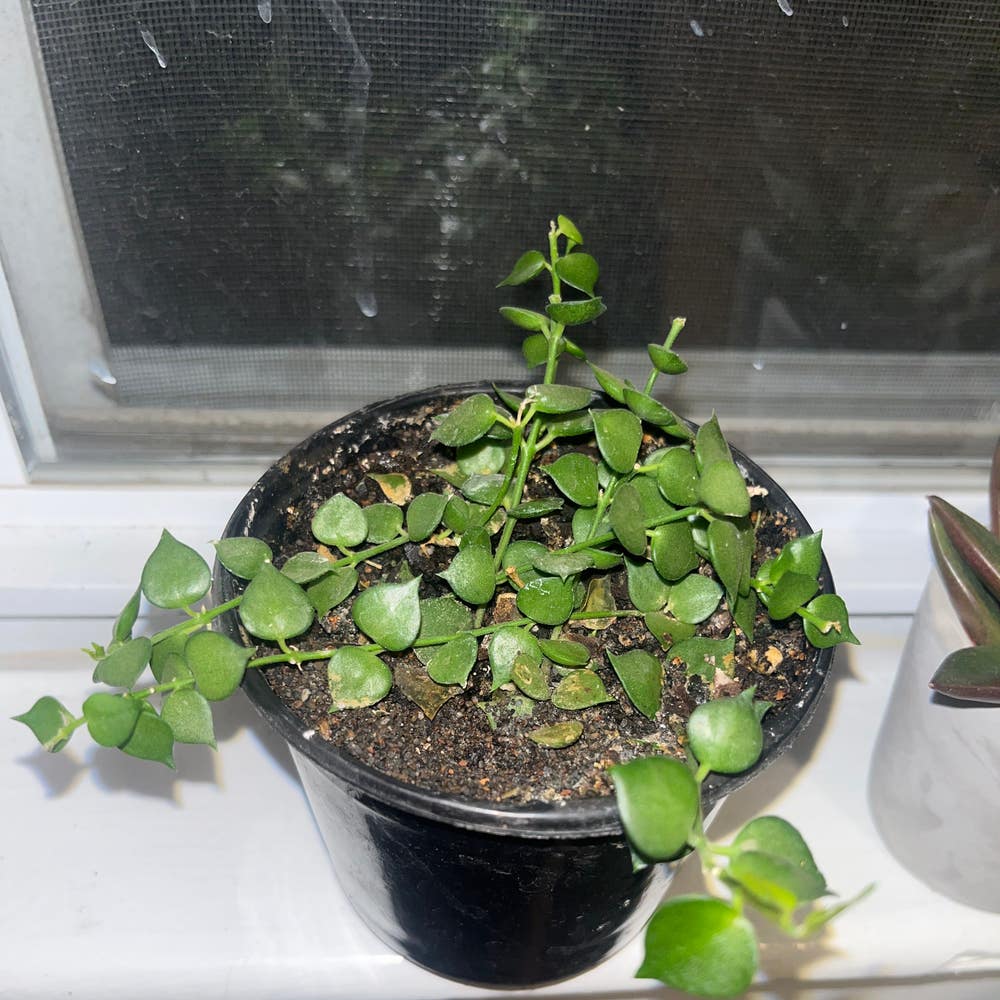
Why Are My Million hearts Leaves Curling?
Dischidia ruscifolia
By the Greg Editorial Team
Jun 18, 2024•5 min read
This article was created with the help of AI so we can cover more plants for you. May contain errors. See one? Report it here.
Unravel the mystery of curling Million hearts leaves 🌿 and revive your plant's splendor with ease!
- 💦 Over or underwatering? Adjust watering based on soil dryness.
- 🌡️ Protect from extreme temps to prevent leaf curling.
- 🌱 Nutrient balance and pest control are key to healthy leaves.
When Thirsty Leaves Curl: Watering Woes
💧 Spotting Overwatering Symptoms
Yellowing leaves and a soggy soil feel are classic signs of overwatering your Million hearts. If the leaves are also soft and mushy, it's time to dial back the H2O. Overwatered roots are drowning, leading to a sad, curled-up plant.
To adjust your watering schedule, wait for the soil to become dry to the touch. Consistency is your plant's best friend, so establish a routine that aligns with the dryness of the soil, not the calendar.
🏜️ Underwatering Troubles
Curling leaves that feel dry and crispy are sending you a distress signal for more water. If the soil feels like a barren wasteland, your Million hearts is parched and pleading for a drink.
Finding the watering sweet spot means checking the soil moisture regularly. When it's dry an inch below the surface, it's time to water. Remember, your plant's thirst varies with the seasons—less in winter, more in summer. Keep an eye on the temperature and humidity, as these can affect how quickly your plant drinks up its water.

It's Not You, It's the Climate: Environmental Stress
♨️ Too Hot to Handle
When Million hearts plants face high temperatures, their leaves can curl as a cry for help. This is a plant's version of sweating bullets. To cool down your green buddy, relocate it to a cooler spot, away from direct, scorching sunlight. Consider a pebble tray with water for added humidity, or a gentle fan to simulate a natural breeze.
❄️ Chilly Plant Blues
Conversely, if your plant is shivering in the cold, you'll see the same curling symptom. Cold drafts and low temperatures can make Million hearts leaves curl tighter than a rolled-up sleeping bag. Keep your plant in a room that's consistently warm, away from drafty windows or doors. A plant sweater doesn't exist, but moving it to a warmer spot is the next best thing.
🌞 Light Levels: Finding the Balance
Light is like a double-edged sword; too much or too little, and your plant's leaves will start to curl like a flag in the wind. Bright, indirect light is the sweet spot for Million hearts. If you catch your plant getting a sunburn or straining in the dark, adjust its position to somewhere with consistent, filtered light. It's all about giving your plant the equivalent of a comfy armchair by the window—not too bright, not too dim.

Hungry for Nutrients: Feeding Your Million Hearts
🌿 The Calcium and Magnesium Connection
Calcium and magnesium are like the unsung heroes of plant nutrition, quietly essential yet often overlooked. If your Million hearts' leaves are curling, it might be crying out for these nutrients. Yellowing leaves or stunted growth can be telltale signs of a deficiency. To supplement, consider adding calcium nitrate or dolomitic limestone for calcium, and Epsom salts for a magnesium boost. Remember, more is not always better; apply supplements judiciously to avoid overdoing it.
🌱 The Overall Fertilization Game
Creating a balanced feeding schedule is like crafting a bespoke diet plan for your plant. A balanced, water-soluble fertilizer with an NPK ratio of 10-10-10 is generally a good choice. Apply it diluted to half strength every two months during the growing season. Just as overeating can lead to health issues, overfertilizing can harm your plant. So, keep it moderate and avoid fertilizing in the dormant winter months. If you're unsure about what your plant needs, a soil test can be the crystal ball that reveals the secrets of your soil's nutrient levels.

Unwanted Guests: Dealing with Pests and Diseases
🐜 Common Culprits: Pests that Cause Curling
Spider mites are like invisible vampires to your Million hearts, leaving behind telltale webbing and speckled leaves. Aphids are the sticky-fingered thieves, secreting honeydew as they suck the life out of your plant. And don't get me started on mealybugs—they throw a white, cottony shindig that's anything but a good time.
To show these pests the door, grab some insecticidal soap or neem oil. Apply with the precision of a sniper, making sure to hit every possible hideout. Remember, it's not just about the top of the leaves; flip them over and check the undersides—pests love a good underside shindig.
🍄 Fungal Foes and How to Fight Them
Fungi are the silent party crashers, often going unnoticed until they've made themselves at home. Look for unusual spots or powdery mildew—these are the red flags of a fungal fiesta. If you spot these, it's time to isolate and remove the affected foliage with sterilized shears.
When it comes to treatment, a fungicide is your best friend, but it's not a free-for-all. Follow the label instructions like your plant's life depends on it—because it does. And prevention? That's about keeping the air moving, avoiding damp conditions, and keeping your tools clean. It's the equivalent of not leaving your door unlocked in a big city.
⚠️ Safety First
This content is for general information and may contain errors, omissions, or outdated details. It is not medical, veterinary advice, or an endorsement of therapeutic claims.
Always consult a qualified healthcare professional before using any plant as food, medicine, or supplement.
Never eat any plant (or feed one to pets) without confirming its identity with at least two trusted sources.
If you suspect poisoning, call Poison Control (800) 222-1222, the Pet Poison Helpline (800) 213-6680, or your local emergency service immediately.
Spotted an error? Please report it here.
Keep your Million hearts' leaves unfurled and fabulous 🌿 by letting Greg remind you when to water and adjust for temperature changes, ensuring your plant care is always on point.