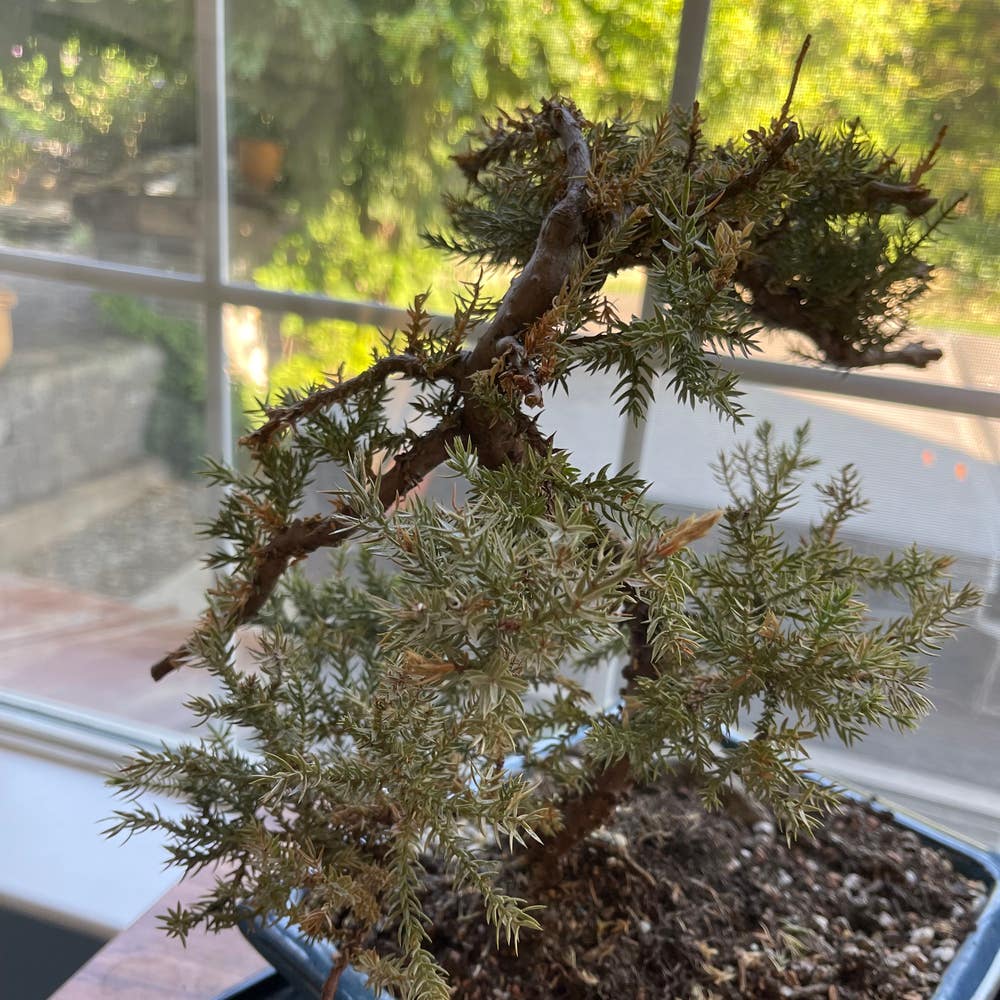
Why Does My Japanese Garden Juniper Have Yellow Leaves? 🍂
Juniperus procumbens
By the Greg Editorial Team
Jun 18, 2024•4 min read
This article was created with the help of AI so we can cover more plants for you. May contain errors. See one? Report it here.
Say goodbye to yellow leaves 🍂 and hello to a thriving juniper with these expert care secrets.
- 🍂 Nutrient deficiencies cause yellowing; soil testing and supplementation are key.
- 💧 Watering balance is crucial; avoid overwatering and waterlogging.
- ☀️🌱 Sunlight and pest management are essential for preventing yellow leaves.
Pinpointing the Culprit: What's Turning the Leaves Yellow?
💡 Lack of Nutrients
Yellowing leaves on your Japanese Garden Juniper could be screaming for nutrients. If the lower half of the plant is affected, it's likely crying out for magnesium, potassium, or nitrogen. Sulfur deficiency, on the other hand, tends to hit the upper half. Don't guess; test your soil and supplement accordingly to get back those lush greens.
🚰 Water Woes
It's a fine line between drought stress and waterlogging. Your juniper isn't a camel, nor does it enjoy swimming. Adjust your watering routine to ensure the soil is moist but not soggy. Remember, overwatering can invite the unwanted guest of root rot, which is a one-way ticket to yellow-leaf city.
🌞 Sunlight and Shade
Sunlight is like the juniper's morning coffee, but too much and it's a jittery mess. Too little, and it's dragging through the day. Aim for that sweet spot of light conditions where your juniper can bask without getting a sunburn. Watch for signs of too much exposure, like a sun-bleached look, and adjust its location if needed.

Battling Pests and Diseases
🐛 Common Invaders
Spotting the signs of pest infestations and fungal diseases in your Japanese Garden Juniper is crucial. Look for yellow speckles, webbing, or discolored spots on leaves. These are red flags that your juniper might be under attack from common garden foes like spider mites or stealthy fungi.
🛡️ Fight Back Strategically
Effective treatments for pests include a spritz of neem oil or insecticidal soap. For fungal issues, pruning the affected areas and applying a fungicide can be life-saving measures. However, if the situation looks dire, don't hesitate to call in the professionals. They're the plant ER, equipped to handle the most stubborn of plant ailments.

Reviving Your Juniper
✂️ Pruning with Purpose
Pruning isn't just a snip here and there; it's surgical precision for your juniper's health. To remove yellowed foliage, cut above a leaf node; this encourages new growth. Remember, junipers won't sprout new needles on old wood, so if there's no green, say goodbye to the whole branch. And timing is everything—prune in early spring or late winter for best results. Keep those pruning shears clean between cuts to prevent disease spread. It's like good hygiene for your plant.
💧 Soil and Water Adjustments
Soil isn't just dirt; it's the lifeline of your juniper. If yellow leaves are your SOS signal, it's time to mix in organic matter and drainage maestros like perlite. As for watering, established junipers are the camels of the plant world—they don't need much. But if they start to yellow, they're telling you they're thirsty. Moisten the soil to a depth of 20 inches, and let it dry out between drinks. Overwatering? That's a one-way ticket to root rot city. Keep it balanced to keep your juniper beaming green.

Keeping Yellow Leaves at Bay
🌱 The Best Planting Practices
Location and soil are the linchpins of juniper joy. Pick a spot that basks in full sun but doesn't fry like an egg on a sidewalk. The soil should drain faster than a sink with no stopper—waterlogged roots are a no-go.
Planting depth is not just a hole in the ground; it's a strategic decision. Bury the juniper so the top of the root ball is level with the soil surface. Think of it as tucking it in bed, not burying treasure. Spacing matters too. These aren't sardines; give them room to breathe and grow without starting a turf war.
🕵️ Ongoing Vigilance
Routine checks are the secret handshake of garden success. Yellow leaves? Could be the plant's way of saying, "Help!" Adjust your care routine like a DJ tweaks the sound for the perfect beat.
Seasonal care is not just a suggestion; it's a requirement. Watering is not a one-size-fits-all; it's a tailored suit. Less in winter, please—junipers are not making snowmen, they're trying to survive the chill. Keep an eye out for pests and diseases like a hawk with a telescope. Act fast, or you'll be telling tales of the juniper that once was.
⚠️ Safety First
This content is for general information and may contain errors, omissions, or outdated details. It is not medical, veterinary advice, or an endorsement of therapeutic claims.
Always consult a qualified healthcare professional before using any plant as food, medicine, or supplement.
Never eat any plant (or feed one to pets) without confirming its identity with at least two trusted sources.
If you suspect poisoning, call Poison Control (800) 222-1222, the Pet Poison Helpline (800) 213-6680, or your local emergency service immediately.
Spotted an error? Please report it here.
Ensure your Japanese Garden Juniper stays vibrantly green 🌿 with Greg's tailored reminders for watering, nutrient supplementation, and seasonal care adjustments.