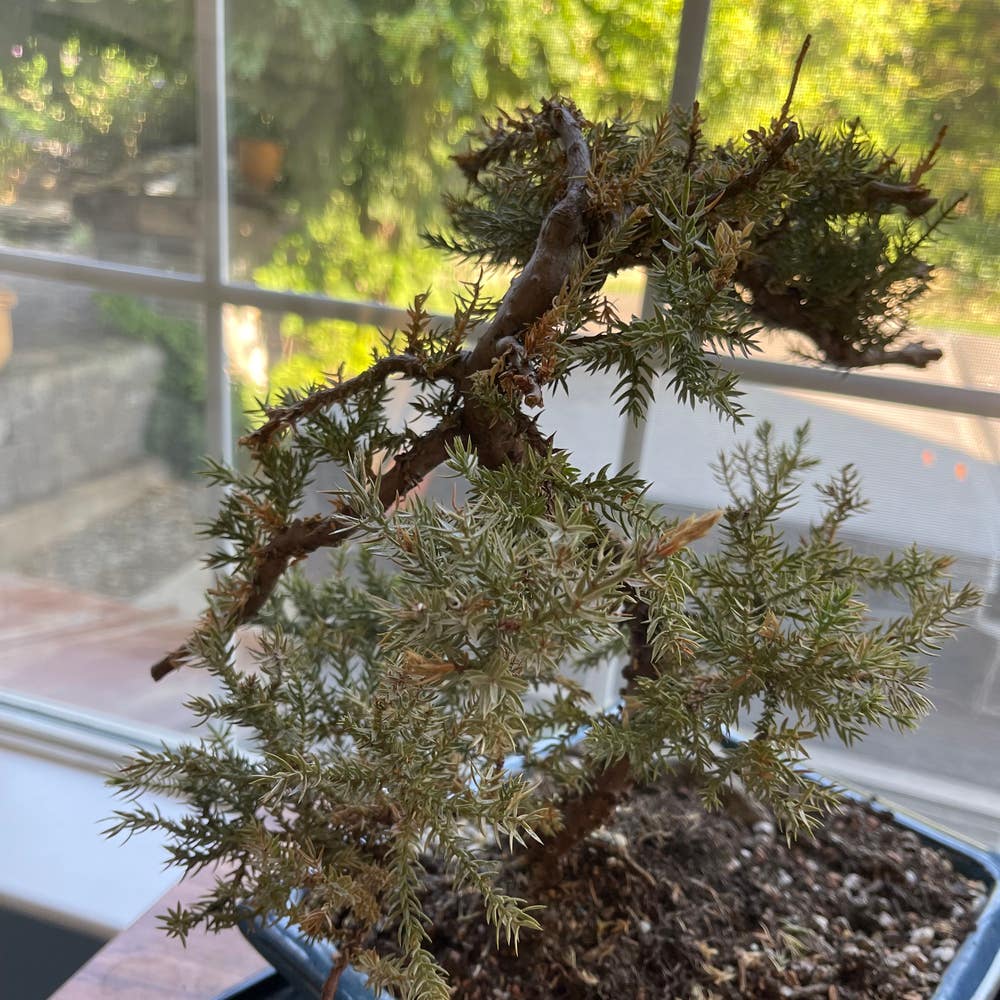
Why Are My Japanese Garden Juniper Leaves Droopy? 😔
Juniperus procumbens
By the Greg Editorial Team
Jun 18, 2024•4 min read
This article was created with the help of AI so we can cover more plants for you. May contain errors. See one? Report it here.
Save your sagging Juniper 🌿 and restore its perky posture with these essential care tips!
- Droopy leaves signal distress in your Japanese Garden Juniper.
- Balance water and environment—too much or too little causes issues.
- Regular care and seasonal adjustments keep your Juniper perky and healthy.
Spotting the Telltale Signs of Droopiness
🌿 Visual Cues: Identifying Droopy Leaves
When your Japanese Garden Juniper starts looking less like a proud warrior and more like it's carrying the weight of the world, take note. Droopy leaves are the plant's white flag, signaling a cry for help. They might hang limply, resembling a deflated balloon after a birthday bash.
🕵️ Beyond the Obvious: Other Symptoms to Watch For
But droopiness is just the headline act; there's often a supporting cast of symptoms. Look for leaves that have lost their luster, turning as yellow as a lemon or as brown as a well-done steak. If the foliage feels softer than your favorite plush toy, it's a sign that something's off. And don't forget to check the roots; if they're darker than a stormy sky, you've got trouble brewing underground.

The Root of the Problem: Uncovering Causes of Droopiness
💦 Too Much Love: Overwatering Woes
Overwatering is like an overbearing hug for your Japanese Garden Juniper – it means well but ends up suffocating. When the roots are swimming rather than sipping, they can't breathe, leading to droopy leaves.
Spotting waterlogged soil is simple: if it feels like a wet sponge, it's too much. Ease off the aqua and let the soil dry out a bit before the next watering.
🏜️ Thirsty Roots: The Underwatering Issue
Conversely, underwatering turns your Juniper into a sad, thirsty creature. If the leaves resemble a crinkled paper bag, it's a cry for hydration.
Balancing the water budget means checking the soil before watering – aim for moist, not desert-dry or monsoon-wet.
🌞 Feeling the Heat: Environmental Stress Impact
Temperature and light need to be just right. Too much sun can scorch leaves, while not enough leaves them languishing in the shade.
Shielding your Juniper from environmental extremes involves finding a spot that's the Goldilocks zone – not too hot, not too cold, but just right.

First Aid for Your Juniper: Immediate Actions
💧 Adjusting the H2O: Fine-Tuning Watering Habits
Crafting the perfect watering schedule is more art than science. Start by watering deeply, then let the soil dry out slightly before the next session. Overwatering is a common misstep; your Juniper isn't a fish, it doesn't need a constant deluge.
- Use a moisture meter or the trusty finger test to gauge soil dampness. If it's soggy, hold off on the H2O.
- In cooler months, your Juniper sips water like a fine whiskey, slowly. Adjust your watering frequency as the temperature drops.
Tools and Tricks for Moisture Monitoring
- Moisture meters are your best friends; they don't lie or sugarcoat the soil's thirst level.
- A simple calendar reminder can prevent over-enthusiastic watering. Mark the days and observe your plant's response.
🌞 Creating a Comfort Zone: Tweaking the Environment
Adjusting light and temperature isn't just about comfort; it's about survival. Your Juniper is more Goldilocks than you think; it craves that 'just right' spot.
- Direct sunlight can scorch, while too little leaves your plant in the dark, literally. Aim for a balance, like a good day at the beach.
- Keep temperatures consistent, around 65°F to 80°F. Your Juniper doesn't appreciate surprises.
The Role of Humidity and Airflow
- Humidity is the silent player in plant health. Too much, and you're in a swamp; too little, and you're in a desert. Aim for the middle ground.
- Airflow is the unsung hero. It wards off fungal foes and keeps your Juniper breathing easy. Make sure it's not suffocating in still air.

Future-Proofing Foliage: Long-Term Strategies
🏗️ Building Strong Foundations: Soil and Drainage
Upgrading to the ideal soil mix is like setting the stage for a blockbuster plant performance. Your Japanese Garden Juniper craves a well-draining, nutrient-rich environment. Think of it as a gourmet meal for the roots. Mix in organic matter like compost or peat moss, and don't forget the aeration magic of perlite or coarse sand.
Ensuring proper drainage is your insurance policy against root rot. Use pots with adequate drainage holes and consider a layer of gravel at the bottom. It's a simple trick, but it's effective. If you're dealing with a garden bed, raised beds might just be your ticket to dry root paradise.
👀 Vigilance and Care: Routine Checks and Balances
Establishing a health check routine is like becoming a plant's personal fitness trainer. Regularly inspect the soil moisture with your finger or a moisture meter. Adjust your watering schedule as needed, because even plants have mood swings with the weather.
Seasonal adjustments for year-round perkiness are non-negotiable. Less water in the winter, more in the summer, and always keep an eye on the light exposure. Your Juniper doesn't need a tan, so provide some shade during those scorching summer months. Remember, a happy plant is a perky plant.
⚠️ Safety First
This content is for general information and may contain errors, omissions, or outdated details. It is not medical, veterinary advice, or an endorsement of therapeutic claims.
Always consult a qualified healthcare professional before using any plant as food, medicine, or supplement.
Never eat any plant (or feed one to pets) without confirming its identity with at least two trusted sources.
If you suspect poisoning, call Poison Control (800) 222-1222, the Pet Poison Helpline (800) 213-6680, or your local emergency service immediately.
Spotted an error? Please report it here.
Ensure your Japanese Garden Juniper stays perky and healthy 🌱 with Greg's personalized watering reminders and care tips, tailored to your plant's needs and your home's environment.