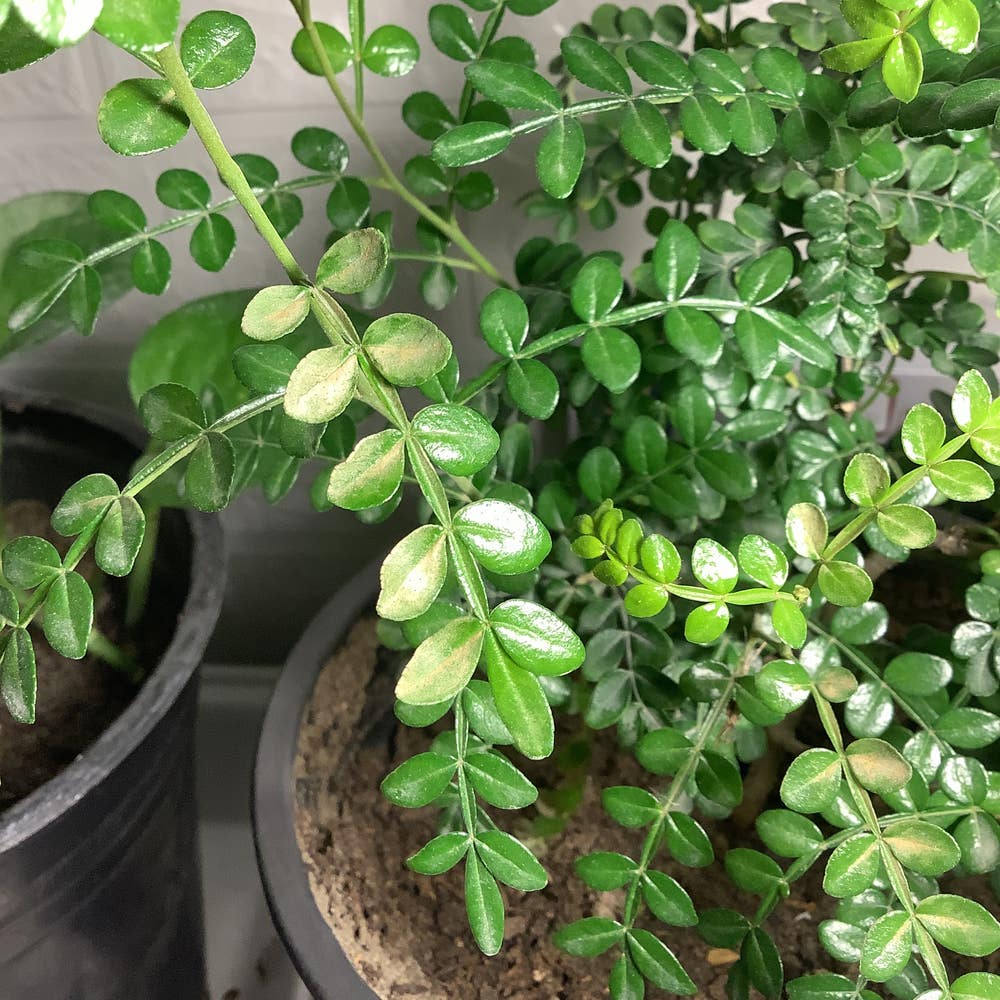
Managing Yellow Leaves on Your Zanthoxylum ☀️
Zanthoxylum ekmanii
By the Greg Editorial Team
Nov 26, 2024•6 min read
This article was created with the help of AI so we can cover more plants for you. May contain errors. See one? Report it here.
- 🌱 Yellow leaves indicate nutrient deficiencies, especially nitrogen and iron.
- 💧 Overwatering and underwatering both cause yellowing; check soil moisture regularly.
- 🐛 Pest monitoring is crucial; pests like aphids can harm your Zanthoxylum.
Causes of Yellow Leaves
🌱 Nutrient Deficiencies
Nutrient deficiencies are a common culprit behind yellow leaves on your Zanthoxylum.
Nitrogen Deficiency
When nitrogen is lacking, you may notice pale green to yellow leaves and stunted growth. Nitrogen is crucial for leaf health, as it promotes lush, green foliage.
Iron Deficiency
Iron deficiency manifests as yellowing between leaf veins, known as interveinal chlorosis. This condition can significantly impact the overall vigor of your plant.
Other Nutrient Deficiencies
Magnesium and potassium deficiencies can also lead to yellowing leaves. Signs include leaf discoloration and poor growth, emphasizing the need for balanced nutrition.
💧 Overwatering and Root Rot
Overwatering is another major factor that can lead to yellow leaves.
Symptoms of Overwatering
Look for yellowing leaves, wilting, and mushy roots as indicators of overwatering.
Causes of Root Rot
Root rot often arises from poor drainage, compacted soil, and excessive moisture. Ensuring proper watering practices is vital for maintaining Zanthoxylum health.
🌵 Underwatering and Drought Stress
On the flip side, underwatering can also cause yellow leaves.
Symptoms of Underwatering
Signs of underwatering include yellowing leaves, crispy edges, and leaf drop.
Effects of Drought Stress
Drought stress negatively impacts growth and flowering, making consistent moisture levels essential for your Zanthoxylum.
🐛 Pests and Diseases
Pests and diseases can wreak havoc on your plant's health.
Common Pests
Watch out for aphids, spider mites, and scale insects, which can cause significant damage.
Diseases
Fungal infections can lead to leaf discoloration, further stressing your plant. Regular pest monitoring is crucial for maintaining Zanthoxylum health.
Understanding these causes of yellow leaves is the first step in restoring your plant's vibrancy. Next, we’ll explore how to diagnose these issues effectively.
Diagnosing Yellow Leaves
🌱 Identifying Symptoms of Nutrient Deficiency
When diagnosing yellow leaves on your Zanthoxylum, start by looking for visual cues of nutrient deficiencies. For nitrogen deficiency, expect pale green to yellow leaves and stunted growth, while iron deficiency presents as yellowing between leaf veins, known as interveinal chlorosis.
Understanding leaf color and texture is crucial for accurate diagnosis. Healthy leaves should be vibrant and firm, so any deviation can indicate underlying issues that need addressing.
💧 Recognizing Signs of Overwatering vs. Underwatering
Differentiating between overwatering and underwatering is essential for your plant's health. Overwatering typically results in wilting leaves and mushy roots, while underwatering leads to crispy edges and drooping foliage.
Pay attention to these symptoms to adjust your care accordingly. Recognizing these signs early can prevent further stress on your Zanthoxylum.
🐛 Checking for Pest Infestations
Regularly inspecting your Zanthoxylum for pests is vital for maintaining its health. Look closely at the leaves and stems for signs of common pests like aphids, spider mites, and scale insects.
Damage from these pests can manifest as discoloration or distorted growth. Catching infestations early can save your plant from significant harm.
🌤️ Assessing Environmental Conditions
Environmental factors play a significant role in leaf health. Evaluate the light exposure your Zanthoxylum receives, as insufficient light can lead to yellowing leaves.
Additionally, humidity and temperature are critical. Regular checks can help ensure your plant thrives in its environment, preventing stress that leads to yellow leaves.
By diagnosing these issues effectively, you can take proactive steps to restore your Zanthoxylum's vibrant health. Next, we’ll explore treatment options to address yellow leaves and promote recovery.
Treatment for Yellow Leaves
🌊 Adjusting Watering Practices
Proper watering is crucial for the health of your Zanthoxylum. Aim to water when the top inch of soil feels dry, ensuring you maintain consistent moisture without over-saturating.
Signs of adequate moisture include soil that is damp but not soggy. If the soil feels dry several inches down, it’s time to water.
🌱 Fertilization Techniques
To combat nutrient deficiencies, consider using a balanced fertilizer that includes nitrogen, phosphorus, and potassium. Organic options like compost or well-rotted manure can also work wonders.
Timing is key; fertilize during the growing season, typically in spring and early summer. Apply according to package instructions to avoid over-fertilization, which can harm your plant.
🐞 Pest Control Methods
For pest control, start with organic solutions like neem oil or insecticidal soap. These options are effective and safer for the environment.
If infestations persist, chemical treatments may be necessary. Always follow label instructions carefully to ensure safe application and minimize harm to beneficial insects.
🌿 Improving Soil Drainage and Aeration
Enhancing soil drainage is vital for preventing root rot and promoting healthy growth. Consider adding organic matter like compost or perlite to improve soil structure.
Well-draining soil allows excess water to escape, reducing the risk of yellow leaves due to overwatering. Regularly check your soil's aeration to keep your Zanthoxylum thriving.
Transitioning to the next topic, understanding how to prevent yellow leaves is just as important as treating them. Let's explore best practices for ongoing care.
Preventing Yellow Leaves
🌱 Best Practices for Care
To keep your Zanthoxylum thriving, establish regular watering and fertilization schedules. Consistency is key; aim to water deeply but infrequently to encourage strong root growth.
Soil testing is equally important. It helps you understand nutrient levels, ensuring your plant receives what it needs to flourish.
🌦️ Seasonal Care Tips
Adjust your care practices with the changing seasons. In warmer months, your Zanthoxylum may require more frequent watering, while cooler months might necessitate less.
Prepare your plant for extreme weather conditions by providing adequate shelter or shade. This proactive approach can prevent stress and yellowing leaves.
🔍 Regular Monitoring and Maintenance
Routine inspections are vital for early detection of potential issues. Look for signs of stress, such as yellowing leaves or wilting, to address problems before they escalate.
Keeping a care journal can be a game-changer. Documenting your plant's health and care routines helps you identify patterns and make informed adjustments.
📍 Choosing the Right Location
Selecting the right planting site is crucial for your Zanthoxylum's success. Consider factors like sunlight exposure, drainage, and protection from harsh elements.
A well-chosen location can significantly reduce the risk of yellow leaves. Ensure your plant has the right balance of light and moisture to thrive.
By implementing these preventive measures, you can maintain the vibrant health of your Zanthoxylum and enjoy its lush foliage year-round. Next, let’s explore how to diagnose yellow leaves effectively.
⚠️ Safety First
This content is for general information and may contain errors, omissions, or outdated details. It is not medical, veterinary advice, or an endorsement of therapeutic claims.
Always consult a qualified healthcare professional before using any plant as food, medicine, or supplement.
Never eat any plant (or feed one to pets) without confirming its identity with at least two trusted sources.
If you suspect poisoning, call Poison Control (800) 222-1222, the Pet Poison Helpline (800) 213-6680, or your local emergency service immediately.
Spotted an error? Please report it here.
Transform your Zanthoxylum's yellow leaves into vibrant green ones 🌿 by using Greg's customized care tips and reminders to ensure your plant gets the nutrients and attention it deserves!