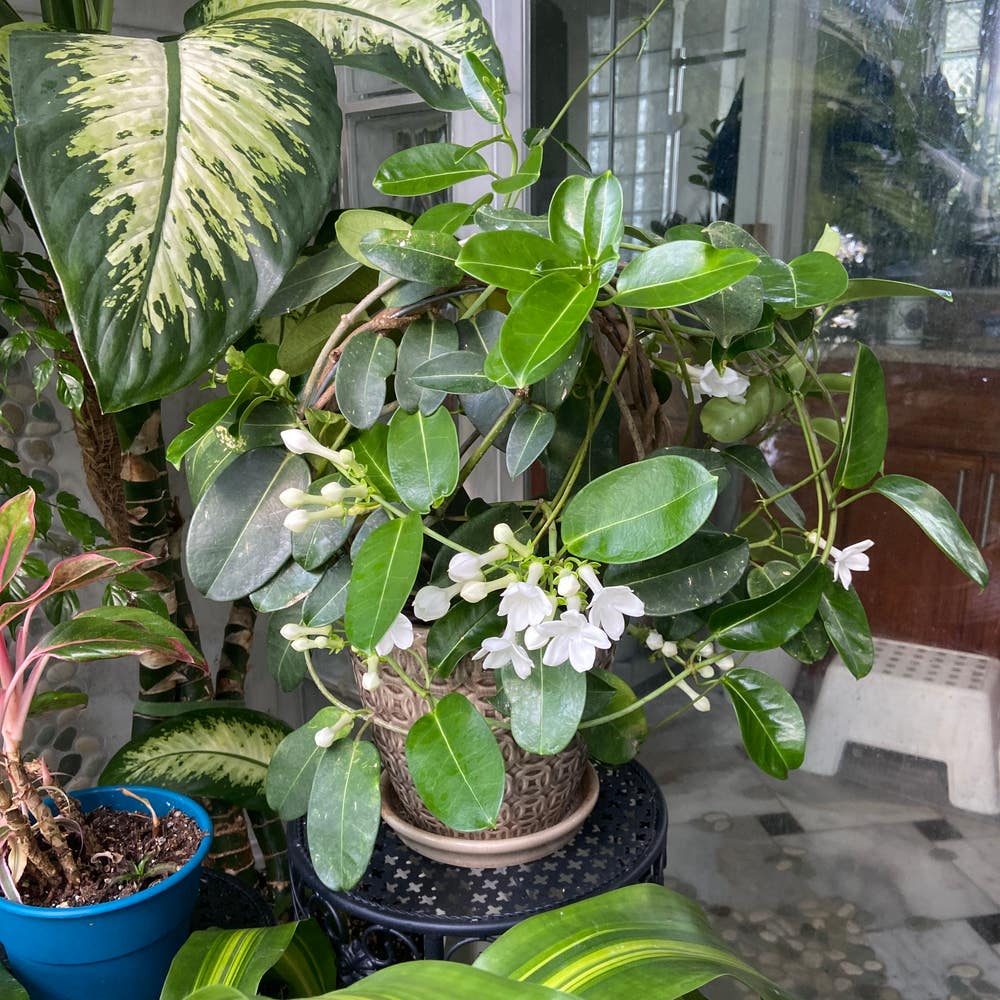
Why Are My Stephanotis Leaves Falling Over?
Stephanotis floribunda
By the Greg Editorial Team
Jun 18, 2024•3 min read
This article was created with the help of AI so we can cover more plants for you. May contain errors. See one? Report it here.
- Check soil moisture to address overwatering or underwatering causing droopy leaves.
- Bright, indirect sunlight and stable temperatures are crucial for Stephanotis health.
- Seek professional help if adjustments don't improve plant health.
Spot the Signs: What Droopy Leaves Tell You
💧 Assessing Soil Moisture
Overwatering or underwatering can turn Stephanotis leaves into a sad display. Check the soil; if it's soggy, your plant's roots might be drowning. Conversely, soil that crumbles like stale bread suggests your plant's thirst isn't quenched. Use the finger test or a moisture meter to avoid guesswork.
🍃 Examining Leaf Health
Leaves don't lie. Yellowing leaves often scream overwatering, while brown, crispy edges whisper of dehydration. Spots or blights could be gossiping about fungal or pest parties. A sudden change in texture? Your Stephanotis might be throwing a stress signal.
🌞 Environmental Check-Up
Light and temperature are the stage and backdrop for your plant's performance. Too little light, and leaves droop like they've lost their lines. Too much, and they might crisp up like an overdone chip. Stable temperatures and consistent light keep the Stephanotis drama-free.

Quick Fixes for Droopy Leaves
💧 Adjusting Water Habits
Watering is crucial. If the top inch of soil is dry, it's time to water. If it's damp, hold off. Use room-temperature water to prevent root shock. Drainage is key; ensure your pot has holes to let excess water escape.
🌞 Light and Temperature Tweaks
Light needs are like a Goldilocks scenario—not too much, not too little. Find a spot with bright, indirect sunlight. Temperature should be stable; avoid placing your Stephanotis in drafty areas or near heat sources.

Long-Term Care Strategies
💧 Watering Wisdom
Consistency is your new mantra when it comes to watering Stephanotis. To avoid the perils of over or underwatering, establish a routine that aligns with the plant's natural rhythm. Water when the topsoil feels dry, typically allowing the soil to dry out slightly between sessions. Remember, your plant's thirst varies with the seasons—more in the growth-friendly spring and summer, less when it's chilling in autumn and winter.
🌡️ Climate Control
Stephanotis thrives in a stable environment. Aim to maintain a temperature range of 21°C-23°C, steering clear of the drama of temperature swings. In the winter months, don't let the mercury dip below 13°C. High humidity is a non-negotiable for these tropical beauties, so keep that pebble tray handy and mist the leaves when the air feels as dry as a stand-up comedian's wit. Avoid direct sunlight like it's a spoiler for your favorite show; bright, indirect light will keep your Stephanotis basking in joy without the sunburn.

When to Seek Professional Help
🚨 Recognizing Persistent Problems
Sometimes, despite our best efforts, Stephanotis plants continue to wilt, yellow, or drop leaves. If you've tried adjusting watering schedules, ensuring proper light, and checking for pests, yet the plant's health doesn't improve, it's time to acknowledge that home remedies might not cut it.
🌿 Consulting with a Horticulturist
When your green thumb meets its match, reaching out to a horticulturist is a smart move. Timing is crucial; don't wait until your plant is on its last leg. A professional can offer insights that are not immediately obvious to the untrained eye, such as subtle signs of disease or environmental stress factors specific to Stephanotis. Remember, seeking help is a testament to your dedication, not a surrender flag.
⚠️ Safety First
This content is for general information and may contain errors, omissions, or outdated details. It is not medical, veterinary advice, or an endorsement of therapeutic claims.
Always consult a qualified healthcare professional before using any plant as food, medicine, or supplement.
Never eat any plant (or feed one to pets) without confirming its identity with at least two trusted sources.
If you suspect poisoning, call Poison Control (800) 222-1222, the Pet Poison Helpline (800) 213-6680, or your local emergency service immediately.
Spotted an error? Please report it here.
Ensure your Stephanotis thrives with consistent care 🌿, guided by Greg's tailored watering reminders and spot-on placement advice.