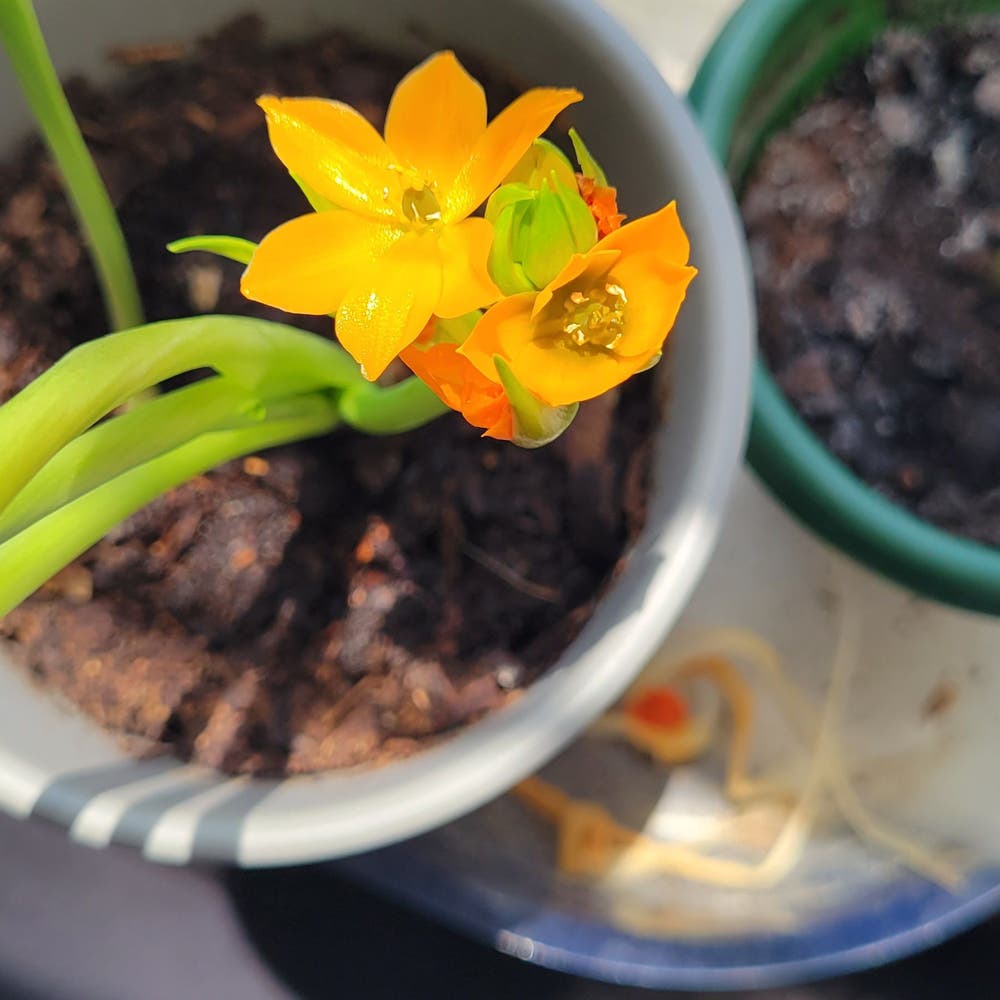
Why Are My Star of Bethlehem Leaves Mushy?
Ornithogalum dubium
By the Greg Editorial Team
Jun 18, 2024•3 min read
This article was created with the help of AI so we can cover more plants for you. May contain errors. See one? Report it here.
Halt the mush-malaise 🍂 in your Star of Bethlehem with these essential plant-care fixes!
- Overwatering leads to mushy leaves, check soil before watering.
- 🌱 Root rot? Act fast: remove affected roots, repot with fresh soil.
- 🍄 Fungal infections cause mush: remove, treat, and improve airflow.
When Water Becomes the Enemy
💦 Spotting Overwatering Symptoms
Your Star of Bethlehem's leaves turning into a mushy mess? That's overwatering raising a red flag. Yellow leaves, black spots, and a soil scent that screams 'swamp' are your plant's way of staging an intervention.
Quick soil check-up: Poke around the base. If it's more saturated than a sponge, you've got your sign.
🌊 Turning the Tide on Watering Habits
Time to fine-tune your watering routine. The goal is to hit that sweet spot where the soil feels like a wrung-out rag, not a drenched towel.
Golden rule of thumb: Water only when the top inch of soil has the dryness of a well-aired laundry. If it clings to your finger, hold off on the H2O.
Remember, proper drainage isn't just nice to have; it's essential. Check those drainage holes—your plant's life preserver.

Unearthing the Root of the Problem
🍄 Recognizing Root Rot
Root rot is the silent killer of plants, often going unnoticed until it's too late. If your Star of Bethlehem has mushy leaves, it's time to play detective. Gently remove your plant from its pot and brush away the soil for a closer look. Healthy roots are firm and white, but if they're brown, mushy, and emit a foul odor, you've got root rot on your hands.
💉 Reviving the Roots
Once root rot is confirmed, it's triage time. With sterilized scissors, cut away the rotten roots; think of it as a life-saving operation. Next, repot your plant in fresh, well-draining soil. This is crucial because soggy soil is a fungal playground. Consider a pot with better drainage to prevent future waterlogging. Remember, moderation is key—your plant's roots need to breathe, not swim.

Fungus Among Us: Tackling Fungal Foes
🍄 Identifying Fungal Culprits
Common fungal infections like powdery mildew and anthracnose can turn your Star of Bethlehem's leaves into a mushy mess. Powdery mildew coats leaves in a ghostly white, while anthracnose brands them with dark spots. Early detection is your best defense; inspect regularly for these unwelcome guests.
🛡️ Fungal Warfare: Treatment and Defense
When you spot signs of fungal distress, act swiftly. Remove affected leaves with sterilized shears to prevent spore spread. For chemical warfare, consider fungicides like potassium bicarbonate or tebuconazole with trifloxystrobin, but don't go trigger-happy. Read labels carefully and follow instructions to the T. As a preventative, keep your plant's environment tidy—fallen leaves and debris are party zones for fungi.

Keeping the Mush Away
🌧️ Mastering Moisture Control
Balancing soil moisture is a non-negotiable for the Star of Bethlehem. Use tools like moisture meters or the trusty finger test to gauge wetness. If the soil clings to your finger, it's a no-go for H2O.
Proper drainage is the unsung hero in this tale. Terra cotta pots with drainage holes are your best bet, letting soil breathe and preventing the dreaded mush. Consider a layer of pebbles at the pot's base to up the ante on drainage.
🧼 Cleanliness and Care
Hygiene is key. Snip off mushy leaves with sterilized scissors and disinfect after each cut. It's like giving your plant a clean slate.
Regular check-ins are crucial. Observe your plant's response post-watering. Adjust based on what you see, not the date. It's about staying responsive, not sticking to a rigid schedule.
Keep the growing area clear of debris to fend off pests and disease. It's like maintaining a tidy home; it just feels better. And remember, airflow is your ally—prune to promote it and consider a fan if your space is more stagnant than a summer swamp.
⚠️ Safety First
This content is for general information and may contain errors, omissions, or outdated details. It is not medical, veterinary advice, or an endorsement of therapeutic claims.
Always consult a qualified healthcare professional before using any plant as food, medicine, or supplement.
Never eat any plant (or feed one to pets) without confirming its identity with at least two trusted sources.
If you suspect poisoning, call Poison Control (800) 222-1222, the Pet Poison Helpline (800) 213-6680, or your local emergency service immediately.
Spotted an error? Please report it here.
Bring your Star of Bethlehem back to life with Greg's smart moisture tracking and custom watering reminders, ensuring you never over-love with water again 🌠.