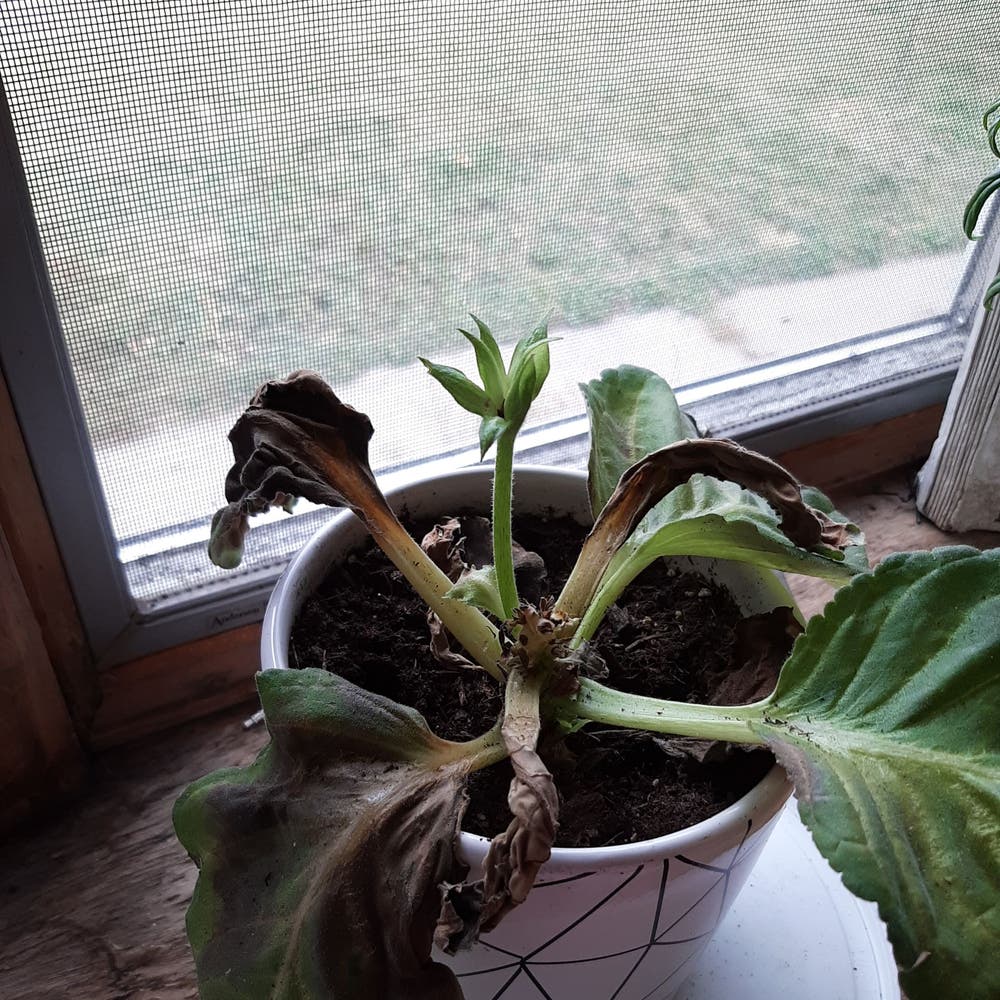
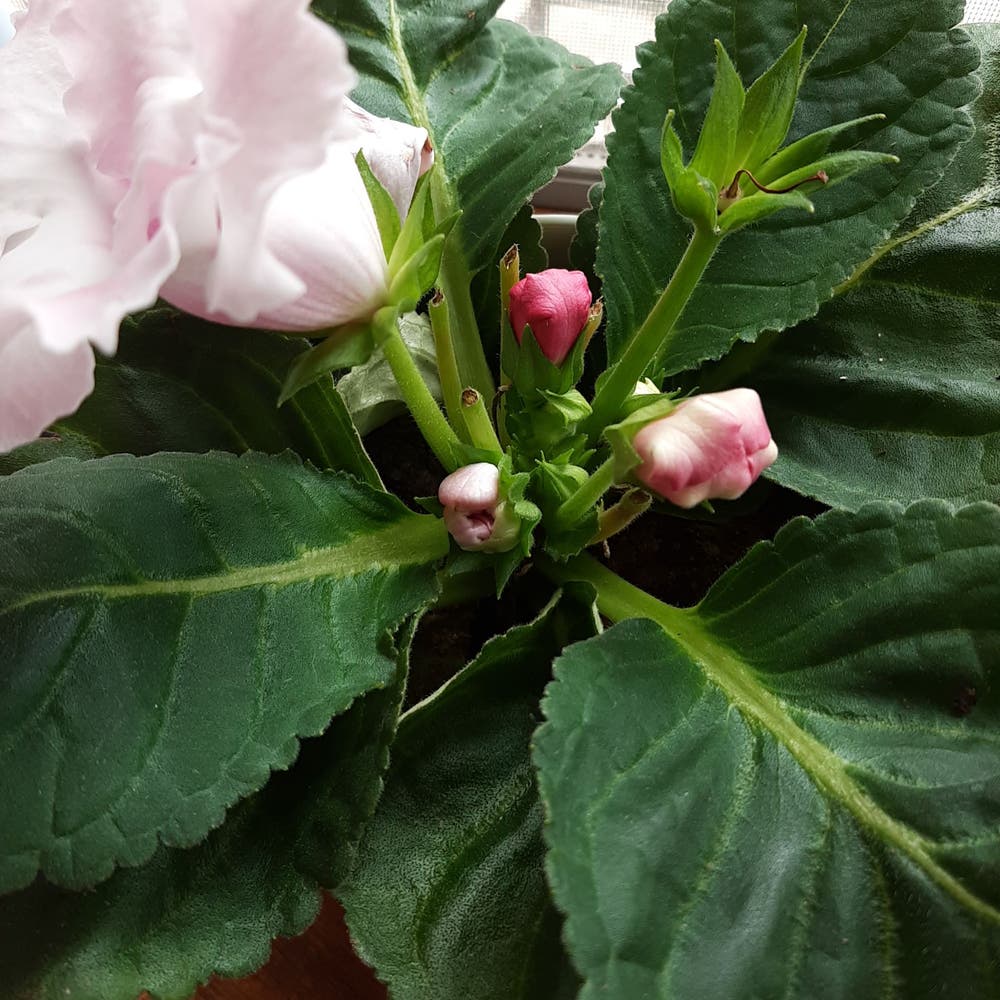
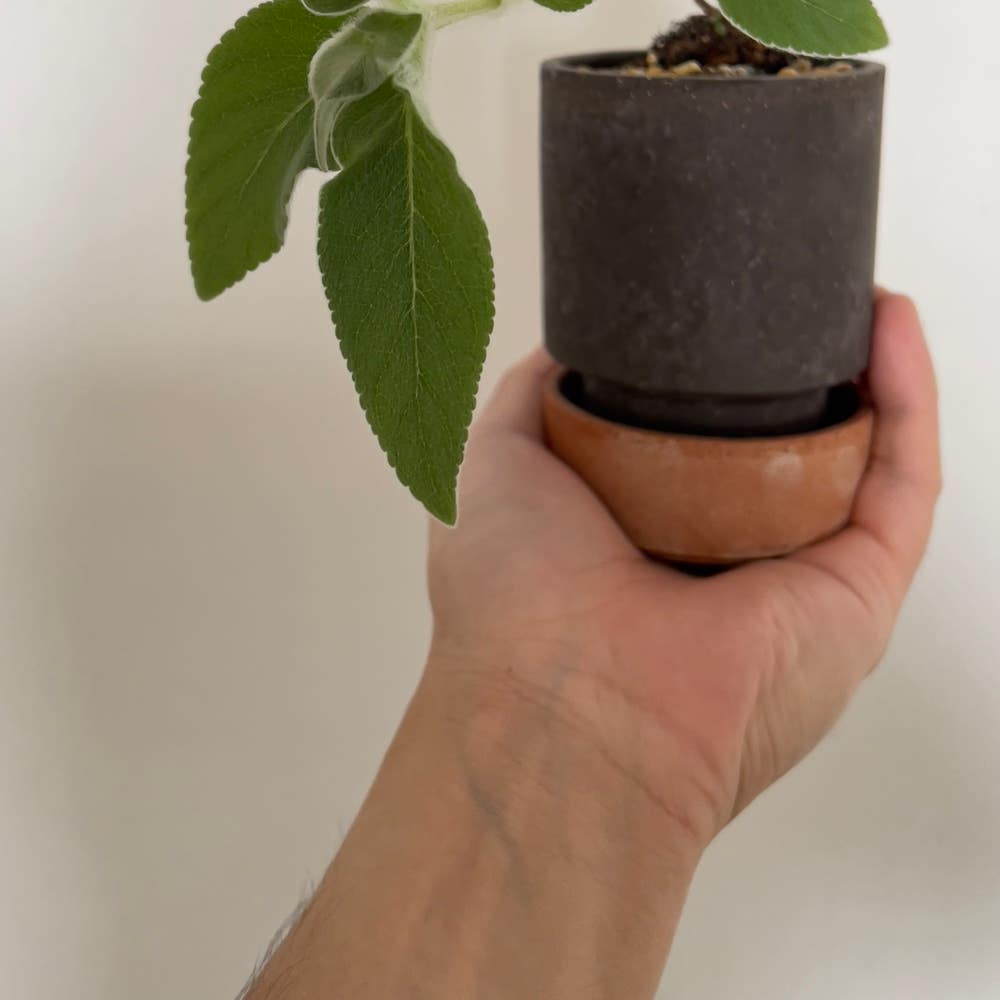
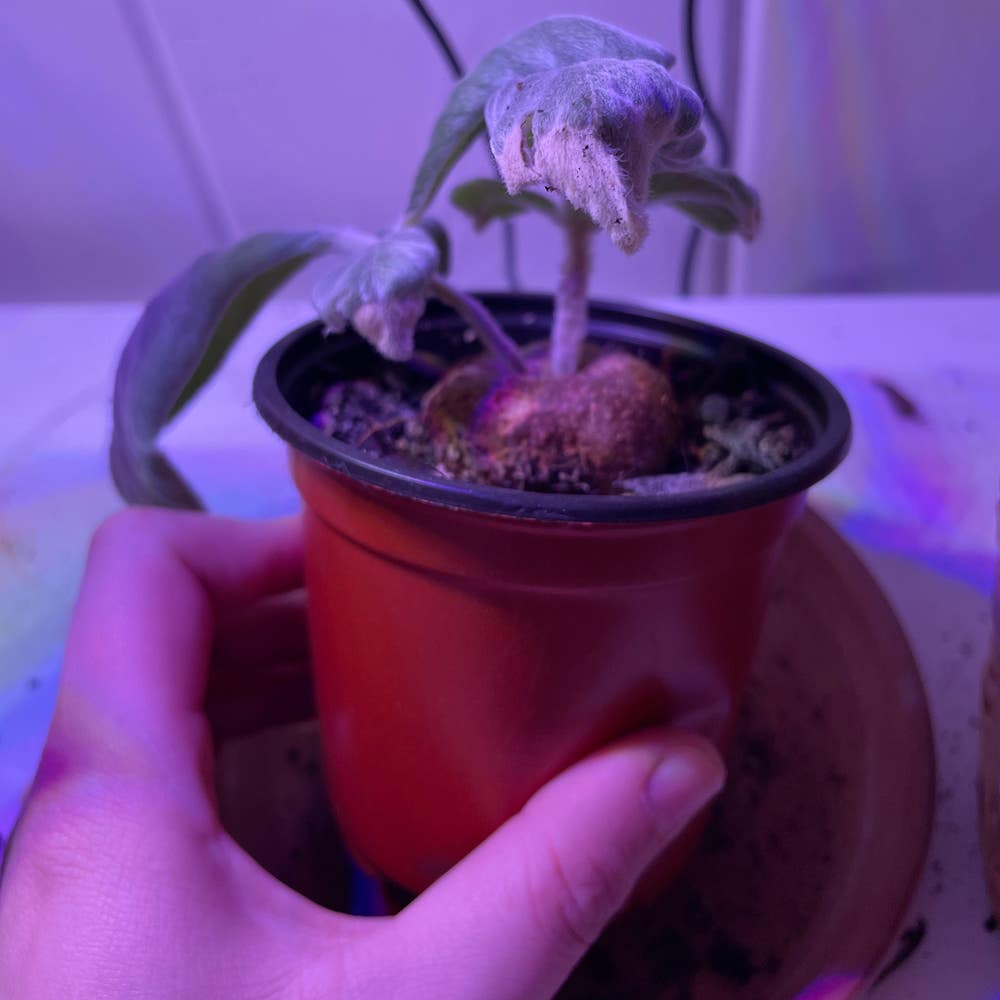
Understanding Curling Leaves on Your Sinningia 🐌
Sinningia allagophylla
By the Greg Editorial Team
Nov 23, 2024•5 min read
This article was created with the help of AI so we can cover more plants for you. May contain errors. See one? Report it here.
Transform your Sinningia's health and beauty by mastering the secrets to preventing leaf curl! 🌿
- 🌬️ High humidity (50-70%) is crucial to prevent curling leaves on Sinningia.
- 🌞 Bright, indirect light prevents leaf scorch; avoid direct sunlight exposure.
- 🐛 Inspect regularly for pests like aphids and spider mites to prevent leaf curl.
Causes of Leaf Curl
🌬️ Environmental Stress Factors
Sinningia, commonly known as gloxinia, thrives in high humidity levels between 50-70%. When humidity drops, the leaves may curl as the plant struggles to retain moisture.
Temperature also plays a crucial role. The ideal range is 20°C to 25°C (68°F to 77°F). If temperatures fall below 15°C (59°F), the plant can experience stress, leading to curling leaves.
Light conditions are equally important. Sinningia prefers bright, indirect light; too much direct sunlight can scorch the leaves, while insufficient light can weaken the plant, causing leaf curl.
🐛 Pests Affecting Sinningia
Pests can wreak havoc on your Sinningia, leading to noticeable leaf curl.
- Aphids are small, green insects that suck sap from leaves, resulting in curling and distortion.
- Spider mites are tiny, web-spinning pests that thrive in dry conditions, causing stippled leaves and curling.
- Mealybugs appear as white, cotton-like pests that can lead to leaf curl and yellowing.
Identifying these pests early is key to preventing further damage.
🦠 Diseases Leading to Leaf Curl
Diseases can also cause leaf curl in Sinningia.
Fungal infections, such as powdery mildew, create white powdery spots on leaves, leading to curling and distortion. Root rot, often caused by overwatering, affects root health and can result in leaf curl.
Viral infections present another challenge. Symptoms include mottled leaves and curling, and unfortunately, these infections are often incurable, necessitating plant removal.
Understanding these causes is essential for effective care and prevention. By addressing environmental stressors, pests, and diseases, you can help your Sinningia thrive and maintain its beautiful foliage.
Diagnosing the Problem
Assessing Environmental Conditions 🌡️
To keep your Sinningia thriving, start by checking humidity levels. Use a hygrometer to ensure the humidity is between 50-70%, as low humidity can lead to leaf curl.
Next, monitor the temperature. Your plant prefers a cozy range of 20°C to 25°C (68°F to 77°F); anything below 15°C (59°F) can stress it out.
Finally, evaluate light exposure. Sinningia loves bright, indirect light, so make sure it's not getting scorched by direct sunlight or left in the shadows.
Identifying Pests and Diseases 🐛
Inspecting your plant's leaves is crucial for catching issues early. Look for signs of pests like webbing or sticky residue, and check for diseases indicated by discoloration or spots.
Using a magnifying glass can be a game changer. It helps you spot tiny pests like spider mites and aphids that might be hiding in plain sight.
Evaluating Watering Practices 💧
Next, check the soil moisture. Stick your finger into the top inch of soil; it should feel slightly moist but not soggy.
Review your watering schedule to ensure you're meeting your plant's needs. Adjust based on environmental conditions to keep your Sinningia happy and healthy.
By diagnosing these key areas, you can tackle the underlying issues causing leaf curl. This proactive approach sets the stage for effective solutions and treatments.
Solutions and Treatments
🌱 Adjusting Environmental Conditions
Light and Humidity Adjustments
To help your Sinningia thrive, start by increasing humidity. You can achieve this by using a humidity tray filled with water and pebbles or by misting the plant regularly.
Next, adjust the light exposure. Move your plant to a spot where it receives bright, indirect light, which is crucial for its health.
Temperature Considerations
Maintaining stable temperatures is essential for your Sinningia. Avoid placing it near drafts or heat sources that can cause temperature fluctuations.
Use a thermometer to monitor the temperature, ensuring it stays within the ideal range of 20°C to 25°C (68°F to 77°F).
🐞 Pest Control Methods
Organic Options
For pest control, consider organic options like neem oil. This natural remedy is effective against aphids and spider mites; apply it every 7-14 days for best results.
Insecticidal soap is another safe choice for your Sinningia. Simply spray it directly on the affected areas to combat pests without harming the plant.
Chemical Options
If you face severe infestations, systemic insecticides can be a solution. Just be sure to follow the label instructions carefully to ensure safe and effective use.
🦠 Disease Management Strategies
Treatment Options for Common Diseases
Addressing fungal infections like powdery mildew requires specific treatments. Use fungicides and ensure proper air circulation around your plant to prevent recurrence.
For root rot, the first step is to remove any affected roots. Repot your Sinningia in fresh, well-draining soil and adjust your watering practices to avoid future issues.
By implementing these solutions and treatments, you can help your Sinningia recover from leaf curl and thrive in its environment. Next, let’s explore preventative measures to keep your plant healthy in the long run.
Preventative Measures
🌱 Best Practices for Sinningia Care
Proper Watering Techniques
Watering your Sinningia correctly is crucial for its health. Allow the top inch of soil to dry out before watering again to prevent overwatering.
Using distilled or rainwater can also be beneficial. This practice reduces the risk of chemical buildup in the soil, promoting healthier growth.
Soil and Potting Recommendations
Choosing the right soil is essential for your plant's well-being. Use a well-draining potting mix and consider adding perlite for better aeration.
Additionally, ensure that your pots have drainage holes. This prevents water accumulation, which can lead to root rot and other issues.
🔍 Regular Monitoring and Maintenance
Signs to Watch For
Regularly checking for pests and diseases is key to keeping your Sinningia healthy. Early detection can save your plant from severe damage.
Keep an eye on leaf health as well. Look for any changes in color, texture, or shape that might indicate a problem.
Seasonal Care Tips
Adjusting your care practices with the seasons can make a significant difference. For instance, increase humidity in winter when indoor air tends to be drier.
Also, establish a fertilization schedule. Using a balanced fertilizer during the growing season—spring and summer—supports robust growth and vibrant foliage.
By implementing these preventative measures, you can ensure your Sinningia thrives and remains free from leaf curl and other issues. Next, let’s explore how to diagnose problems effectively.
⚠️ Safety First
This content is for general information and may contain errors, omissions, or outdated details. It is not medical, veterinary advice, or an endorsement of therapeutic claims.
Always consult a qualified healthcare professional before using any plant as food, medicine, or supplement.
Never eat any plant (or feed one to pets) without confirming its identity with at least two trusted sources.
If you suspect poisoning, call Poison Control (800) 222-1222, the Pet Poison Helpline (800) 213-6680, or your local emergency service immediately.
Spotted an error? Please report it here.
Keep your Sinningia's leaves curl-free 🌿 by using Greg's tailored care tips and reminders to create the ideal environment for thriving growth!