How Do I Cure Paphiopedilum Fairrieanum Root Rot?
Paphiopedilum fairrieanum
By the Greg Editorial Team
Apr 06, 2024•4 min read
This article was created with the help of AI so we can cover more plants for you. May contain errors. See one? Report it here.
- 🌱 Yellow leaves and soft roots signal root rot in orchids.
- Sterilize tools, remove rot, and repot for recovery.
- Adjust watering, ensure air flow to prevent future root rot.
Spotting Trouble: Recognizing Root Rot in Your Orchid
🚩 Visual Red Flags
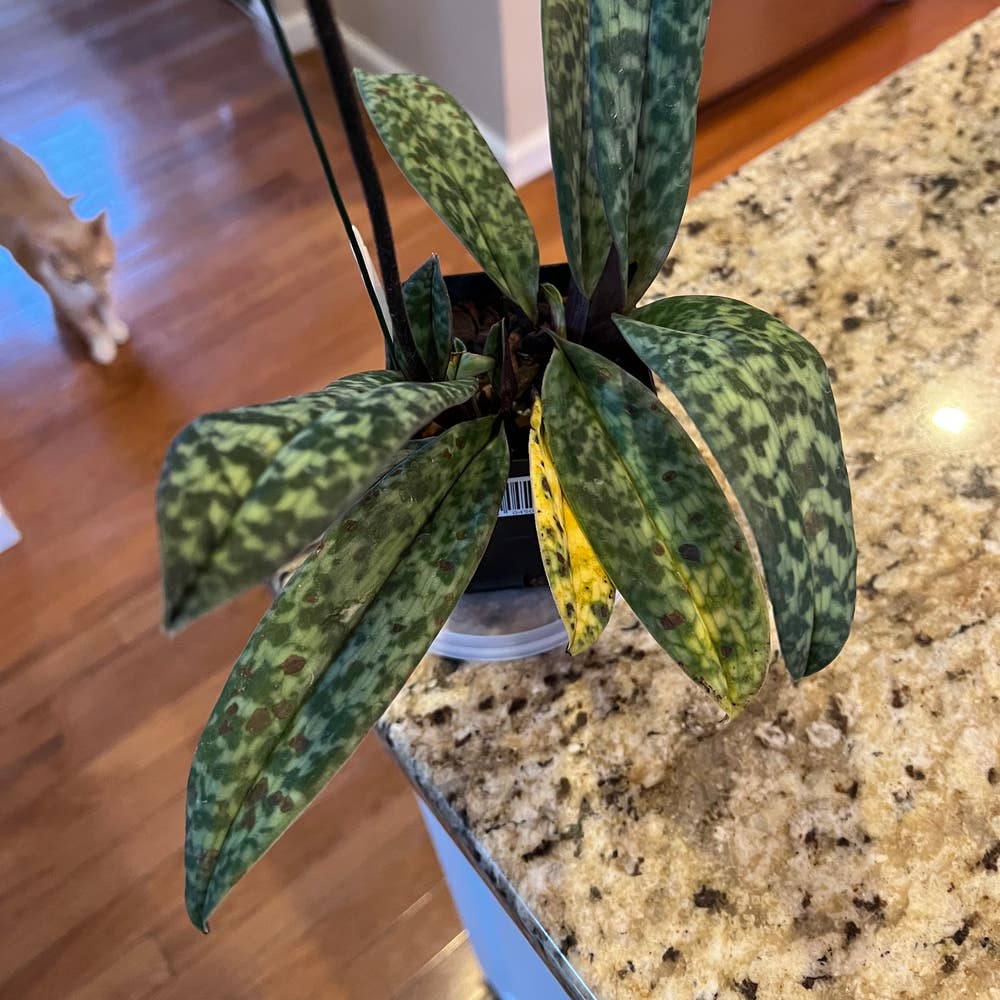
Yellowing leaves on your Paphiopedilum fairrieanum aren't a fashion statement; they're a distress signal. If your orchid's leaves are more yellow than green, it's time to perk up and pay attention. Wilting is another tell-tale sign that your plant's roots might be in trouble.
Soft, discolored roots are a clear indication of root rot. Healthy roots should be firm and a creamy white, not brown and mushy like overripe fruit.
🕵️ Getting to the Root of It
To inspect your orchid's roots, you'll need to channel your inner surgeon. Use sterile tools to avoid spreading any potential disease. Gently remove the plant from its pot and examine the roots. Healthy ones will be firm and white, while rotten ones will feel as disappointing as a deflated balloon.
Remember, catching root rot early can save your orchid from an untimely demise. Keep your senses sharp, and your orchid might just reward you with robust health and vibrant blooms.
First Response: Immediate Care for Root Rot
🏥 Cutting to the Chase
When root rot rears its ugly head, it's time to channel your inner surgeon. First, yank your Paphiopedilum fairrieanum out of its pot like you're unveiling a magic trick. But gently—no one likes a rough magician. Next, scrutinize those roots. Healthy ones boast a firm, white appearance, while the rotten ones are as appealing as overcooked noodles. Snip the bad ones with sterilized scissors; think of it as pruning the dead weight. Remember, cleanliness is next to orchidliness, so keep everything sterile to avoid spreading the funk.
🌱 The Right Environment for Recovery
Now, let's talk real estate for your orchid's roots. The pot is their home, so make it cozy. Terracotta pots are the MVP here, balancing moisture like a pro. As for the potting mix, aim for a fluffy, airy concoction—think 60% orchid bark with a sprinkle of charcoal, perlite, and pumice. Repotting is like tucking your orchid into bed. Spread the roots gently, tuck them in with the mix, and water to settle them down. It's a fresh start in a comfy pot—orchid rehab at its finest.
Water Wisely: Adjusting Your Watering Habits
💧 Finding the Balance
Watering your Paphiopedilum fairrieanum isn't about sticking to a rigid schedule. It's about tuning into your orchid's needs and responding to environmental cues. Hotter months may call for more frequent watering, while cooler times demand restraint.
🌱 Techniques to Ensure You're Not Overdoing It
Lift and learn: Pick up the pot. If it feels lighter than you'd expect, it's probably time for a drink. Conversely, if it's got some heft, hold off on the H2O.
Top inch test: Stick your finger into the potting mix. Dry at the top inch? Time to water. Still moist? Your orchid can wait.
Moisture meters: For those who love gadgets, a moisture meter can take the guesswork out of the equation. It's like a hydration barometer for your plant's soul.
Observation is key: Keep an eye on your orchid's leaves. They should be firm and upright. Limp or wrinkled leaves might signal dehydration, while yellowing or soft spots could indicate overwatering.
Remember, it's a dance, not a march. Adjust your steps to the rhythm of the seasons, and your orchid will thank you with robust health and stunning blooms.
Keeping Root Rot at Bay: Prevention Strategies
🌱 Cultivating Healthy Growth
Good air circulation is critical for preventing root rot. It's like giving your roots their own personal space to thrive. Ensure your Paphiopedilum fairrieanum isn't suffocating in still air by placing it in an area with gentle airflow.
Moisture control is a balancing act. Too much and you're asking for trouble; too little and your orchid will protest. Use a hygrometer to keep tabs on humidity levels, aiming for that perfect middle ground.
🕵️ Monitoring and Adjusting Care Routines
Regularly monitoring your orchid's environment is non-negotiable. It's about catching issues early, like a plant detective on the lookout for clues of distress. Adjust your watering schedule with the seasons—orchids have different needs throughout the year.
Repotting in a well-draining mix is a long-term defense strategy. Choose a mix that allows roots to breathe and water to flow freely. Remember, a pot with drainage holes isn't just a recommendation; it's a necessity for healthy roots.
Rotate your orchid occasionally to ensure even growth and prevent disease from taking hold. It's a simple move that can make a big difference in your plant's health.
Consider alternative irrigation methods like trickle irrigation for precise water management. It's about giving your orchid the right amount of water at the right time, nothing more, nothing less.
Keep your gardening tools clean to avoid introducing pathogens. It's a simple step that's often overlooked but can be the difference between a healthy plant and one fighting for survival.
⚠️ Safety First
This content is for general information and may contain errors, omissions, or outdated details. It is not medical, veterinary advice, or an endorsement of therapeutic claims.
Always consult a qualified healthcare professional before using any plant as food, medicine, or supplement.
Never eat any plant (or feed one to pets) without confirming its identity with at least two trusted sources.
If you suspect poisoning, call Poison Control (800) 222-1222, the Pet Poison Helpline (800) 213-6680, or your local emergency service immediately.
Spotted an error? Please report it here.
Combat orchid root rot by recognizing early signs and optimizing care, while Greg 🛠 tailors your watering routine to keep your blooms thriving.