Why Are My Paphiopedilum fairrieanum Leaves Mushy?
Paphiopedilum fairrieanum
By the Greg Editorial Team
Apr 06, 2024•3 min read
This article was created with the help of AI so we can cover more plants for you. May contain errors. See one? Report it here.
- 🚿 Overwatering? Yellow leaves and mushy roots signal too much water.
- 🌱 Improve drainage with terracotta pots and a perlite-infused soil mix.
- 🛡️ Prevent infections with proper watering, drainage, and targeted fungicides/bactericides.
Spotting the Trouble: Signs Your Paphiopedilum fairrieanum is Too Wet
💧 Overwatering Symptoms
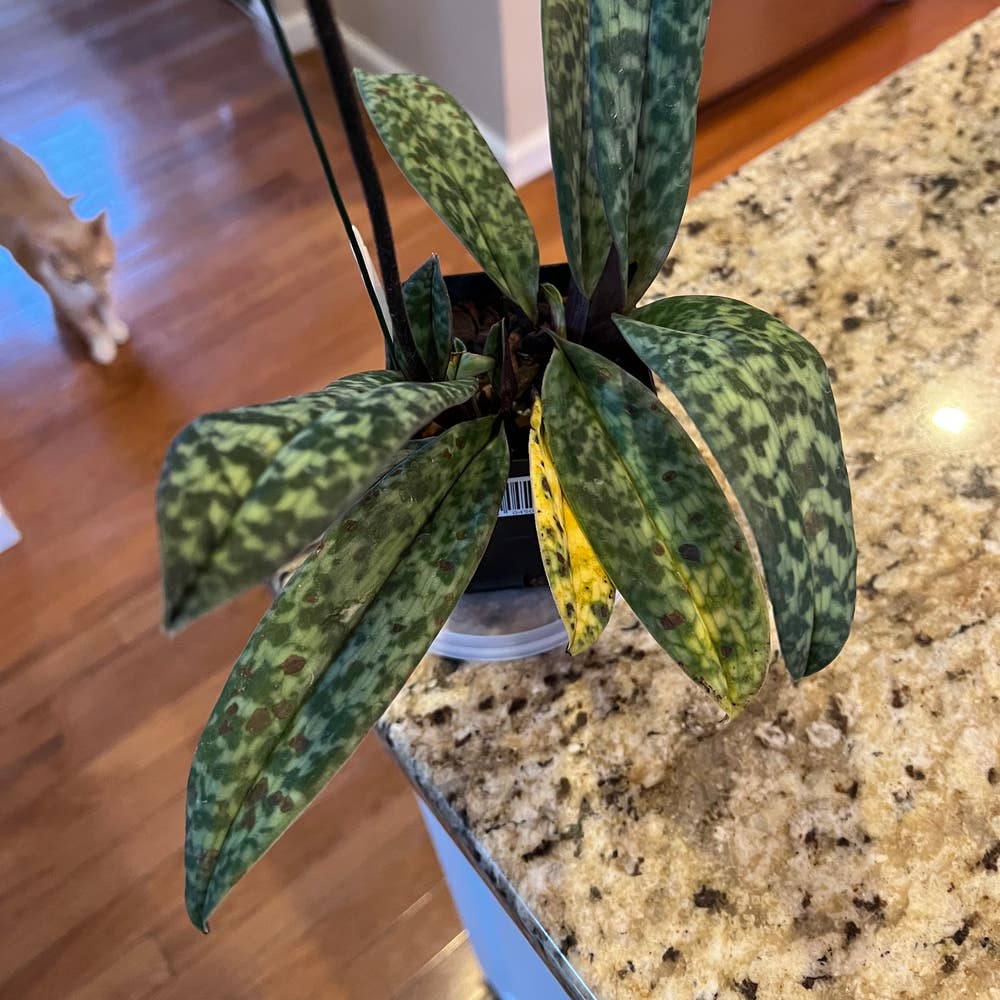
Yellow leaves waving the white flag of surrender are your first clue. If the roots of your Paphiopedilum fairrieanum have turned from a healthy white to a mushy brown, you're likely loving it to death with water.
🚰 Drainage Dilemmas
A pot that's heavier than your last breakup is a sign of water that's not escaping. Foul smells emanating from the potting mix are your orchid crying out for help.
🦠 Infection Indicators
Spots on leaves with a yellow halo are like unwanted tattoos indicating fungal issues. If the edges of leaves look crispy, your plant is not just throwing a tantrum—it's likely suffering from an infection.
First Aid for Mushy Leaves
💧 Adjusting Your Watering Technique
Overwatering is a silent killer for Paphiopedilum fairrieanum. To start the rescue mission, let the top inch of soil dry out before you even think about watering again. Use the finger test or a chopstick to check for moisture. If it comes out clean, you're clear to proceed with a conservative amount of water.
🏡 Upgrading Your Plant's Living Quarters
Your plant's pot is its castle, and it needs good drainage to keep the roots from drowning. Consider a terracotta pot for its breathability or a plastic one with ample drainage holes. The soil mix should be light and airy; think a blend with perlite or pumice. If you're repotting, be gentle. It's not a race, it's precision surgery for your plant's roots.
🦠 Infection Intervention
If your plant's leaves are mushy, it might be waving a white flag due to an infection. Fungicides or bactericides can be the cavalry here, but choose wisely. Copper-based fungicides are your go-to for fungal infections, while bactericides will battle bacterial ones. Always follow the label like it's the law of the land. After treatment, monitor your plant's recovery like it's the only channel on TV.
Building a Mushy-Proof Care Routine
💧 Watering Wisdom
Crafting the perfect watering schedule is crucial for your Paphiopedilum fairrieanum's health. It's not about marking days on a calendar; it's about observing your plant's needs. Begin by checking the soil moisture; if the top inch is dry, it's time to water. Remember, these orchids prefer consistency, but they also need you to be adaptable. Light, humidity, and temperature changes will affect their watering needs.
🌱 Pot and Mix Mastery
Selecting the right pot and potting mix is like choosing a good home for your plant—it needs to be comfortable and functional. Go for a pot with drainage holes and avoid the myth of a gravel layer at the bottom; it's useless for preventing waterlogging. Your potting mix should be airy and well-draining, think of a mix that's one part peat moss, one part perlite, and one part vermiculite. This combination ensures optimal drainage and aeration, keeping your Paphiopedilum fairrieanum's roots healthy and preventing mushy leaves.
⚠️ Safety First
This content is for general information and may contain errors, omissions, or outdated details. It is not medical, veterinary advice, or an endorsement of therapeutic claims.
Always consult a qualified healthcare professional before using any plant as food, medicine, or supplement.
Never eat any plant (or feed one to pets) without confirming its identity with at least two trusted sources.
If you suspect poisoning, call Poison Control (800) 222-1222, the Pet Poison Helpline (800) 213-6680, or your local emergency service immediately.
Spotted an error? Please report it here.
Revive your overwatered Paphiopedilum fairrieanum and prevent future sogginess with Greg's tailored watering reminders 🌱 and drainage tips!