Why Are My Paphiopedilum fairrieanum Leaves Falling Over?
Paphiopedilum fairrieanum
By the Greg Editorial Team
Apr 06, 2024•4 min read
This article was created with the help of AI so we can cover more plants for you. May contain errors. See one? Report it here.
- Yellowing and drooping leaves signal your orchid's distress.
- Balance water and light to prevent overwatering and ensure proper exposure.
- Inspect roots and repot for a firm, healthy foundation.
Spotting the Signs: Is Your Paphiopedilum fairrieanum Unhappy?
🚨 Visual Symptoms of Distress
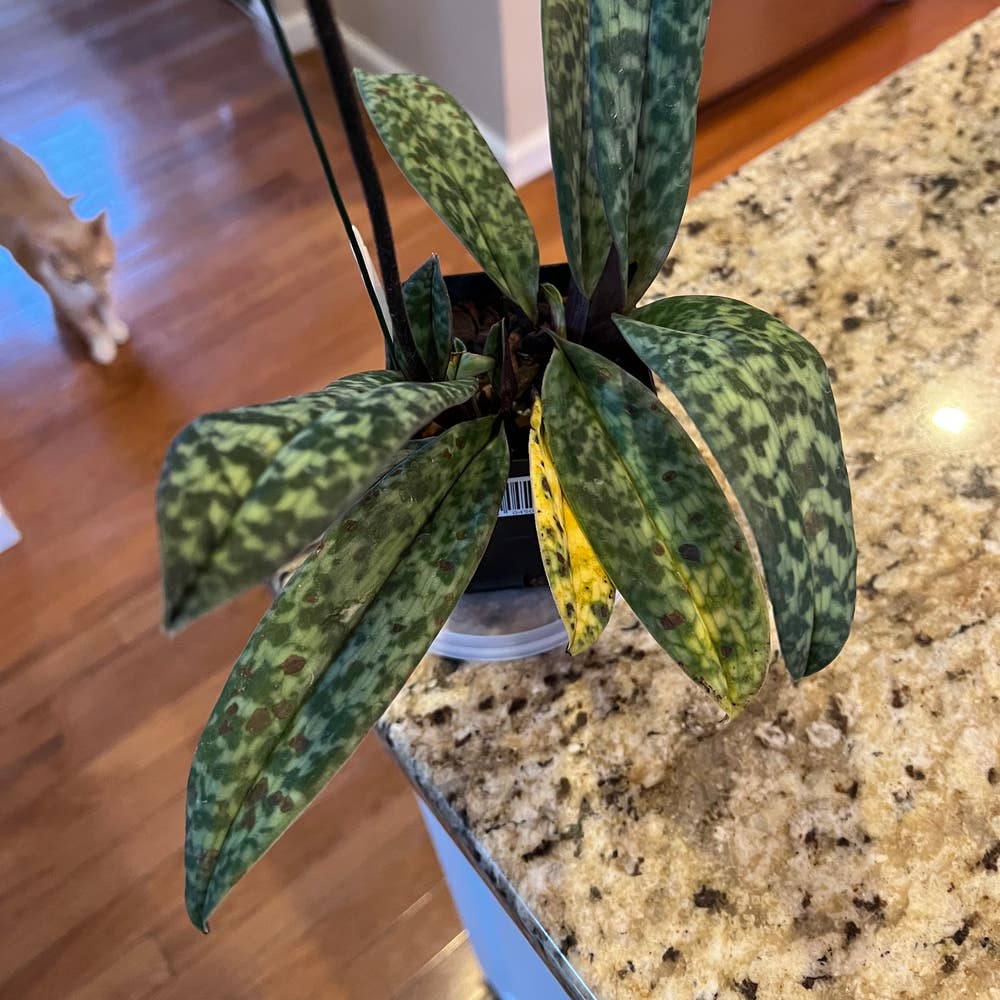
Yellowing leaves on your Paphiopedilum fairrieanum should set off alarm bells. Not a fashion choice, but a distress signal. Wilting or drooping leaves are your orchid's way of saying, "Hey, I'm struggling here!" It's like a visual SOS—ignore it at your peril.
🌿 Environmental Stress Signals
If your Paphiopedilum fairrieanum's leaves are as limp as overcooked spaghetti, it's time to reassess its environment. Too much sun and your plant's leaves might look like they've been sunbathing too long—crispy and bleached. Not enough light? You'll see your orchid stretching out like it's trying to snag the remote from across the room. Temperature tantrums are also a thing—leaves dropping faster than a mic at a rap battle could mean your orchid is too hot or too cold.
Water Woes: Finding the Balance for Your Orchid
💦 The Perils of Overwatering
Overwatering can turn your Paphiopedilum fairrieanum's home into a swampy nightmare. Root rot is the grim reaper here, sneaking up on unsuspecting plants. If your orchid's pot feels heavier than your last dumbbell set, it's time to reassess your watering game.
🚰 Ensuring Proper Drainage
To combat the bogs, ensure your pot has drainage holes. No holes? You're basically drowning your orchid in a ceramic bathtub. Get a pot that lets the water run free, or you'll be orchestrating a root funeral.
Adjusting Watering Habits
Your orchid isn't a cactus; it can't store water for the dry spells. But it's not a fish either; it doesn't need to swim. Touch the soil; if it clings to your finger like a wet sock, skip the watering can. If it's drier than a stand-up comedian's wit, it's time for a drink.
🏜️ The Risks of Underwatering
Underwatering is the silent drought your Paphiopedilum fairrieanum never signed up for. Wrinkled leaves are the SOS flags, signaling a thirst that's been ignored for too long.
Establishing a Consistent Watering Schedule
Consistency is key. Orchids thrive on routine, not surprises. Set a watering schedule that aligns with the rhythms of your home environment. Think of it as setting a coffee date with your plant—regular, anticipated, and necessary for survival.
💧 Humidity Control
If your home is drier than a British comedy, consider a humidity tray. It's like a spa day for your orchid, keeping it plump and happy. Remember, a dehydrated orchid is as sad as a raincloud with no job. Keep the air around it as moist as a morning dew.
By striking the right balance between over and under-watering, you'll keep your Paphiopedilum fairrieanum's leaves standing tall and proud, rather than flopping over like a defeated umbrella.
Let There Be Light: Setting the Stage for Strong Leaves
💡 Ideal Light Conditions
Bright, indirect light is the sweet spot for your Paphiopedilum fairrieanum. It's like a secret handshake between you and your orchid; get it right, and you're in the club. Aim for a spot that mimics the dappled sunlight of the orchid's natural habitat. Direct sun is a no-go; it's the equivalent of putting your plant in a fryer.
💫 Adjusting Plant Placement
Finding the perfect spot for your Paphiopedilum fairrieanum can be a bit of a Goldilocks situation. Too much sun, and you'll have a crispy critter on your hands; too little, and it's goodbye, vibrant leaves. Rotate your plant to ensure even light exposure, but do it with the finesse of a safe cracker. Remember, a sudden move from shade to sun is like jumping into a cold pool—it's a shock. Transition gradually to avoid leaf burn.
Root Rescue: Ensuring a Firm Foundation
🌱 Inspecting and Caring for Roots
Healthy roots are your orchid's lifeline. When inspecting, look for firm and white roots; this is a sign of good health. Mushy, brown, or black roots are a distress signal. If you encounter the latter, it's time for some root rehab. Use sterile scissors to trim away the rot, but don't overdo it—think precision, not hacking.
🌷 The Right Time to Repot
Repotting is like a wellness retreat for your plant's roots. Timing is crucial; do it when growth is active, typically in the spring. Choose a pot that's cozy but not cramped—your plant isn't looking for a mansion, just a comfortable space to grow. Well-draining soil is non-negotiable; it's the foundation of a healthy root system. Remember, a pot with drainage holes is your best friend here, preventing water from overstaying its welcome.
⚠️ Safety First
This content is for general information and may contain errors, omissions, or outdated details. It is not medical, veterinary advice, or an endorsement of therapeutic claims.
Always consult a qualified healthcare professional before using any plant as food, medicine, or supplement.
Never eat any plant (or feed one to pets) without confirming its identity with at least two trusted sources.
If you suspect poisoning, call Poison Control (800) 222-1222, the Pet Poison Helpline (800) 213-6680, or your local emergency service immediately.
Spotted an error? Please report it here.
Ensure your Paphiopedilum fairrieanum thrives with upright leaves 🍃 by letting Greg assist with tailored light and watering reminders based on your orchid's needs!