Why Are My Paphiopedilum fairrieanum Leaves Curling?
Paphiopedilum fairrieanum
By the Greg Editorial Team
Apr 06, 2024•4 min read
This article was created with the help of AI so we can cover more plants for you. May contain errors. See one? Report it here.
- Environmental stressors like light and humidity imbalances cause leaf curling.
- Water wisely to prevent over/underwatering-induced leaf curling.
- Pests and diseases need early detection and treatment to stop curling.
Spotting the Signs: When Your Paphiopedilum fairrieanum Leaves Start to Curl
🌀 Identifying Leaf Curling
Leaf curling in Paphiopedilum fairrieanum can be subtle or pronounced. Initially, you might notice a slight inward roll or a change in the leaf's texture. Early signs include a loss of the leaf's natural flatness and a tendency to bend or twist in an unusual manner.
Assessing the Severity
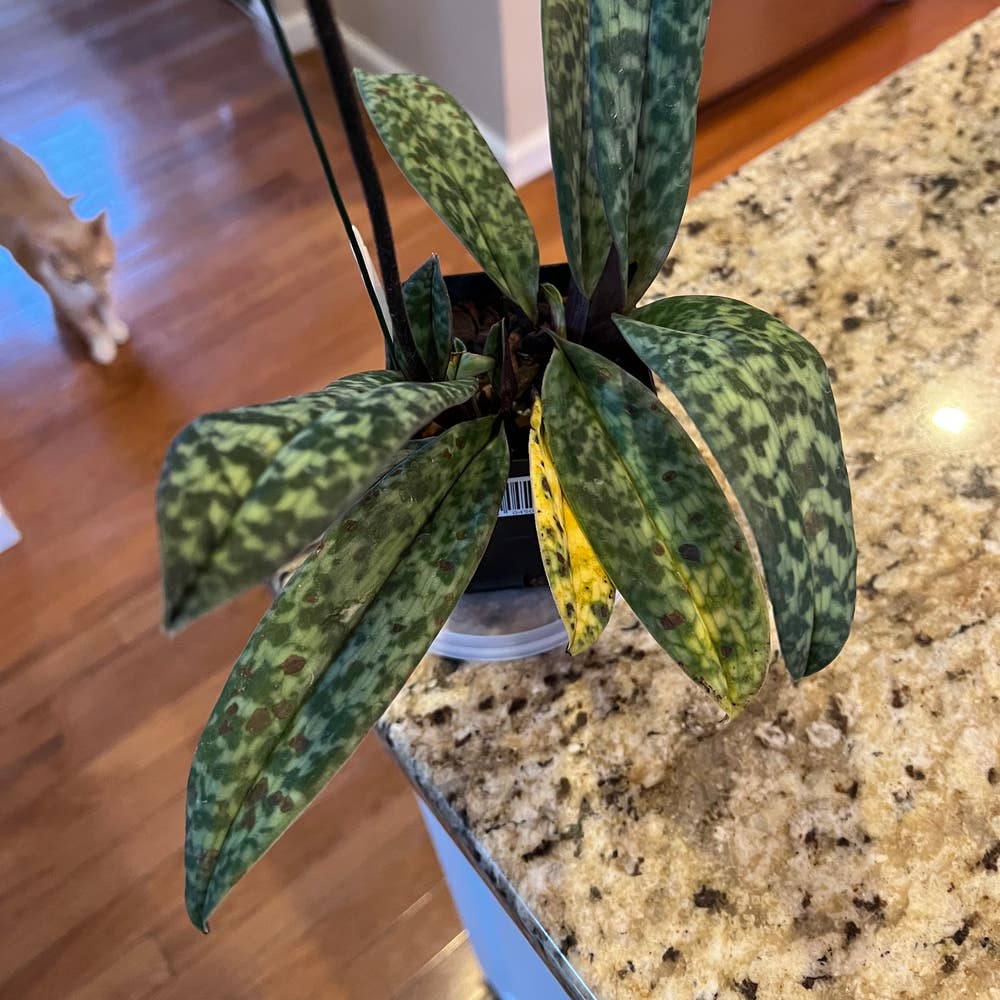
The severity of leaf curling can range from a gentle wave to a tight spiral. Extent of curling matters; a slight curl may just require a small tweak in care, while severe curling could indicate a more serious health issue. Pay attention to additional symptoms like discoloration or a brittle texture, as these can signal the need for immediate action.
The Usual Suspects: Common Causes of Leaf Curling
🌞 Environmental Stressors
Light, temperature, and humidity imbalances are the trifecta of trouble for Paphiopedilum fairrieanum leaves. Too much sun can make leaves curl up like they're trying to hide, while not enough light has them reaching for the stars. Keep your plant basking in bright, indirect light to avoid these extremes.
Temperature swings can send your plant into a tizzy, with leaves curling up tighter than a miser's fist. Aim for a steady climate—no drafts, no direct heat sources, just a cozy, consistent microclimate.
Humidity is the silent player in the room. Too low, and your leaves curl up, hoarding moisture like a miser with gold. Too high, and you might as well be swimming with the leaves. Keep it balanced, between 40%-60%, to avoid turning your Paphiopedilum fairrieanum into a drama queen.
💧 Thirsty Roots or Waterlogged Soil?
Watering is like a dance—too much or too little, and you'll step on your plant's toes. Overwatering leads to waterlogged soil and sad, curled leaves. Underwatering? Your plant's leaves will curl upwards, reaching for the clouds. Check the soil before watering—your plant's thirst level should dictate your actions.
Finding the watering sweet spot is crucial. Think of it as a steady rain shower, not a flood. Let the water penetrate the soil evenly, then allow excess to drain. This method encourages deep root growth and helps prevent leaf curling. Remember, watering deeply and less frequently encourages deep root growth, which helps stabilize moisture uptake.
Unwanted Guests: Pests and Diseases Leading to Leaf Curling
🐞 Pests That Love Your Paphiopedilum fairrieanum
Aphids, spider mites, and mealybugs are the usual suspects when it comes to pests. These critters are like the worst kind of party guests: they show up uninvited, eat all the food, and leave a mess behind. In the plant world, that mess is leaf curling. Check the undersides of leaves and between crevices for signs of these pests. You might see webbing, sticky residues, or the bugs themselves. Early detection is key, so make regular inspections a part of your plant care routine.
🦠 Diseases That Cause Leaves to Curl
Fungal infections often come with their own set of visual cues, like concentric rings or powdery coatings. Bacterial issues might show up as water-soaked spots. If you spot these signs, it's time to act fast. Remove affected leaves and isolate the plant to prevent the spread. Fungicides can be the equivalent of antibiotics for your plant—use them wisely and as a last resort. Remember, prevention is better than cure, so keep your plant's environment clean and well-ventilated to ward off these diseases.
Nurturing Practices: Cultural Care to Prevent Leaf Curling
💡 The Right Nutrition
Balanced fertilization is key to preventing leaf curl in Paphiopedilum fairrieanum. Over-fertilization can lead to nutrient lockout, much like how cramming too much food in a blender can stall the blades.
To keep leaves flat and healthy, use a water-soluble, balanced fertilizer sparingly. Think of it as a vitamin pill for your plant – necessary but not in excess.
🧼 Plant Hygiene and Care
Cleanliness is next to godliness, especially in plant care. Regular maintenance can thwart leaf curling by keeping environmental stressors at bay.
Inspect your Paphiopedilum fairrieanum regularly for dust and pests. A clean plant is a happy plant, less likely to succumb to the curl.
⚠️ Safety First
This content is for general information and may contain errors, omissions, or outdated details. It is not medical, veterinary advice, or an endorsement of therapeutic claims.
Always consult a qualified healthcare professional before using any plant as food, medicine, or supplement.
Never eat any plant (or feed one to pets) without confirming its identity with at least two trusted sources.
If you suspect poisoning, call Poison Control (800) 222-1222, the Pet Poison Helpline (800) 213-6680, or your local emergency service immediately.
Spotted an error? Please report it here.
Banish leaf curl 🍃 in your Paphiopedilum fairrieanum by letting Greg tailor the ideal care routine to keep your orchid thriving.