Why Are There Brown Spots on My Paphiopedilum fairrieanum?
Paphiopedilum fairrieanum
By the Greg Editorial Team
Apr 06, 2024•4 min read
This article was created with the help of AI so we can cover more plants for you. May contain errors. See one? Report it here.
- Disease may cause brown spots; take immediate action upon detection.
- Fungal and bacterial infections are common culprits; use fungicides and pruning.
- Prevent with proper care: adjust light, moisture, airflow, and regular maintenance.
Spotting the Trouble: Identifying Brown Spots
🍂 Visual Symptoms of Brown Spots
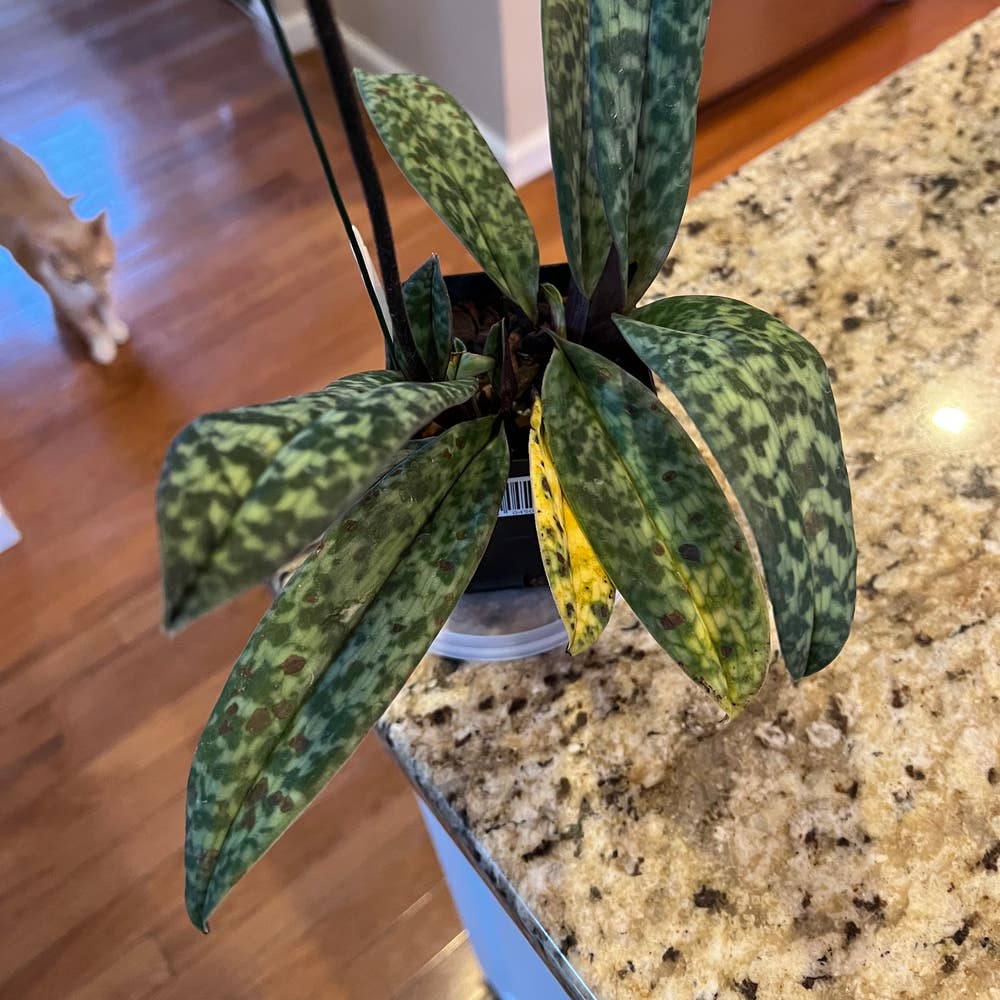
Brown spots on Paphiopedilum fairrieanum leaves can be alarm bells. They might start as tiny specks and can grow into larger patches. Distinct edges or a yellowish halo could spell trouble, indicating disease. The spots may appear anywhere on the leaf and vary in size, but a consistent pattern of irregular blotches is a clear sign of distress.
🚨 Immediate Steps Upon Detection
When you first spot these blemishes, isolate your plant to prevent any potential spread. Snap a photo for a visual record and compare it to online resources to match symptoms. Monitor the spots for changes in size or number, which can help gauge the severity. Immediate action can mean the difference between a quick fix and a drawn-out battle for your plant's health.
Rooting Out the Causes
🍄 Fungal Foes
Fungal infections are the unseen invaders of your Paphiopedilum fairrieanum, often leaving behind the dreaded brown spots. Circular lesions or a powdery substance on leaves? That's their calling card. These culprits love moist, stagnant air, so if your plant's leaves are looking like a crime scene, it's time to inspect your humidity levels.
🦠 Bacterial Bullies
Bacterial infections are more like the stealthy spies of the plant world, slipping in unnoticed and wreaking havoc. They leave behind water-soaked spots often surrounded by a yellow halo. These spots can quickly turn your plant's leaves to mush, so it's critical to act swiftly. Overwatering and poor drainage are practically a VIP invite for these pathogens.
🌿 Environmental Stress Signals
Environmental factors are the silent stressors in the life of your Paphiopedilum fairrieanum. Too much direct sunlight can cause brown patches, while temperature fluctuations and drought conditions can weaken your plant's defenses. These stressors can make your plant an easy target for fungal and bacterial invaders. Keep an eye on your plant's living conditions to ensure they're not rolling out the red carpet for these unwelcome guests.
Crafting the Cure: Treatment Strategies
🍄 Fungicide to the Rescue
Timing is critical when it comes to fungal infections. At the first hint of brown spots, reach for a fungicide. Copper-based products are a solid choice, but don't get too cozy with just one; rotate your fungicides to prevent resistance. Apply them with the precision of a watchmaker, ensuring every leaf is covered but not soaked. Suit up in safety gear—this isn't a fashion statement, it's about handling chemicals responsibly.
🦠 Battling Bacteria
When bacteria crash the party, it's time to get surgical. Prune the affected areas with the focus of a laser beam, and sterilize your tools after each cut to avoid spreading the infection. Copper-based bactericides can be your knights in shining armor, but they're not foolproof. Match the bactericide to the bacteria you're dealing with, and apply it with the strategy of a chess grandmaster. Remember, overuse is your enemy; use bactericides judiciously to sidestep the rise of superbugs.
💆 Stress Busters
Environmental stress can turn your Paphiopedilum fairrieanum's leaves into a brown-spot gallery. Light and moisture are your dials to adjust; aim for bright but indirect light, and water at the base to keep those leaves dry. Airflow is your ace in the hole—space out your plants to avoid a mosh pit of disease. Think of these adjustments as setting the perfect ambiance for your plant's health. Keep the environment stress-free, and your plant will thank you with spotless leaves.
Prevention: Keeping Brown Spots at Bay
🌱 Cultural Practices for Healthy Leaves
Cleanliness isn't just next to godliness; it's plant protection 101. Keep your Paphiopedilum fairrieanum's environment debris-free to cut down on disease-causing party crashers. Spacing is crucial – think of your plant's leaves as introverts that thrive with a little elbow room. Overcrowding is the fast-track to a fungal rave.
Mulching can be a game-changer, maintaining moisture without turning your pot into a fungal hotspot. Airflow is the unsung hero here; good circulation is like giving your plant a breath of fresh air, literally. And don't forget soil pH – neutral is the sweet spot to keep those pesky pathogens at bay.
🕵️ Monitoring and Maintenance
Regular check-ups are the heartbeat of prevention. Like a plant detective, keep a keen eye out for the early signs of trouble. Watering at the base keeps the leaves dry and uninviting for fungal freeloaders. And when it comes to pruning, think of yourself as a surgeon – sterilize those shears and remove only what's necessary.
Sanitation is your garden's daily hygiene routine. Fallen leaves? Gone. Dead foliage? History. It's like taking out the trash – do it often, and you'll keep the pests and diseases from settling in. And remember, prevention isn't a one-off chore; it's the continuous backdrop to your plant care symphony.
⚠️ Safety First
This content is for general information and may contain errors, omissions, or outdated details. It is not medical, veterinary advice, or an endorsement of therapeutic claims.
Always consult a qualified healthcare professional before using any plant as food, medicine, or supplement.
Never eat any plant (or feed one to pets) without confirming its identity with at least two trusted sources.
If you suspect poisoning, call Poison Control (800) 222-1222, the Pet Poison Helpline (800) 213-6680, or your local emergency service immediately.
Spotted an error? Please report it here.
Eradicate brown spots 🛡 on your Paphiopedilum fairrieanum with Greg's custom care plans and real-time support from our plant pros!