🧚 Why Are My Paphiopedilum fairrieanum Leaves Dropping?
Paphiopedilum fairrieanum
By the Greg Editorial Team
Apr 06, 2024•4 min read
This article was created with the help of AI so we can cover more plants for you. May contain errors. See one? Report it here.
- Overwatering and underwatering both lead to leaf drop; know the signs.
- 🌡️🌿 Mimic natural habitat with correct temperature, humidity, and air circulation.
- 🐞 Combat pests with inspections, horticultural oils, and natural predators.
When Too Much Love Leads to Loss: Overwatering
💧 Spotting the Signs of Overwatering
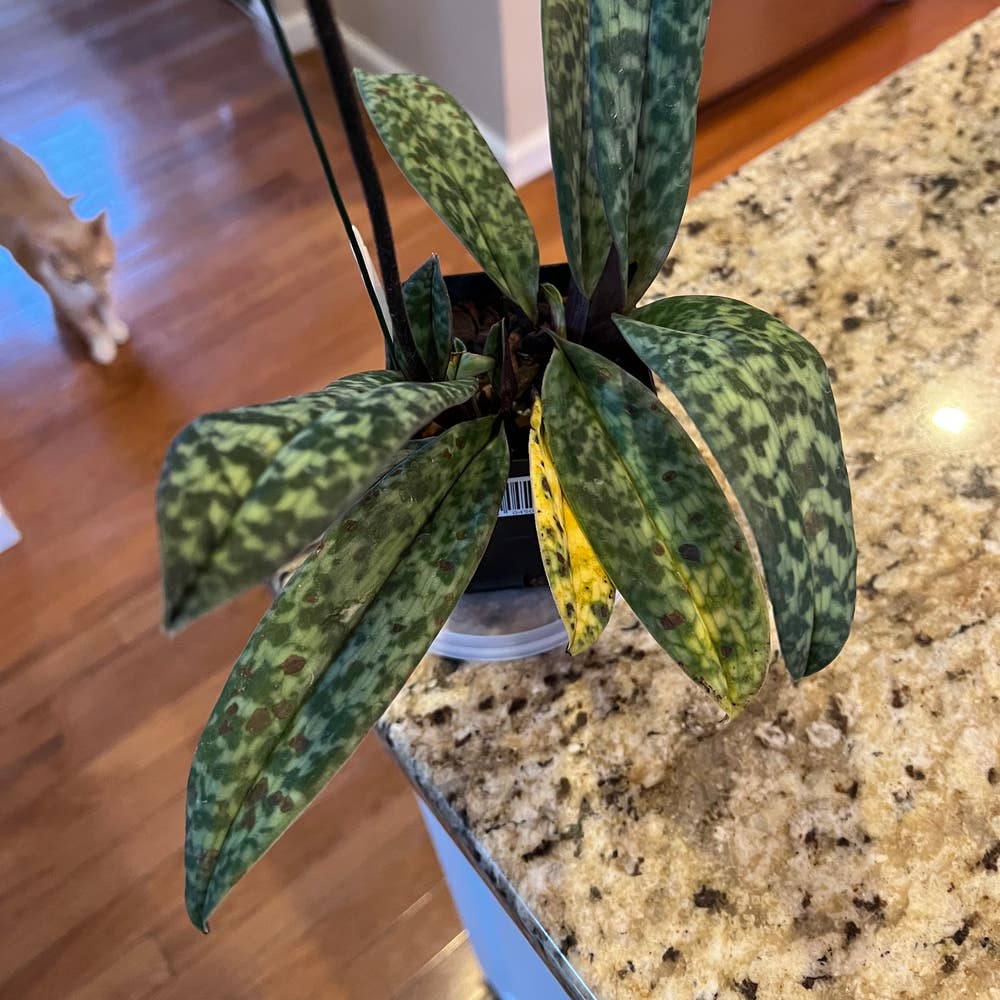
Overwatering can turn your Paphiopedilum fairrieanum from a tropical treasure into a wilted woe. Yellowing leaves at the base are your first red flag. If the pot feels like it's retaining more water than a camel's hump, you've gone too far. Soggy soil is a telltale sign; it should never feel like a wet sponge. Roots should be firm and white, not dark and mushy like overcooked noodles. A musty smell? That's the scent of root rot setting in.
🚑 Saving Your Orchid from Drowning
To rescue your waterlogged wonder, unpot it gently and inspect the damage. Trim away any rotten roots with sterile scissors. Let the root system air out before repotting in fresh, well-draining media. Going forward, test the soil moisture with your finger before watering—only water when the top inch feels dry. Consider the weight of the pot; it should never feel like it's just been through a monsoon. And remember, your orchid's not a fish—it doesn't need to swim.
The Thirsty Orchid: Underwatering Woes
🚰 The Telltale Signs of Underwatering
Wilting leaves on your Paphiopedilum fairrieanum are like a red flag at a bullfight, except here, they're signaling a dire need for water. If the leaves are more wrinkled than a linen shirt at the bottom of a laundry pile, it's a clear sign of thirst. Dry soil that pulls away from the pot edges is another giveaway, much like a tumbleweed in a ghost town. Brown leaf tips are the plant's way of saying, "I'm not okay," and if your orchid's growth has stalled like a car in winter, it's time to reevaluate your watering schedule.
Quenching the Thirst
To properly hydrate your Paphiopedilum fairrieanum, think of it as a precision task—like a barista crafting the perfect espresso shot. Start by checking the soil moisture with your finger or a moisture meter; it should feel like a well-wrung sponge, not a soaked towel or dry dust. When watering, do so thoroughly, allowing excess water to drain freely—imagine it's like a detox for your plant's roots. Consistency is key; mark your calendar or set a reminder to avoid the guesswork and ensure your orchid gets the regular sips it needs to thrive.
A Climate of Concern: Environmental Stress
🌡️ Recognizing Environmental Triggers
Temperature and humidity are silent dictators of your Paphiopedilum fairrieanum's well-being. Leaves dropping? Could be the plant's silent scream against the climate chaos it's enduring. Consistent temperatures mimic the orchid's natural habitat, while the right humidity levels keep its leaves plump and happy.
🌸 Crafting the Perfect Orchid Oasis
To halt the leaf loss, think mild spring day—that's your orchid's jam. Use a thermometer to keep the temperature steady; avoid placing your plant near heaters or air conditioners to prevent those jarring temperature swings. Humidity too low? Leaves shrivel. Too high? Hello, fungal nightmares. A humidifier or pebble tray can be your best allies here. And don't forget air circulation—it's like the plant's personal breathing space, keeping the air fresh and stagnant-free.
Tiny Pests, Big Problems: Pest Infestations
🐛 Unwanted Guests: Identifying Common Pests
Paphiopedilum fairrieanum orchids can fall victim to stealthy pests. Aphids cling to new growth, sapping the plant's vigor. Spider mites are even sneakier, weaving fine webs and causing leaves to speckle and drop. Scale insects masquerade as harmless bumps, secreting sticky honeydew. Regular inspections are crucial; a magnifying glass can help spot these tiny marauders.
🛡️ Orchid Defenders: Pest Control Strategies
Once pests are identified, it's time to show them the door. Horticultural oils or insecticidal soaps can evict soft-bodied freeloaders like aphids. For spider mites, a strong water spray might dislodge them, but for persistent problems, introduce natural predators like ladybugs. Always isolate infested plants to prevent a full-blown pest party. Remember, the best defense is a good offense: keep your orchid's leaves clean and the pests will think twice before crashing your green oasis.
⚠️ Safety First
This content is for general information and may contain errors, omissions, or outdated details. It is not medical, veterinary advice, or an endorsement of therapeutic claims.
Always consult a qualified healthcare professional before using any plant as food, medicine, or supplement.
Never eat any plant (or feed one to pets) without confirming its identity with at least two trusted sources.
If you suspect poisoning, call Poison Control (800) 222-1222, the Pet Poison Helpline (800) 213-6680, or your local emergency service immediately.
Spotted an error? Please report it here.
Combat leaf drop and nurture your orchid back to health 🌱 with Greg's moisture monitoring and expert pest control advice tailored just for your plant's needs.