🥿 How Often Should I Water My Paphiopedilum fairrieanum?
Paphiopedilum fairrieanum
By the Greg Editorial Team
Apr 06, 2024•4 min read
This article was created with the help of AI so we can cover more plants for you. May contain errors. See one? Report it here.
- 🌿 Look for visual cues like wrinkled or yellowing leaves to gauge watering needs.
- Seasons affect watering - less in winter, more in summer, mimicking the orchid's habitat.
- Use soak and drain method, terracotta pots, and moisture meters for optimal watering.
When Thirst Strikes: Recognizing Your Orchid's Needs
💧 The Tell-Tale Signs of Thirst
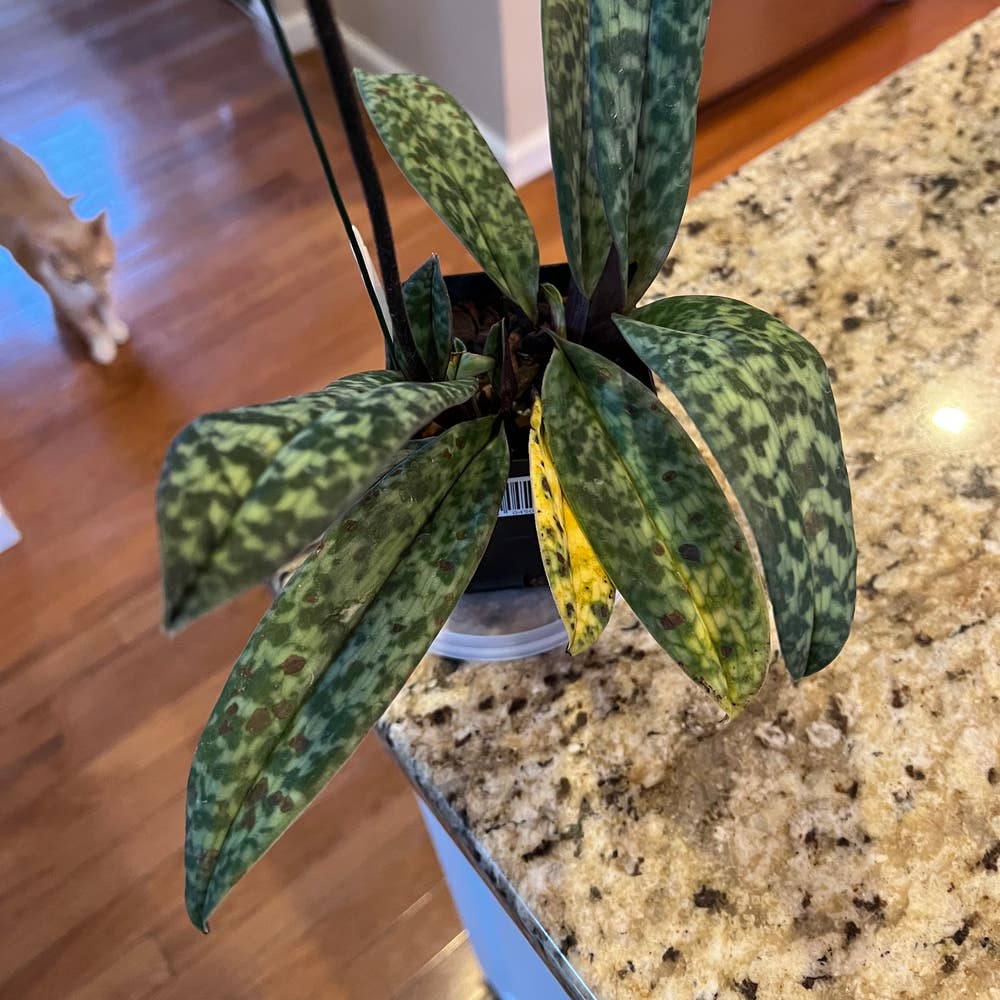
Visual cues are your orchid's silent scream for hydration. If the leaves of your Paphiopedilum fairrieanum start to wrinkle like an old linen shirt, it's time to water. Yellowing leaves are the plant's way of waving a caution flag, possibly signaling overwatering.
🌱 The Role of Roots and Leaves in Watering Decisions
Roots don't lie. A healthy orchid root should be a vibrant green, not a dull brown. If the roots are silvery-grey, your orchid is likely thirsty. Leaves, on the other hand, are the mood rings of the plant world. Limp or leathery leaves are your orchid's way of telling you it's parched. Remember, it's about the plant's parts, not the parts of the week.
The Balancing Act: Watering in Different Environments
🏡 Home Sweet Home: Mimicking the Orchid's Natural Habitat
To keep your Paphiopedilum fairrieanum thriving, emulate its native conditions. This means being a bit of a copycat—mimicking the humidity and watering cycles of its natural habitat. If you're not living in a climate similar to Northeast India and Burma, where these orchids come from, you'll need to get creative. Adjust your watering schedule to reflect the humidity and rainfall patterns of these regions, without turning your living room into a tropical jungle.
🌦 Seasonal Shifts: Adapting to Changes Throughout the Year
Your orchid's thirst changes with the seasons. As the days grow shorter and the temperature drops, your watering can should take a bit of a break. Winter calls for less frequent watering, but don't let your orchid turn into a desert dweller. Conversely, when summer rolls in with its longer days and warmer temps, be ready to ramp up the hydration. Monitor closely; your plant will tell you when it's parched or when it's had its fill. Remember, it's not just about sticking to a calendar; it's about observing and responding to your orchid's needs as they shift with the indoor climate.
The Perfect Sip: Techniques for Watering Paphiopedilum Fairrieanum
💧 The Art of Moisture: Finding the Sweet Spot
Watering your Paphiopedilum fairrieanum isn't about sticking to a rigid schedule; it's about observing and responding. Moisture is key, but overdoing it is a no-no. To achieve the ideal balance, consider the soak and drain method, which mimics natural rainfall. Use tepid water to avoid shocking the plant's roots, and always check the soil with your finger before watering. If it's dry an inch down, it's time to quench your orchid's thirst.
🛠 Tools of the Trade: Using the Right Equipment
The right tools can elevate your watering game. Terracotta pots are excellent for their breathability, drying out faster than plastic ones. Ensure they have drainage holes to prevent root rot. A moisture meter can be your best friend if you're unsure about when to water. For those who tend to forget, self-watering pots can be a lifesaver, providing a steady supply of moisture. And if your tap water is more chemical than H2O, let it sit out or use filtered water to keep your orchid smiling.
SOS: Saving Overwatered and Underwatered Orchids
🌊 Rescuing Drowned Dreams: Addressing Overwatering
Overwatering is like giving your orchid a bath when it just needs a drink. Root rot sets in when you love your plant a little too much with the watering can. To fix this, first, cut back on the H2O. Let the soil dry out before you even think about watering again. Check the drainage; if it's poor, repot with a fast-draining mix and unblock those drainage holes. They're your orchid's lifeline.
🏜️ The Drought Response: Combatting Underwatering
Underwatering is the silent killer, often going unnoticed until your orchid's leaves start to look like crumpled paper. Wrinkled leaves are your cue to step up your game. Increase watering frequency carefully, ensuring the soil is moist but not soggy. Consistency is key; mark your calendar if you must, but don't let your orchid turn into a desert dweller.
⚠️ Safety First
This content is for general information and may contain errors, omissions, or outdated details. It is not medical, veterinary advice, or an endorsement of therapeutic claims.
Always consult a qualified healthcare professional before using any plant as food, medicine, or supplement.
Never eat any plant (or feed one to pets) without confirming its identity with at least two trusted sources.
If you suspect poisoning, call Poison Control (800) 222-1222, the Pet Poison Helpline (800) 213-6680, or your local emergency service immediately.
Spotted an error? Please report it here.
Keep your Paphiopedilum fairrieanum thriving 🌿 with Greg's custom watering reminders, ensuring lush leaves and healthy roots without the guesswork.