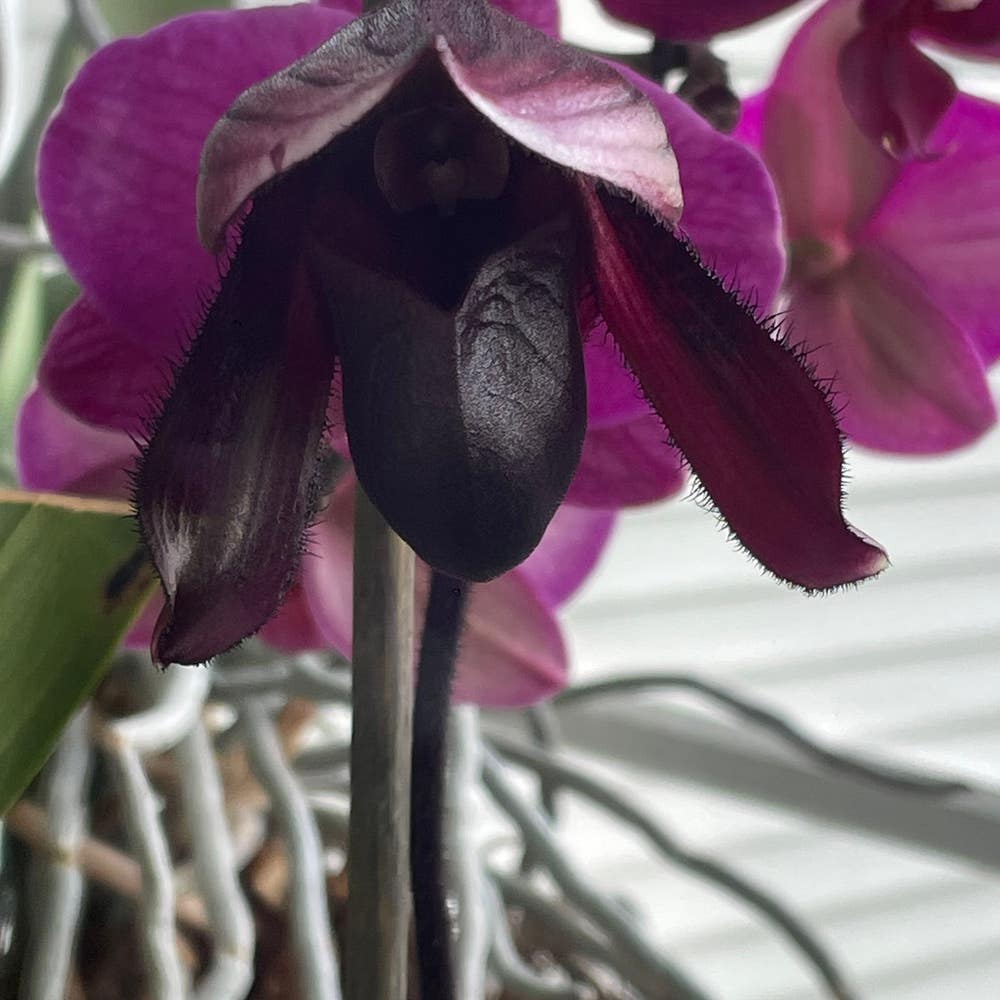
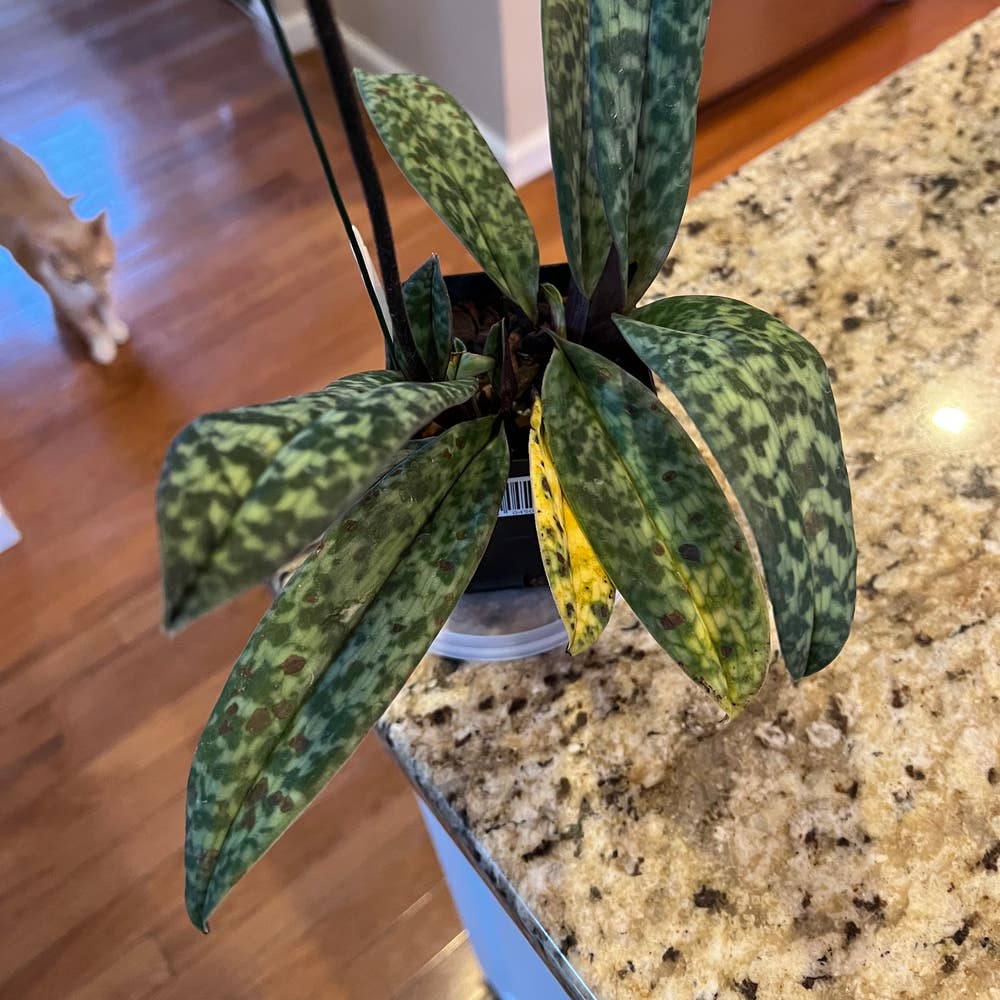
Why Are My Paphiopedilum callosum Leaves Turning Yellow?
Paphiopedilum callosum
By the Greg Editorial Team
Mar 21, 2024•4 min read
This article was created with the help of AI so we can cover more plants for you. May contain errors. See one? Report it here.
Unearth the secret to reviving your orchid's yellow leaves 🍂 and keep them perpetually green! 🌿
- 🍂 Natural aging or distress? Yellow leaves can signal either.
- 💧🌞 Balance water and light to prevent yellowing from improper care.
- 🌡️🌱 Stable temps and nutrients are key for orchid health.
Spotting the Trouble: Identifying Yellow Leaves
🍂 Natural Aging vs. Problematic Yellowing
Yellowing leaves can be the orchid's equivalent of a white flag. If it's the elder statesmen of leaves at the bottom yellowing, that's just nature's cycle. But when the fresh-faced leaves start to look sickly, that's your cue to take action.
👀 Visual Symptoms and What They Mean
Stripes or spots on leaves? That's not a fashion statement; it's a sign of distress, possibly from pests or disease. Uniform yellowing? Think big picture issues like watering or nutrition. And if the leaves are more yellow than a school bus, it's definitely time to reassess your care routine.
Rooting Out the Causes
🌞 Too Much Sun or Not Enough?
Lighting is a delicate balance for Paphiopedilum callosum. Too much sun leads to scorched leaves, while too little results in a pale, stretched appearance. Aim for bright, indirect sunlight; east-facing windows or sheer curtains can help achieve this. Rotate your orchid to promote even growth and avoid the dreaded lopsided look.
🚰 Water Woes: Overwatering and Underwatering
Overwatering can drown your orchid's roots, while underwatering leaves them thirsty. Check soil moisture with your finger; it should feel damp, not wet or bone dry. Water deeply, allowing the pot to drain completely. Adjust your watering schedule based on the plant's needs, not the calendar. If the soil dries out too quickly, consider repotting to improve water retention.
🌡️ Temperature Tantrums
Paphiopedilum callosum prefers stable temperatures with a slight drop at night. Avoid drastic fluctuations, as they can stress the plant and inhibit blooming. Keep the daytime warm and the night cooler, maintaining a 10-15°F difference. Remember, your orchid isn't a fan of extremes; too hot or too cold, and you're in for trouble.
🍽️ The Hunger Games: Nutrient Needs and Deficiencies
Your orchid could be starving for nutrients. It needs a balanced diet of nitrogen (N), phosphorus (P), and potassium (K), along with secondary nutrients like calcium (Ca) and magnesium (Mg). Yellow leaves might indicate a deficiency. Use a fertilizer formulated for orchids, following the N-P-K ratio on the label, to keep your plant well-fed and happy.
Turning Over a New Leaf: Treatment Tactics
💡 Adjusting Your Care Routine
Tweaking your Paphiopedilum callosum's environment is like fine-tuning a musical instrument; it needs to be just right. Light is a fickle friend—too much, and your orchid's leaves will scream for sunglasses, too little, and they'll languish in the shadows. Aim for bright, indirect light, where the sun kisses but doesn't scorch.
When it comes to water, think of your orchid's pot as its personal oasis. Let the top inch of soil dry before you water again, ensuring you're not drowning its roots. Temperature-wise, keep it steady. Orchids aren't fans of the hot-and-cold treatment; they prefer a consistent, comfortable climate.
🍽️ Feeding Your Flower: Fertilizers and Supplements
Your Paphiopedilum callosum isn't picky, but it does need a balanced diet. A blooming fertilizer in early spring can be like a shot of espresso for your plant's flowering potential. Remember, fertilizer is a supplement, not a substitute—use it sparingly to avoid an overdose.
Nutrients are non-negotiable. If your orchid's leaves are turning yellow, it might be crying out for a nutrient boost. A balanced, water-soluble fertilizer with an even NPK ratio is the multivitamin your plant craves. Apply it during the growing season, and watch your orchid thank you with vibrant leaves and robust blooms.
Prevention: Keeping the Green In
🩺 Regular Check-Ups
Regular check-ups are the orchid equivalent of a wellness exam. Inspect your Paphiopedilum callosum for early signs of distress, like yellowing leaves or a wilted demeanor. This proactive approach can head off potential issues before they become full-blown plant crises.
🌞 Creating the Ideal Environment
Light and Location
Indirect light is your Paphiopedilum callosum's best friend. Position it in a spot that mimics the dappled light of its natural habitat, avoiding the harsh midday sun that can scorch its leaves.
🚰 Water and Humidity
Balance is crucial when watering—thoroughly drench the plant, then let it dry out between waterings. A consistent humidity level is also key. Consider a pebble tray or humidifier to maintain that tropical vibe without turning your home into a rainforest.
Temperature and Airflow
Keep the temperature steady, around 70°F (21°C), to mimic the stable climate of its natural environment. Good air circulation is like an insurance policy against fungal and pest invasions, so keep that air moving.
Soil and Fertilization
A bark-based medium ensures proper drainage, preventing the dreaded root rot. Light fertilization keeps your Paphiopedilum callosum from going hungry without overfeeding it, which can be just as detrimental as neglect.
By staying vigilant and creating a stable environment, you're not just preventing problems, you're setting the stage for your Paphiopedilum callosum to thrive. Remember, it's not about coddling your plant—it's about understanding and meeting its needs.
⚠️ Safety First
This content is for general information and may contain errors, omissions, or outdated details. It is not medical, veterinary advice, or an endorsement of therapeutic claims.
Always consult a qualified healthcare professional before using any plant as food, medicine, or supplement.
Never eat any plant (or feed one to pets) without confirming its identity with at least two trusted sources.
If you suspect poisoning, call Poison Control (800) 222-1222, the Pet Poison Helpline (800) 213-6680, or your local emergency service immediately.
Spotted an error? Please report it here.
Ensure your Paphiopedilum callosum stays radiantly green 🌸 with Greg's personalized care reminders, tailored to keep those orchid leaves from yellowing.