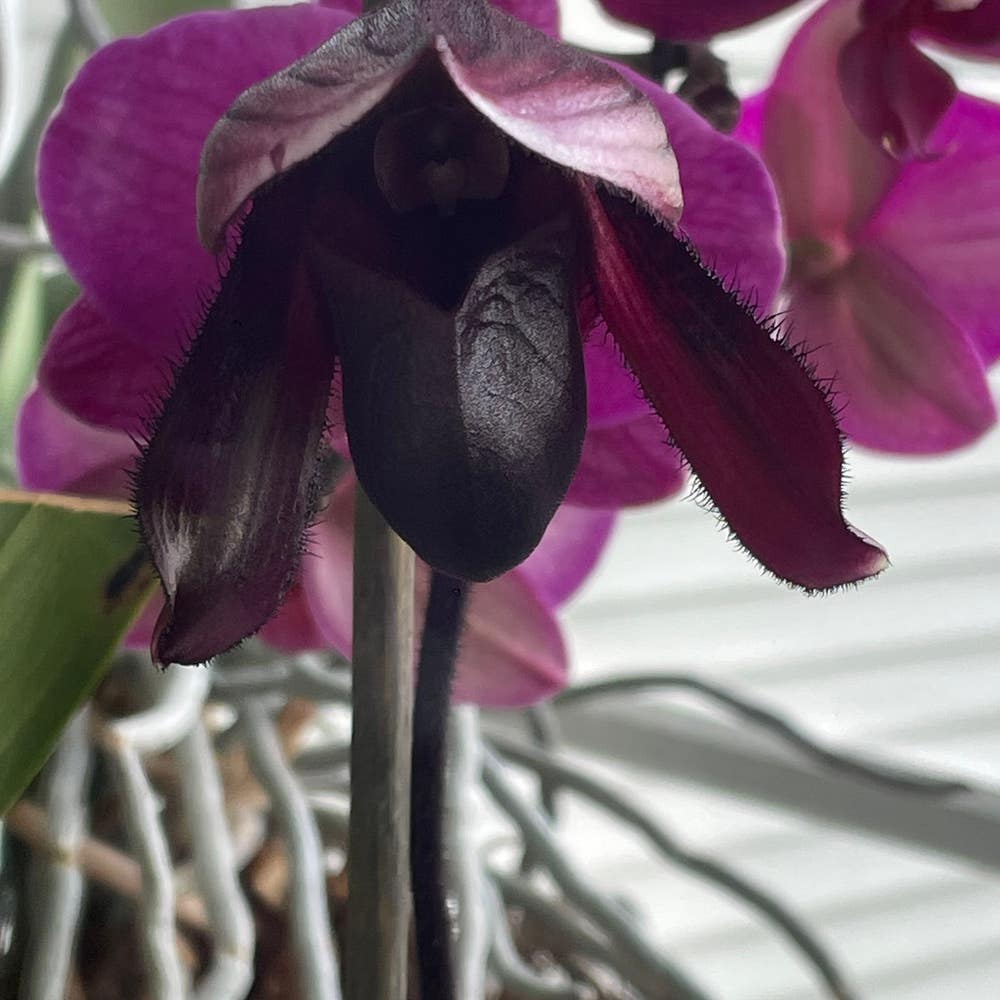
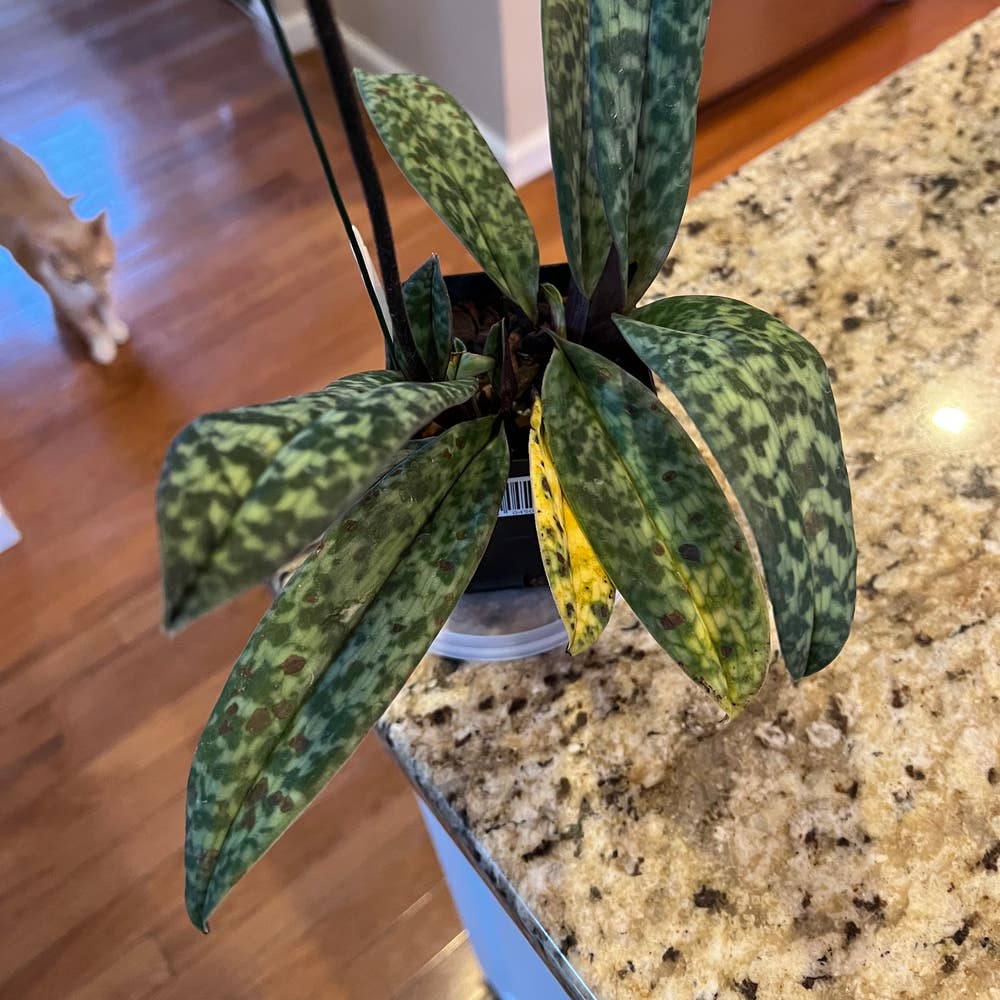
Why Are My Paphiopedilum callosum Leaves Curling?
Paphiopedilum callosum
By the Greg Editorial Team
Mar 21, 2024•5 min read
This article was created with the help of AI so we can cover more plants for you. May contain errors. See one? Report it here.
Unravel the mystery behind your orchid's curled leaves for a thriving Paphiopedilum callosum 🌿.
- 🌞🌱 Light and water balance is key to prevent leaf curling.
- 🌡️💧 Maintain 40%-60% humidity and steady temperatures for orchid health.
- 🐛🌿 Inspect for pests regularly and use gentle treatments as needed.
Spotting the Culprits: Common Causes of Leaf Curling
🌞 Light and Shadow Play
Light levels can make or break your Paphiopedilum callosum's posture. Too much sun, and the leaves curl like a boxer's fist; too little, and they stretch out, desperately seeking photons.
🔄 Adjusting Your Orchid's Sunbathing Routine
Rotate your plant regularly to ensure even exposure. Find that sweet spot of bright, indirect light where your orchid can flourish without the drama of leaf curl.
💧 Water Woes
The line between hydrated and waterlogged is thinner than a razor's edge. Overwatering leads to soggy despair, while underwatering leaves your orchid as parched as a desert.
🚰 Quenching Your Orchid's Thirst Without Overdoing It
Check the soil's moisture with your finger or a meter—trust but verify. Water only when the top inch feels dry, and ensure your pot allows for proper drainage.
🌡️ Climate Conundrums
Temperature and humidity are the divas of the orchid world. Too hot or too cold, and your orchid's leaves curl up tighter than a miser's wallet.
🌱 Creating a Cozy Climate for Your Paphiopedilum callosum
Aim for a steady 40%-60% humidity and avoid temperature extremes. Your orchid's leaves will thank you by staying as flat and uncurled as a pancake.
Feeding Finesse: Nutrient Needs and Deficiencies
💪 The Diet for Lush Leaves
Yellowing leaves or stunted growth? Your Paphiopedilum callosum might be hungry. Just like us, orchids need a balanced diet. An even NPK ratio in fertilizer acts as a full-course meal, providing nitrogen for leaf and stem growth, phosphorus for roots and flowers, and potassium for overall health.
Feed your orchid every 4-6 weeks during its active growth in spring and summer. But remember, moderation is key. Overfeeding can lead to nutrient burn, manifesting as more leaf curling. Think of it as a vitamin supplement, not an all-you-can-eat buffet.
🍲 Serving up a Balanced Meal: Fertilizer Fixes for Your Paphiopedilum callosum
To avoid the perils of over or underfeeding, dilute your fertilizer to ¼ strength. This ensures a steady diet without the risk of overindulgence. For specific deficiencies, targeted supplements like Epsom salts for magnesium can be a game-changer.
Always adjust your feeding strategy based on the orchid's condition. If the roots show signs of burn, ease up on the fertilizer. Consistency is crucial, so stick to a regular feeding schedule, and you'll have a lush Paphiopedilum callosum in no time.
Unwanted Guests: Pests and Diseases
🐜 Keeping Critters at Bay
Pests are orchid saboteurs, turning lush leaves into crumpled messes. Aphids, mealybugs, and scales lead the assault, dehydrating leaves until they curl in distress. Regular inspections are crucial; a blast of water can be your first line of defense. For persistent pests, insecticidal soap or neem oil are your go-to weapons. Remember, cleanliness is pest repellence—keep your orchid's area tidy and free of plant debris.
🤒 Orchid Ailments
Diseases can be stealthy, manifesting as curled leaves or discolored spots. Fungal and bacterial infections thrive in moisture, so keep leaves dry and improve air circulation. Black rot and botrytis are common culprits, often requiring fungicides—strictly follow label instructions. When you spot trouble, isolate and sanitize; prune affected foliage with sterilized shears. Vigilance and prompt action are your best allies in the fight for your orchid's health.
Orchid First Aid: Corrective Actions for Curled Leaves
🌞 Light and Temperature Triage
Fine-tuning your orchid's environment is like hitting the reset button on its health. Direct sunlight is a no-go; it's the botanical equivalent of a beach sunburn. Instead, aim for bright, indirect light. Keep the temperature steady—orchids dislike surprises more than a cat dislikes baths.
💧 Hydration Therapy
Overwatering is the silent killer of orchids, while underwatering leaves them gasping. Let the top inch of soil dry before you water again. Think of it as the orchid's version of not drowning in a pool of good intentions. Consistency is your watering can's best friend.
🍽️ Nutritional Supplements
Yellow leaves might be crying out for iron, while curling could signal a magnesium RSVP gone unanswered. A balanced, water-soluble fertilizer is the ticket, but don't get heavy-handed. It's nourishment, not an all-you-can-eat buffet. Watch for brighter green leaves as a sign of approval from your orchid.
🛡️ Pest and Disease Eradication
Pests and diseases are the party crashers in your orchid's life. Show them the door with insecticidal soap or neem oil for bugs, and a fungicide for fungal foes. Apply with the precision of a surgeon—your orchid's life depends on it. Remember, it's about being a protector, not a pesticide cowboy.
Pro Tips: Preventing Paphiopedilum callosum Leaf Curling
🕵️ Daily Inspections
Check on your orchid daily. Like a detective on the beat, look for the slightest signs of distress.
💧 Consistent Watering
Water with a steady hand. Your orchid craves predictability, so give it a drink on a regular schedule.
🥦 Balanced Feeding
Feed your plant a balanced diet. An even NPK fertilizer ratio does wonders, but don't overdo it—think of it as your orchid's gym routine.
🐜 Pest Patrol
Keep pests in check. If you spot an unwanted critter, act like an eviction officer—swift and decisive.
🌡️ Climate Control
Maintain a stable environment. Your orchid's comfort zone is a cozy climate with consistent warmth and humidity.
🧹 Clean Living
Keep the area tidy. Debris invites trouble, so clean up like you're expecting company.
✂️ Pruning
Trim with care. Snip off any curled or damaged leaves to encourage new, healthy growth.
📝 Log Keeping
Document your plant's life. A logbook can be a lifesaver when you need to troubleshoot.
🌱 Soil and Pot Selection
Choose the right soil and pot. Think well-draining and breathable—your orchid's roots will thank you.
By incorporating these proactive care practices, you'll be well on your way to keeping those Paphiopedilum callosum leaves flat, fabulous, and the envy of orchid aficionados everywhere.
⚠️ Safety First
This content is for general information and may contain errors, omissions, or outdated details. It is not medical, veterinary advice, or an endorsement of therapeutic claims.
Always consult a qualified healthcare professional before using any plant as food, medicine, or supplement.
Never eat any plant (or feed one to pets) without confirming its identity with at least two trusted sources.
If you suspect poisoning, call Poison Control (800) 222-1222, the Pet Poison Helpline (800) 213-6680, or your local emergency service immediately.
Spotted an error? Please report it here.
Keep your Paphiopedilum's leaves unfurled and fabulous 🍃 with Greg's custom care plan, ensuring just the right light and water for curl-free growth.