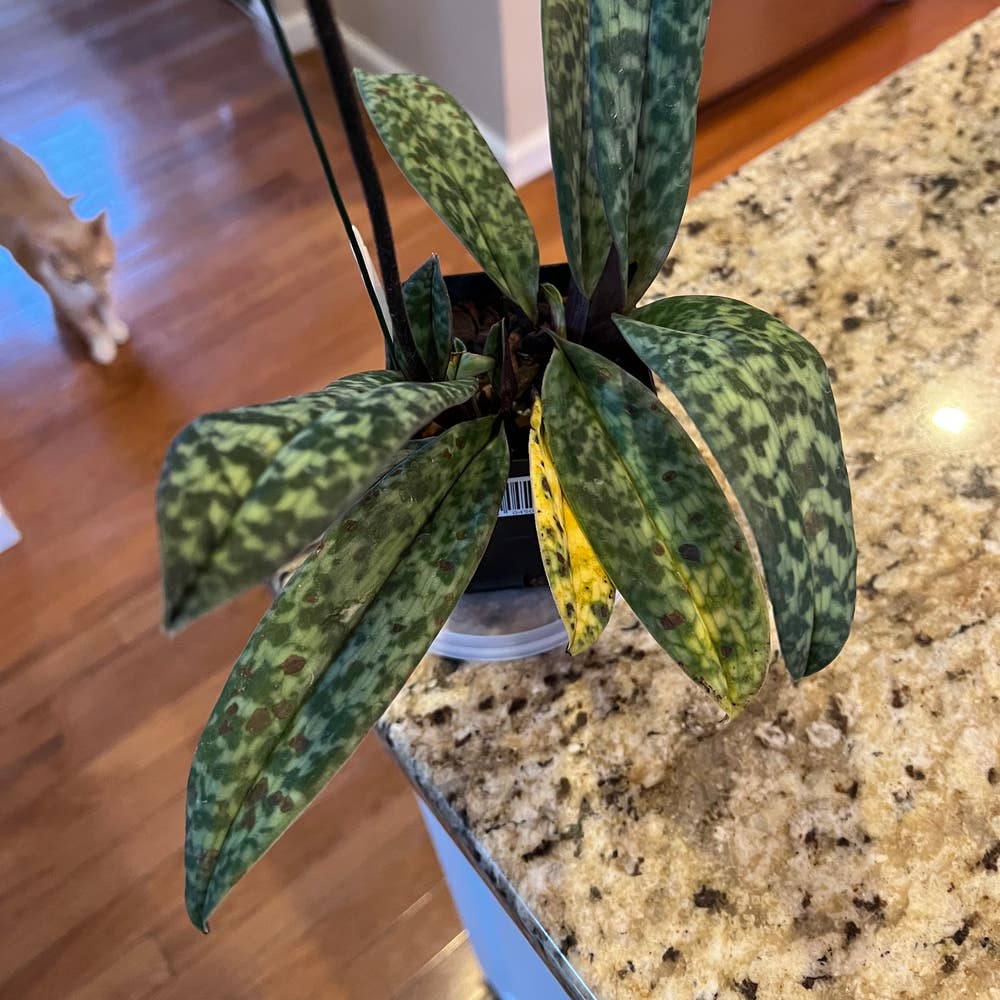
Why Are My Paphiopedilum callosum Leaves Falling Over?
Paphiopedilum callosum
By the Greg Editorial Team
Mar 21, 2024•4 min read
This article was created with the help of AI so we can cover more plants for you. May contain errors. See one? Report it here.
Revive your droopy orchid leaves 🍂 with proven tips for robust Paphiopedilum callosum health!
- Overwatering causes root rot and leaf droop in Paphiopedilum callosum.
- Bright indirect sunlight prevents limp leaves; rotate for even growth.
- Repot for health: Larger pots with good drainage promote strong leaves.
Pinpointing the Culprits
💧 Overwatering and Its Consequences
Overwatering is the silent killer of Paphiopedilum callosum. If the leaves of your orchid are drooping, it's time to check the roots. Soggy roots spell trouble, often leading to root rot, which manifests as brown and mushy roots. This condition is a direct ticket to Slouchy Leaf Ville.
🌞 Light Levels: Finding the Sweet Spot
Low light can leave your orchid's leaves as limp as a forgotten salad. If your Paphiopedilum callosum is stretching towards the light or has pale leaves, it's craving more lumens. Light deprivation weakens the plant, causing leaves to lose their vigor and droop in protest.
🌱 The Perils of Being Pot-Bound
When your Paphiopedilum callosum's roots are packed tighter than a subway at rush hour, it's a sign the plant is pot-bound. Cramped conditions restrict root growth, which can lead to droopy leaves as the plant struggles to maintain its posture. It's like trying to do yoga in a closet – there's just not enough space to stretch out properly.
Turning the Tide: Solutions for Strengthening Leaves
💧 Watering Wisdom: Balancing Moisture for Mighty Leaves
Adjusting your watering routine is crucial for the health of your Paphiopedilum callosum. Overwatering can lead to limp leaves, while underwatering can cause them to dry out and fall over. Aim for a happy medium where the soil feels moist but not soggy.
Consider using tools like moisture meters to take the guesswork out of watering. These gadgets are like a cheat sheet for plant care, letting you know exactly when your orchid is thirsty.
☀️ Let There Be Light: Illuminating the Path to Perky Leaves
Your orchid's leaves might be falling over due to insufficient light. Modifying light conditions can make a world of difference. Place your plant in a spot where it can bask in bright, indirect sunlight.
Practical tips include rotating your plant regularly to ensure even light exposure and using sheer curtains to diffuse direct sunlight, which can be too harsh for your delicate Paphiopedilum callosum.
🌱 Room to Grow: Repotting for Resilient Roots and Leaves
If your orchid's roots are more cramped than a clown car, it's time to repot. The repotting process should be done with care, using a pot that's slightly larger than the current one and a suitable orchid potting mix that provides excellent drainage.
Choosing the right pot is about more than just size; it's also about material. Go for a pot with adequate drainage holes to prevent water from pooling at the bottom, which can lead to root rot and, consequently, droopy leaves.
Prevention: Keeping Your Leaves Upright
🛡️ Proactive Measures to Prevent Future Foliage Flops
Consistency in your plant care routine is like the rhythm to a song—it keeps everything flowing smoothly. Ensure regular watering and feeding schedules to maintain robust health. Avoid overwatering by checking the soil's moisture before giving your Paphiopedilum callosum a drink.
🌡️ Creating a Stable Environment for Enduring Leaf Health
Temperature stability is crucial; dramatic fluctuations are as welcome as a skunk at a lawn party. Aim for a steady climate to prevent stress-induced leaf drooping. Humidity levels should be just right—too much can encourage rot, too little can dehydrate leaves.
👀 Vigilance and Care
Keep an eye out for pests; they're like uninvited guests at a dinner party. At the first sign, show them the door with appropriate treatments. Cleanliness is your ally—wipe leaves gently to keep them dust-free and efficient at photosynthesis.
🍽️ Nutrient Management
Feed your Paphiopedilum callosum with the right fertilizer to bolster its strength. Think of it as a balanced diet, providing all the essential goodies for a healthy plant. But don't overdo it—too much can be just as bad as too little.
🌞 Environmental Stability
Craft an environment that's as stable as a reliable friend. Light should be bright but indirect, like a sunny spot shielded by a sheer curtain. Rotate your plant occasionally to ensure even growth and prevent it from leaning like a nosy neighbor.
👩🌾 Consistent Care Routines
Establish a care routine that's as dependable as a trusty watch. Prune selectively to redistribute energy and keep your Paphiopedilum callosum's posture upright. Remember, a little trim here and there can make a big difference.
🐜 Pests: The Unwanted Guests
Be proactive with pest management. Regular inspections can catch critters early, preventing them from turning your plant into their personal buffet. Use non-toxic treatments when necessary to keep your orchid safe and sound.
⚠️ Safety First
This content is for general information and may contain errors, omissions, or outdated details. It is not medical, veterinary advice, or an endorsement of therapeutic claims.
Always consult a qualified healthcare professional before using any plant as food, medicine, or supplement.
Never eat any plant (or feed one to pets) without confirming its identity with at least two trusted sources.
If you suspect poisoning, call Poison Control (800) 222-1222, the Pet Poison Helpline (800) 213-6680, or your local emergency service immediately.
Spotted an error? Please report it here.
Ensure your Paphiopedilum callosum leaves never droop again by letting Greg craft a custom care schedule 📅 that balances watering, lighting, and community wisdom for peak orchid health.