What Do I Do About Paphiopedilum Callosum Root Rot?
Paphiopedilum callosum
By the Greg Editorial Team
Mar 21, 2024•3 min read
This article was created with the help of AI so we can cover more plants for you. May contain errors. See one? Report it here.
Rescue your orchid 🌸 from root rot's clutches with proven recovery and prevention tips.
- Yellow leaves and mushy roots signal root rot in Paphiopedilum callosum.
- Trim and repot using clean tools and well-draining soil for recovery.
- Prevent with dry soil, airflow, and sterilized gardening practices.
Spotting the Trouble: Signs of Root Rot
🚨 Recognizing Symptoms
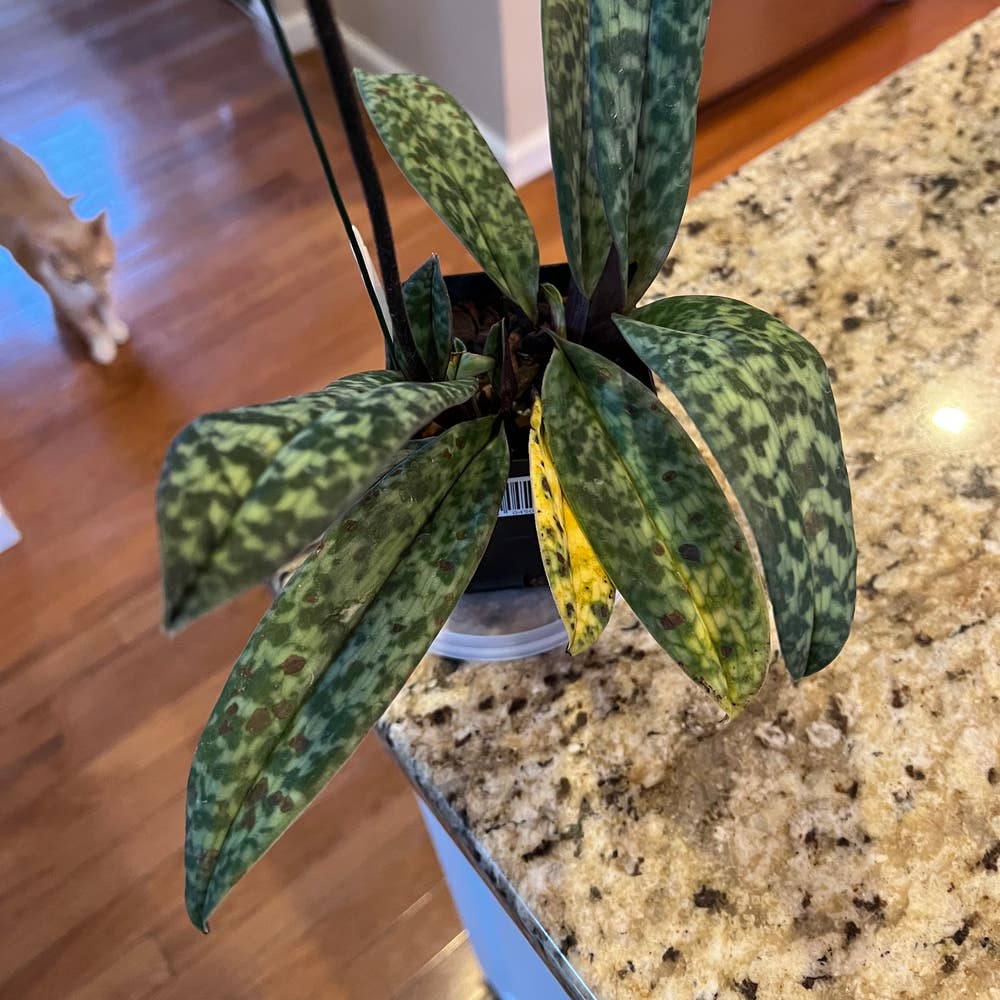
- Yellowing or browning leaves can be your first clue that something's amiss.
- Roots that feel like they've given up on life—soft, mushy, or discolored—are screaming for help.
🕵️ Identifying Causes
- Overwatering and poor drainage are like the Bonnie and Clyde of plant problems, often leading to root rot.
- Fungal and bacterial culprits thrive in soggy conditions, turning your plant's roots into a horror show.
Taking Action: Treating Root Rot
🌱 Removing the Damaged Roots
First things first, suit up for surgery. Yank the Paphiopedilum callosum out of its pot like you mean business. Now, get those sterilized scissors in hand. Snip away the mushy, discolored roots—no mercy for the weak. Remember, you're on a rescue mission, not a pruning party.
🌿 Repotting for Recovery
Next, it's time to upgrade the living quarters. Grab a pot that's the Goldilocks size—not too big, not too small—and make sure it's got drainage holes to spare. Fill it with fresh, well-draining soil that's as airy as your last sigh of relief. This isn't just a new pot; it's a new lease on life for your orchid.
🧪 Considering Chemical Helpers
If things look grim, it might be time to call in the chemical cavalry. Fungicides are like the bouncers at the club of plant health—they only let the good guys in. But don't go wild; use them as directed, like you're following a recipe for the world's most delicate cake. Remember, the goal is to heal, not to drown your plant in a chemical soup.
Keeping It Healthy: Preventing Future Root Rot
💧 Watering Wisely
Check the soil's moisture before watering—only water when it's dry. Use a moisture meter for precision; it's like a plant's thirst gauge. Avoid the temptation to water on a schedule. Instead, water when the plant needs it, not when you remember to do it.
🌬 Promoting Good Airflow
Space out your plants to avoid a crowded, disease-prone area. Think of airflow as an invisible shield, protecting your plant from the stagnation that invites root rot. Rotate your plant regularly to ensure even exposure to air, much like turning a roast for an even cook.
🧼 Sterilization Practices
Clean your tools and pots as if they're going into surgery—sterilization is key. After each use, give them a bleach solution bath to kill any lurking pathogens. It's like washing your hands, but for your plant's health. This practice is non-negotiable, especially if you've dealt with root rot before.
⚠️ Safety First
This content is for general information and may contain errors, omissions, or outdated details. It is not medical, veterinary advice, or an endorsement of therapeutic claims.
Always consult a qualified healthcare professional before using any plant as food, medicine, or supplement.
Never eat any plant (or feed one to pets) without confirming its identity with at least two trusted sources.
If you suspect poisoning, call Poison Control (800) 222-1222, the Pet Poison Helpline (800) 213-6680, or your local emergency service immediately.
Spotted an error? Please report it here.
Revive your paphiopedilum callosum from root rot and prevent future woes with Greg's tailored care reminders 🌱 and a supportive plant community.