Black Spots on My Paphiopedilum callosum Leaves
Paphiopedilum callosum
By the Greg Editorial Team
Mar 21, 2024•4 min read
This article was created with the help of AI so we can cover more plants for you. May contain errors. See one? Report it here.
Banish black spots 🌑 on your Paphiopedilum with our expert prevention and cure guide!
- Fungal vs. bacterial spots: Powdery or slimy textures indicate the cause.
- Environmental factors matter: Light, humidity, temperature, and watering affect spot development.
- Prevent with care: Optimal conditions and cleanliness keep black spots away.
Spotting the Trouble: Recognizing Black Spots
🕵️ What Do Black Spots Look Like?
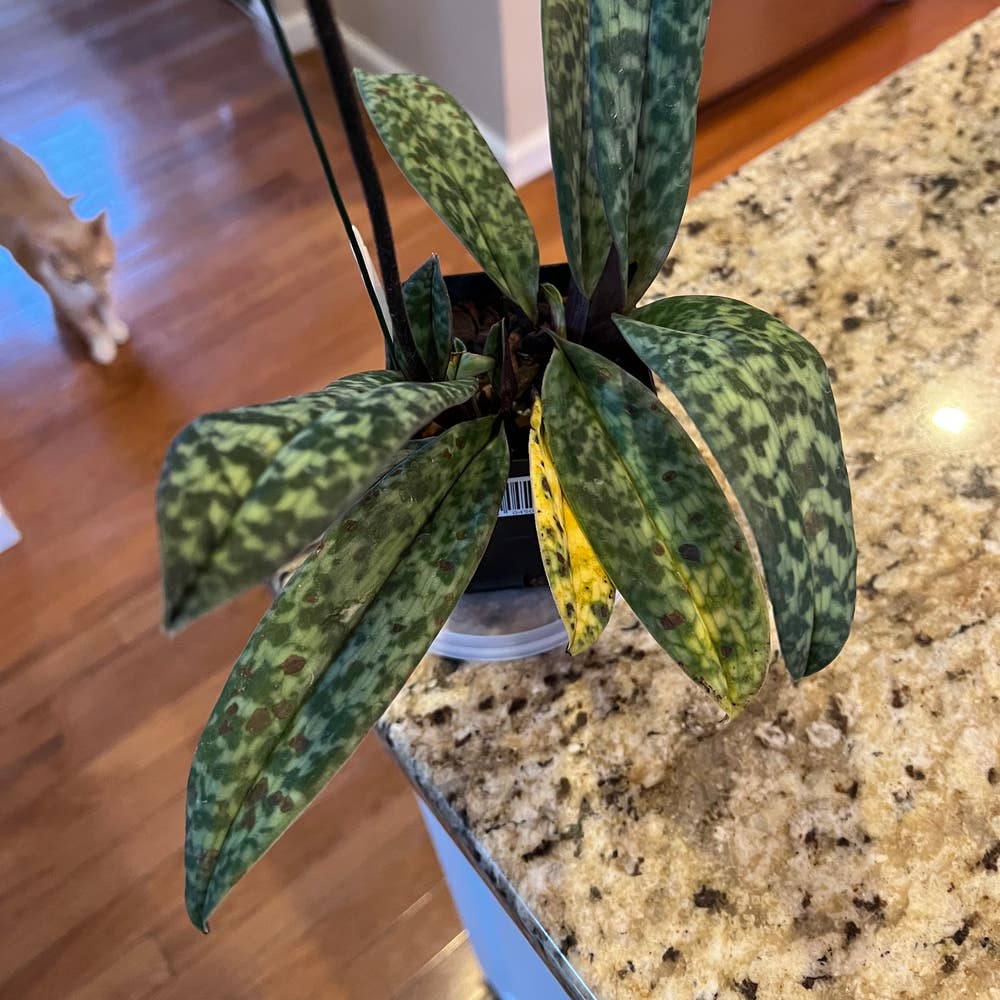
Black spots on Paphiopedilum callosum leaves are attention-grabbers. They're typically dark and may be circular, with feathery or concentric ring patterns. Look for tiny black dots within these spots, often surrounded by a telltale yellow halo, which suggests a fungal culprit.
🦠 Common Culprits: Fungal vs. Bacterial
Distinguishing between fungal and bacterial black spots is crucial for effective treatment. Fungal spots often have a powdery texture and may appear crusty, like a loaf of bread that's seen better days. In contrast, bacterial spots are usually slimy, resembling a damp paper towel, and might be edged with a yellow or red warning sign. Bacterial infections also love to flaunt water-soaked lesions that look like the aftermath of a slimy encounter. Keep an eye out for these differences; they're your clues for what's afflicting your plant.
The Root of the Problem: Pinpointing the Cause
💡 Environmental Factors
Light, humidity, and temperature are the stage setters for black spots. Too much sun and your Paphiopedilum callosum might as well be frying; it's a delicate dance between too much and too little. Humidity swings both ways: a fungal fiesta with too much, a stress-fest with too little. And temperature? Think of it as the mood music—if it's off, so is your plant.
🚰 Water Woes
Overwatering is like throwing a pool party without a pool. The roots drown, and fungi send out their invites. Drainage is your bouncer here, keeping the unwanted guests out. Remember, it's not just about the amount of water but the quality of the soak.
🛡️ Unwelcome Guests: Pests and Pathogens
Pests like spider mites and fungus gnats are the vandals, leaving behind black spots as graffiti. If you see fine webs or tiny flies, start the eviction process. Pathogens sneak in through the tiniest wounds, so keep an eye out for any plant injuries. Copper-based treatments can be the cops at this party, shutting it down before it gets out of hand.
Combating the Spots: Treatment Strategies
🛡️ Fungicide and Antibacterial Solutions
Act fast when you spot black spots. For fungal foes, fungicides are your shield and sword. Tebuconazole and triticonazole are the MVPs here, but don't get trigger-happy. Apply as directed, and rotate them to keep the fungi guessing. If bacteria are the baddies, reach for copper compounds or targeted bactericides. Remember, it's a precision strike, not a blanket bomb.
🌞 Adjusting the Environment
Change the game by modifying your plant's environment. Dry air and sunlight are nature's disinfectants, making them unwelcome for bacteria. Ensure your Paphiopedilum callosum is not drowning in moisture; overwatering is like handing out invites to a fungal party. Air circulation is key—think of it as giving your plant room to breathe. If you've been overzealous with the watering can, it's time to dial it back and let the soil dry out a bit.
Staying Spot-Free: Prevention Tactics
💡 Optimal Growing Conditions
Light: Your Paphiopedilum callosum is like a Goldilocks of the plant world; it prefers bright, indirect sunlight. Too much sun can scorch its leaves, while too little can weaken it. Find that sweet spot where the light is just right.
Temperature: Aim for a stable, warm environment without drastic fluctuations. Your orchid doesn't appreciate a surprise cold draft any more than you do.
Humidity: These plants enjoy a bit of humidity, but not too much. Keep it balanced to avoid creating a fungal paradise.
🛡️ Proactive Plant Care
Watering: Water when the soil feels like a wrung-out sponge—moist but not soggy. Always water at the base to avoid wet leaves, which are an open invitation for black spots.
Air Circulation: Good air flow is crucial. Space out your plants and consider a gentle fan to keep the air moving. This isn't just about comfort; it's about keeping those pesky fungi at bay.
Pruning: Regularly prune your plant with sterilized shears. This isn't just a trim; it's a strategic move to remove potential problem areas before they become an issue.
Soil: Choose a well-draining soil mix. It's the foundation for a healthy plant, preventing water from overstaying its welcome.
Cleanliness: Keep your plant's environment clean. Sanitize your tools and keep an eye out for early signs of trouble. It's easier to prevent black spots than to treat them.
Consistency: Stick to a care routine. Your plant thrives on routine, just like you do with your morning coffee or evening wind-down. Regular check-ups can catch issues before they escalate.
Remember, prevention is about being proactive. Keep these tactics up your sleeve, and your Paphiopedilum callosum will thank you with its vibrant, spot-free leaves.
⚠️ Safety First
This content is for general information and may contain errors, omissions, or outdated details. It is not medical, veterinary advice, or an endorsement of therapeutic claims.
Always consult a qualified healthcare professional before using any plant as food, medicine, or supplement.
Never eat any plant (or feed one to pets) without confirming its identity with at least two trusted sources.
If you suspect poisoning, call Poison Control (800) 222-1222, the Pet Poison Helpline (800) 213-6680, or your local emergency service immediately.
Spotted an error? Please report it here.
Banish black spots 🚫 on your Paphiopedilum callosum with Greg's tailored reminders for the perfect watering and care routine, keeping your orchid in peak health.