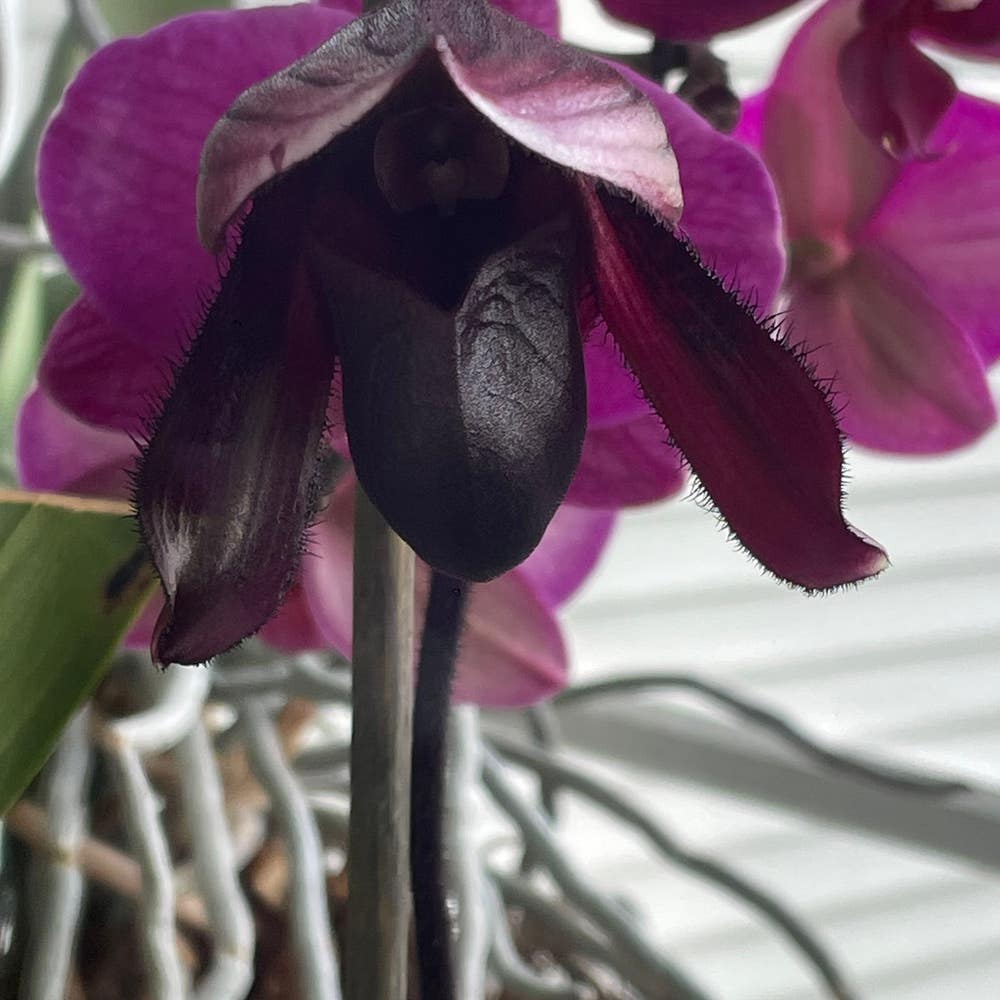
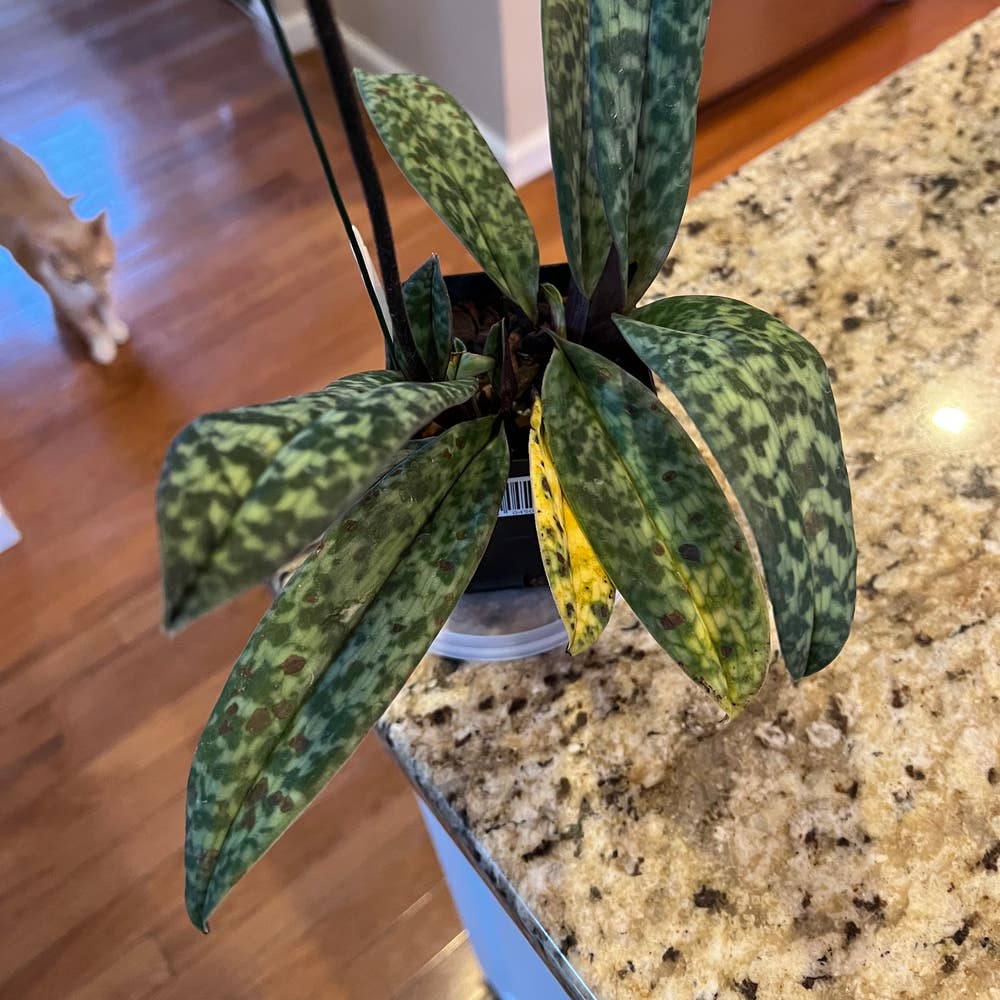
👠 What Is The Best Way To Water a Paphiopedilum callosum?
Paphiopedilum callosum
By the Greg Editorial Team
Mar 21, 2024•4 min read
This article was created with the help of AI so we can cover more plants for you. May contain errors. See one? Report it here.
Master your Paphiopedilum's hydration for lush growth with this fail-proof watering guide! 🌿💧
- Wrinkled leaves mean thirst, while overwatering causes yellowing and blisters.
- "Soak and Dry" method is best; avoid wetting the crown.
- Adjust for seasons and environment; terracotta dries faster than plastic.
When Thirst Strikes: Recognizing Your Paphiopedilum's Needs
💧 The Telltale Signs of Thirst
Your Paphiopedilum callosum's leaves are the best indicators of its hydration needs. When they start to look more wrinkled than usual, it's a clear sign that your plant is thirsty. The leaves may also become softer and less rigid, signaling a need for water. It's crucial to respond to these visual cues promptly to prevent dehydration stress.
🚱 The Perils of Overindulgence
Conversely, symptoms of overwatering can be just as telling. Yellowing leaves can indicate that you've been a little too generous with the watering can. If you notice a fungal presence or blisters on the leaves, it's time to cut back on the water. Overwatering can lead to root rot, a condition that is often a death sentence for paphiopedilums if not addressed quickly. Regularly check the pot's weight and the soil's moisture level to gauge when it's time to water and when it's time to wait.
The Art of Watering: Techniques and Tips
💧 Mastering the "Soak and Dry" Method
Watering your Paphiopedilum callosum isn't rocket science, but it does require a bit of finesse. Here's how to nail it:
- Wait for the top inch of the potting mix to feel dry.
- Drench the soil until water runs freely from the drainage holes.
- Patience is key—let the plant drain completely before returning it to its decorative pot.
This method ensures your orchid gets a thorough drink, promoting deep root growth and preventing the dreaded root rot.
🌿 Keeping the Crown Dry
Waterlogged crowns are a one-way ticket to rot city. Follow these steps to keep your Paphiopedilum's crown high and dry:
- Avoid pouring water directly onto the plant's crown.
- Target the base of the plant, ensuring the potting mix gets the hydration it needs.
- Drainage is your best friend; make sure your pot allows excess water to escape with ease.
Remember, a dry crown is a happy crown. Keep it that way, and your Paphiopedilum callosum will thank you with stunning blooms.
Tailoring Watering to Your Environment
🌱 Potting Medium and Container Considerations
Your potting medium and container are like the bed and mattress for your Paphiopedilum callosum. Get it right, and your plant will sleep like a baby; get it wrong, and it's all tosses and turns. A fast-draining medium will have you at the watering can more often, while a denser mix holds onto moisture, giving you some leeway.
Terracotta pots breathe easy, letting soil dry out faster, but plastic pots are like clingy friends, holding onto water for longer. Size matters too; small pots dry out quicker, so they're thirstier, while large pots are the camels of the container world.
🌡️ Reading the Room: Temperature and Humidity
Think of your plant as a homebody that's sensitive to the room's vibe. A hot, dry room? Your plant's chugging water like there's no tomorrow. But in a cool, humid space, it's sipping slowly. Adjust your watering routine to these environmental cues, and you'll avoid the drama of over or under-watering.
Room temperature water is the sweet spot—too cold can shock the roots, too hot can harm. It's like Goldilocks, but for plant care. And remember, your Paphiopedilum callosum isn't just sitting pretty; it's silently telling you what it needs. Pay attention, and you'll both be happier for it.
Seasonal Watering Wisdom
🌞 Summer Sips and Winter Wanes
In the summer heat, your Paphiopedilum callosum's thirst ramps up. The plant's metabolism is in overdrive, and it's guzzling water like there's no tomorrow. You'll want to water more frequently, ensuring the roots are quenched without becoming waterlogged.
Come winter, it's a different story. Your orchid slows down, entering a period of rest. Here, less is more. Overwatering is the fast track to root rot, so ease up on the hydration. Think of it as putting your plant on a water diet, providing just enough to keep it from dehydrating.
🤹♂️ The Balancing Act: Consistency vs. Adaptability
Finding the right watering rhythm is like walking a tightrope. You aim for consistency, but the weather doesn't always cooperate. Be observant and responsive, adjusting your routine to your Paphiopedilum's subtle cues.
Adaptability is key. Your plant won't send you a memo when it's parched or waterlogged. You've got to be the detective here, reading the signs and tweaking your approach with the precision of a master gardener. Keep your eyes peeled for droopy leaves or dry soil, and act accordingly.
⚠️ Safety First
This content is for general information and may contain errors, omissions, or outdated details. It is not medical, veterinary advice, or an endorsement of therapeutic claims.
Always consult a qualified healthcare professional before using any plant as food, medicine, or supplement.
Never eat any plant (or feed one to pets) without confirming its identity with at least two trusted sources.
If you suspect poisoning, call Poison Control (800) 222-1222, the Pet Poison Helpline (800) 213-6680, or your local emergency service immediately.
Spotted an error? Please report it here.
Achieve the perfect hydration balance 💧 for your Paphiopedilum callosum with Greg's tailored reminders, ensuring your orchid thrives without the guesswork.