🥿 Why Are My Paphiopedilum callosum Leaves Droopy?
Paphiopedilum callosum
By the Greg Editorial Team
Mar 21, 2024•4 min read
This article was created with the help of AI so we can cover more plants for you. May contain errors. See one? Report it here.
Revitalize droopy Paphiopedilum leaves 🍃 and unveil their hidden vigor with expert care secrets!
- Droopy leaves signal distress, potentially indicating root rot or pests.
- Over/underwatering and light issues cause leaves to droop or lose vigor.
- Consistent care and monitoring are key to maintaining healthy leaves.
Spotting the Signs: Is Your Paphiopedilum callosum Unhappy?
🚩 Visual Clues of Distress
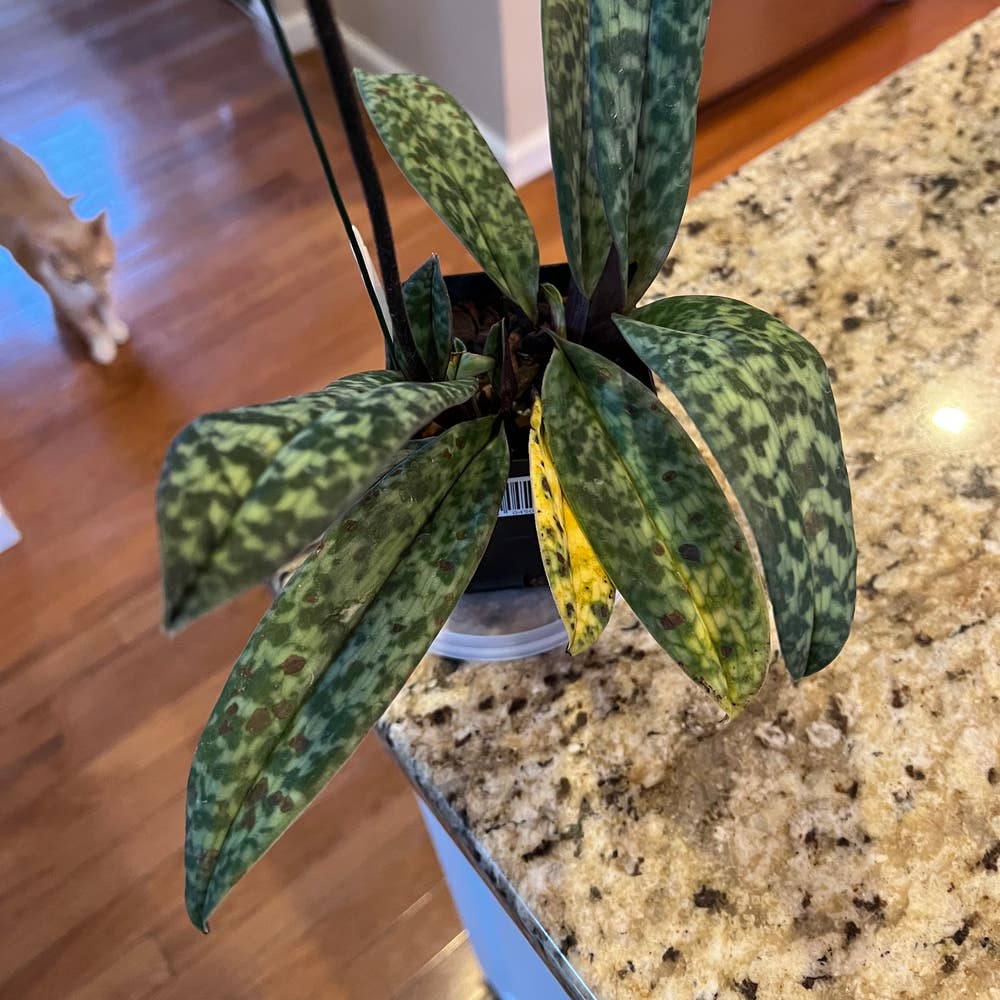
Droopy leaves on your Paphiopedilum callosum are like a red flag; they're not just having a bad day. Sagging or bending downwards, they betray their usual robust posture. But droopiness isn't the only SOS signal—look for yellowing leaves, a sluggish growth rate, or a lackluster sheen. These symptoms don't lie; they're a cry for help.
When to Worry
Droopiness goes from a casual concern to a code red when it's persistent or severe. If leaves feel flimsy or stems start to bend, your plant's structural integrity is at stake. It's not just about aesthetics; droopy leaves can signal deeper health issues, like root rot or pests. Ignoring these signs can lead to a downward spiral for your Paphiopedilum callosum's overall health.
The Usual Suspects: Common Causes of Droopy Leaves
💧 Too Much H2O? Overwatering Woes
Soggy soil and a musty smell are dead giveaways of overwatering in Paphiopedilum callosum. This excess moisture suffocates roots, leading to the dreaded droop.
🏜️ Thirsty Roots: The Underwatering Dilemma
Conversely, underwatering leaves roots as dry as a bone, causing leaves to lose their vigor. Wrinkled, crispy leaves are crying out for hydration.
🌞 Let There Be Light: The Role of Lighting
Inadequate light diminishes photosynthesis, leaving leaves limp. Balance is key; too little light equals droopy leaves, too much can scorch.
🌱 Root of the Problem: Compromised Root Health
Root issues often surface as droopy leaves. Check for roots that are darker than midnight and smell like trouble. Overcrowding and rot can cause leaves to sag like a hammock.
Turning Things Around: Fixing Droopy Leaves
💧 Adjusting Watering Practices
Watering is a delicate dance, and your Paphiopedilum callosum is a picky partner. To avoid drowning or parching your plant, check the top inch of soil; if it's dry, it's time to water. If it's moist, give it a break. Room-temperature water is your best bet to avoid shocking the roots. And don't forget, drainage holes are non-negotiable.
🌱 Root Rehabilitation
When roots turn to mush, it's a code red for plant parents. Inspect the roots for rot and if you spot trouble, it's time for some surgery. Trim the bad roots, give it fresh soil, and a new pot. Think of it as a plant reboot. Use a well-draining mix to keep those roots breathing easy.
🌿 Optimizing the Environment
Your plant's environment is like its personal bubble—light and temperature need to be just right. Too dark and your leaves will droop like overcooked noodles. Find that sweet spot for light without turning your plant into a crispy critter. And remember, the right humidity and airflow can make all the difference in keeping your Paphiopedilum callosum perky.
Keeping Leaves Perky: Prevention Strategies
💧 Consistency is Key: Watering Schedules
Consistency in watering isn't just a nice-to-have; it's a must for the Paphiopedilum callosum. Crafting a watering calendar is like setting up a series of mini-dates with your plant—regular and attentive, but not smothering.
- Set reminders on your phone or use a digital calendar to keep track of watering times.
- Invest in a moisture meter to take the guesswork out of when to water.
🌿 Environmental Harmony
Your Paphiopedilum callosum's environment should be as stable as your favorite coffee shop—always welcoming and never a shock to the system.
- Regularly monitor and adjust light, temperature, and humidity to mimic the plant's natural habitat.
- Be mindful of seasonal changes; what works in summer may not fly in winter. Use a hygrometer to keep those humidity levels in check.
Remember, your plant's health is a direct reflection of the care and consistency you provide. Keep the environment stable and the watering on point, and those leaves will stay as perky as a morning cup of joe.
⚠️ Safety First
This content is for general information and may contain errors, omissions, or outdated details. It is not medical, veterinary advice, or an endorsement of therapeutic claims.
Always consult a qualified healthcare professional before using any plant as food, medicine, or supplement.
Never eat any plant (or feed one to pets) without confirming its identity with at least two trusted sources.
If you suspect poisoning, call Poison Control (800) 222-1222, the Pet Poison Helpline (800) 213-6680, or your local emergency service immediately.
Spotted an error? Please report it here.
Ensure your Paphiopedilum callosum thrives by adjusting care with precision 🌿, using Greg's reminders to water, repot, and optimize light for perfect plant health.