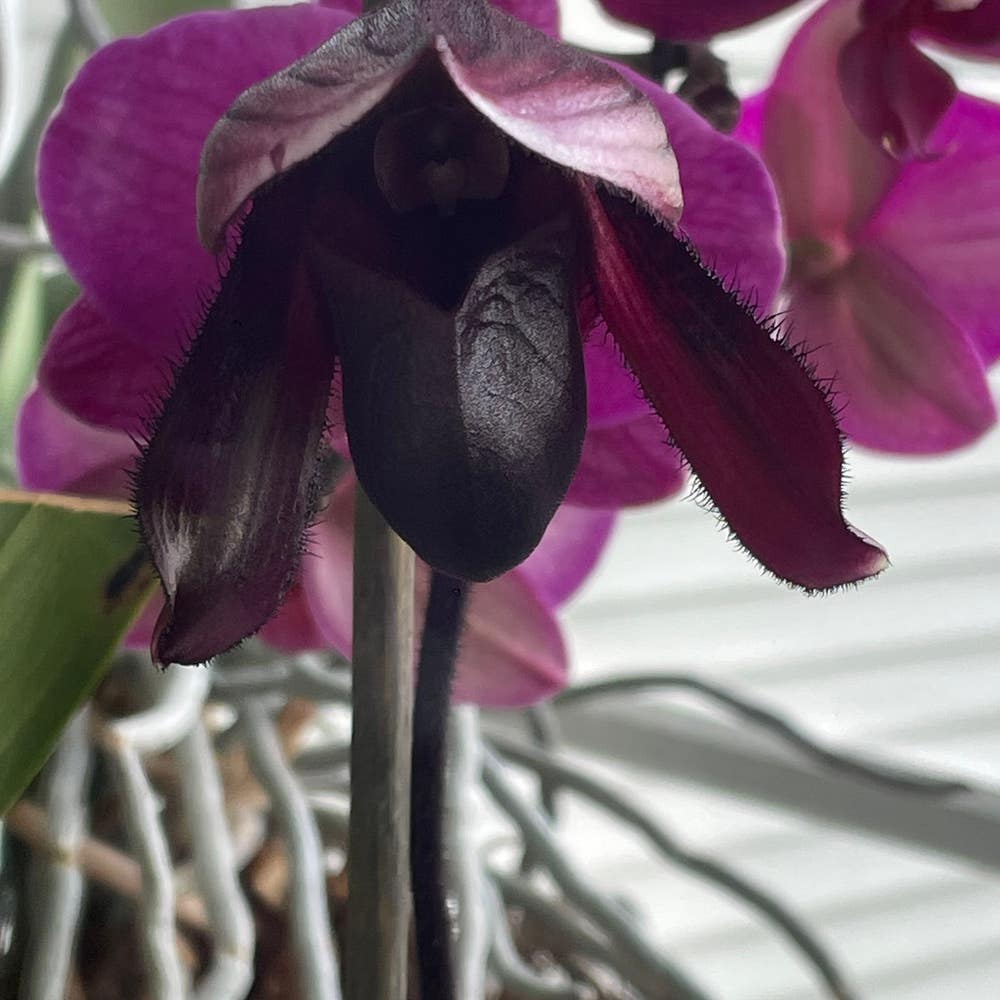
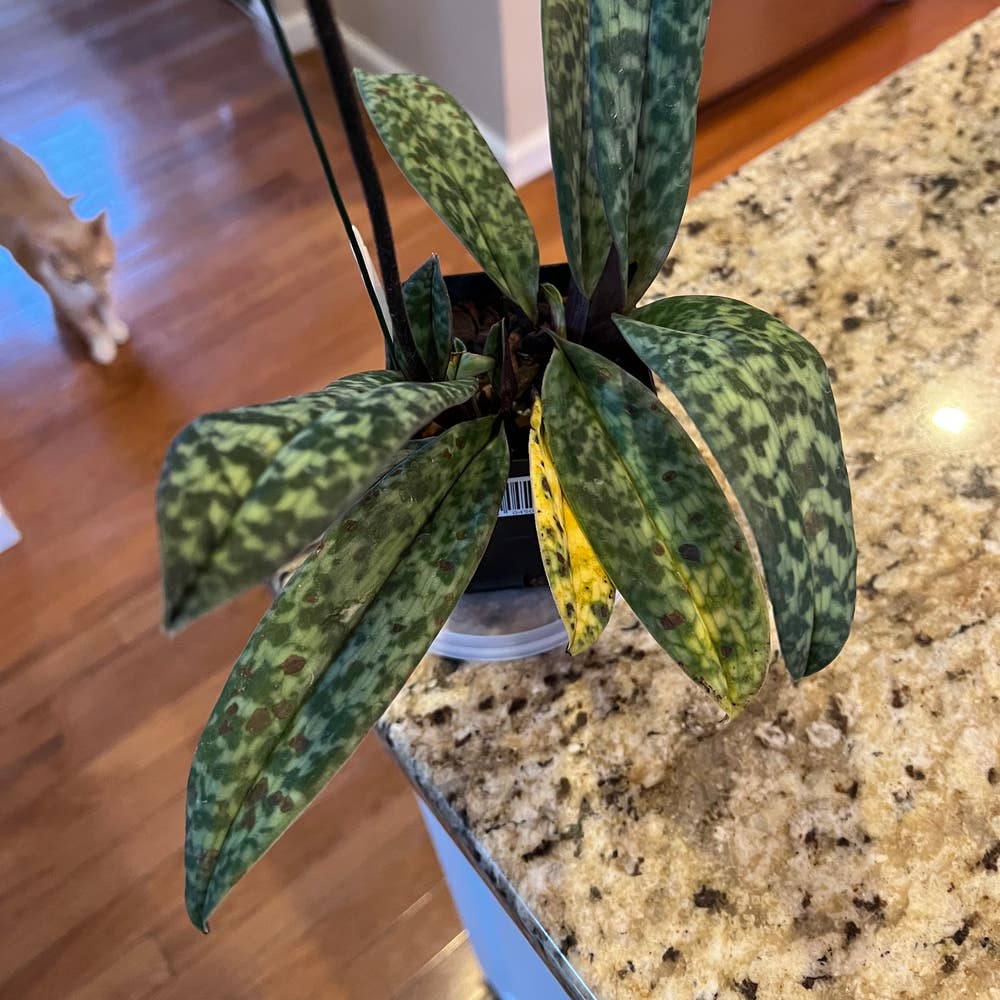
👠 How Can You Tell If A Paphiopedilum callosum Is Dying?
Paphiopedilum callosum
By the Greg Editorial Team
Mar 21, 2024•5 min read
This article was created with the help of AI so we can cover more plants for you. May contain errors. See one? Report it here.
Revive your wilting Paphiopedilum callosum 🌸 by spotting and correcting these crucial care errors!
- Yellow leaves and root rot signal over-watering; let soil dry out.
- 🌱 Consistent watering and light are key to preventing wilting and scorching.
- 🌡️ Keep 65°F to 75°F to avoid temperature stress and promote growth.
Water Woes: Too Much or Too Little
💦 Over-watering Symptoms and Solutions
Yellowing leaves and a soil texture that's more bog than garden? Your Paphiopedilum callosum is practically swimming. Root rot sets in when roots are more mush than firm, a clear sign you've been overzealous with the watering can.
Getting Back on Track
Stop watering and let the soil dry to a crumbly state. If root rot has taken hold, it's time for surgery: remove the plant, snip off the rotted roots, and rehome it in fresh, well-draining soil. Fine-tune your watering to a rhythm that's more spa day than water park.
🏜️ Under-watering Symptoms and Solutions
Wilting leaves and soil dry as a bone? Your orchid is throwing up the white flag for hydration. Roots should be plump, not shriveled like last year's prunes.
Hydration Station
Introduce a watering schedule that's consistent but not drenching. Think of it as a steady drip of coffee for your plant—enough to keep it perky, not so much it's bouncing off the walls. Ensure the top inch of soil is moist, not a dust bowl, to get back on track.
Light and Temperature: Finding the Sweet Spot
⛅️ Light Issues: From Fading to Scorching
Fading leaves are the Paphiopedilum callosum's silent scream for more light. If you spot leaves with a sunburnt look, that's a cry for less.
To prevent leaf scorch, dial back on the direct sun. Think of a sheer curtain as a sunscreen for your orchid. For those pale, stretched-out leaves begging for rays, a shuffle closer to the window or a strategic artificial light can work wonders.
🌡️ Temperature Troubles and Triumphs
Temperature stress shows up as wilting or discolored leaves. Your orchid prefers a day spa environment: 65°F to 75°F by day, a touch cooler at night.
Avoid the drama of drafts or the chill of a cold window. Consistency is the name of the game. Keep the temperature as steady as your favorite barista's hand pouring a latte.
The Unseen Enemy: Pests and Pathogens
🐛 Battling Bugs
Mealybugs and aphids are like uninvited guests at a party—they show up unannounced and wreak havoc. You'll spot mealybugs setting up their cottony camps on leaves, while aphids prefer to suck the life out of new growth, leaving a sticky mess called honeydew. This goo can lead to sooty mold, a black, fungal blight on your orchid's good looks.
To evict these pests, start with a gentle but firm approach. Rinse your orchid with water or swipe them off with a cotton swab dipped in rubbing alcohol. If they're stubborn, bring out the neem oil or insecticidal soap. Apply with precision—think sniper, not shotgun.
🍄 Fungal Foes: Mold and Rot
Mold and rot are the silent killers in the orchid world. If you spot discolored spots or a powdery residue, it's time to act. These are the calling cards of a fungal infection. Root rot is even sneakier, with roots turning dark and mushy, often a result of overenthusiastic watering.
Cut out the infected parts like a surgeon removing an appendix. Then, change the soil to something that drains better, because soggy soil is a fungal fiesta. To prevent future outbreaks, improve air circulation—think of it as giving your orchid room to breathe. If the situation calls for it, use a fungicide, but always as a last resort. Remember, prevention is better than cure, so keep the air moving and the water in check.
When Your Orchid Cries for Help: Other Distress Signals
🚰 Telltale Signs of Distress
Wrinkled Leaves: A Thirsty Orchid's Plea
Wrinkled leaves on your Paphiopedilum callosum aren't just a sign of aging; they're parched. This is a clear indicator that your orchid is dehydrated and in need of a more consistent watering schedule.
Soggy Base: The Overwatering Omen
A base that feels like a wet sponge is a telltale sign of too much water. Your orchid's roots are likely suffocating, and it's time to reassess your watering habits and improve drainage immediately.
Leaf Color: The Yellow Flag
Yellow leaves are your orchid's way of telling you that you've been a little too generous with the H2O. Cut back on watering and ensure the potting medium has time to dry out slightly between waterings.
Leaf Discoloration: A Light Issue Alert
If your orchid's leaves are sporting dark, sad spots, it's a sign that it's starved for light. Conversely, yellow leaves can mean there's too much sun. Adjust the light exposure to find that sweet spot.
Stunted Growth: The Silent Protest
When your orchid refuses to grow or bloom, it's like it's holding up a sign that reads, "Help, I'm not happy!" This could be due to a variety of issues, including poor lighting, incorrect temperatures, or even a pest problem.
Root Health: The Foundation of Trouble
Roots that resemble overcooked noodles or are more brown than green are screaming for an intervention. Healthy roots should be firm and a vibrant green, indicating a well-hydrated and happy plant.
Pests: The Uninvited Guests
Distorted leaves can be a distress signal indicating pests. Keep an eye out for any unwelcome visitors and be prepared to take action with appropriate treatments.
Spotted Leaves: A Cry for Help
Black spots with a yellowish halo are not just a fashion statement; they're a cry for help. This could be a sign of a fungal issue or even a pest problem, and it's time to investigate further.
Flower Bud Drop: The Buzzkill
A flower bud that drops before it blooms is like a bad roommate—it's a total buzzkill. This could be an early sign of root rot or other distress, and it's crucial to take action before it's too late.
Remember, spotting these signs early and responding quickly can be the difference between a thriving orchid and a botanical casualty. Keep a hawk's eye on your Paphiopedilum callosum and be ready to act at the first sign of distress.
⚠️ Safety First
This content is for general information and may contain errors, omissions, or outdated details. It is not medical, veterinary advice, or an endorsement of therapeutic claims.
Always consult a qualified healthcare professional before using any plant as food, medicine, or supplement.
Never eat any plant (or feed one to pets) without confirming its identity with at least two trusted sources.
If you suspect poisoning, call Poison Control (800) 222-1222, the Pet Poison Helpline (800) 213-6680, or your local emergency service immediately.
Spotted an error? Please report it here.
Revive your Paphiopedilum callosum and prevent future distress with customized care reminders 🌸 from Greg, ensuring perfect watering, lighting, and temperature conditions.