Why Are There Brown Spots on My Paphiopedilum callosum?
Paphiopedilum callosum
By the Greg Editorial Team
Mar 21, 2024•6 min read
This article was created with the help of AI so we can cover more plants for you. May contain errors. See one? Report it here.
Banish brown spots on your orchid 🌿 and restore its lush, vibrant leaves with expert tips!
- Early detection is key to effectively address brown spots on orchids.
- Sunburn and infections can cause brown spots; adjust light and treat with fungicides.
- Consistent care prevents spots: proper watering, light, and air circulation are crucial.
Spotting the Trouble: Identifying Brown Spots
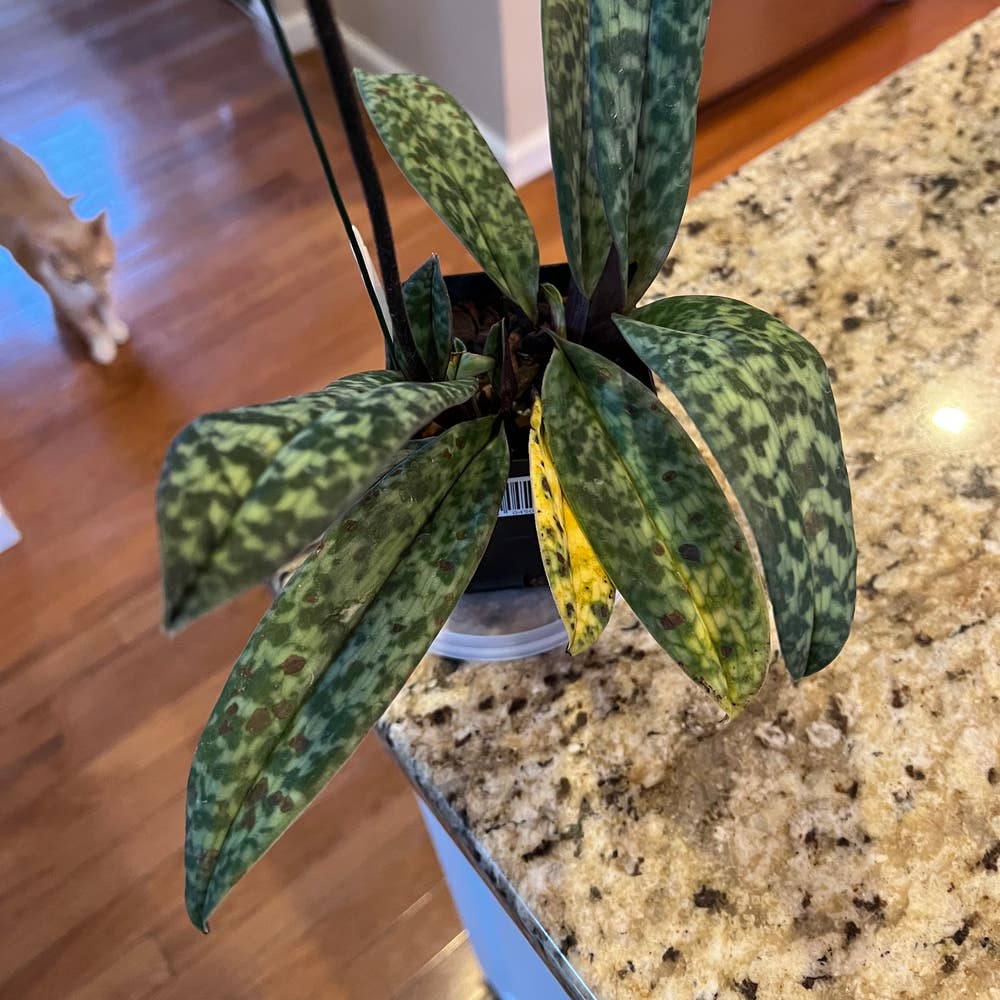
Brown spots on your Paphiopedilum callosum can be as varied as a thrift shop's inventory. They might show up as dry, crusty patches or as soggy, dark lesions. Location is a clue; they could be flaunting their ugliness anywhere from the leaf center to the edges. Sometimes, a yellow halo surrounds the spot, like a crime scene waiting to be decoded.
🔍 Visual Symptoms
Rusty patches might indicate a lack of nutrients, while circular lesions often point to infections. Some spots come with a yellow halo, looking almost like a solar eclipse on your plant's leaves.
🚨 Quick Tips for Initial Assessment
- Inspect your plants like a detective on a case. Catching brown spots early is like finding a clue that cracks the case wide open.
- Quarantine new or infected plants to prevent an outbreak. It's like putting your plant in solitary to stabilize its condition.
- Prune affected areas promptly with sterilized scissors, and keep an eye out for changes. Remember, brown spots are your plant's SOS signal—ignoring them is like muting a fire alarm.
Sunburn: When Your Orchid Gets Too Much Sun
🌞 Recognizing Sunburn on Paphiopedilum callosum
Crispy leaves and a color palette that screams "too much beach time" are telltale signs of sunburn. Your Paphiopedilum callosum might show freckle-like red or brown specks on its leaves, which can expand into larger brown or black patches. In severe cases, leaves may yellow, wilt, or even fall off. If the flowers are looking discolored and drop prematurely, that's another red flag.
🏖 Shading Strategies to Protect Your Orchid
To prevent your orchid from turning into a crispy critter, shade is your best friend. Here's how to keep your Paphiopedilum callosum from frying:
- Relocate to a Shadier Spot: An east-facing window is the sweet spot, offering light without the harsh midday sun.
- Prune with Caution: If the damage is minor, trim the affected leaves. If it's more widespread, hold off on the shears to avoid shocking your plant.
- Boost Humidity: Orchids are humidity hogs. Increase moisture in the air, or mist leaves to help them chill out.
- Adjust Watering: Sunburned orchids might need more water, but don't drown them in sympathy—overwatering can lead to other issues.
- Pest Patrol: Stressed plants attract pests like a magnet. Keep an eye out and be ready to defend your orchid with natural pest control tactics.
- Seasonal Awareness: The sun's angle changes with the seasons. Keep track of the light and move your orchid accordingly.
- Filter the Light: If the sun insists on being a spotlight, use sheer curtains or other filters to soften its glow.
Remember, once a leaf is burnt, it's a goner. But with these strategies, you can ensure your Paphiopedilum callosum lives to photosynthesize another day.
Battling Fungus and Bacteria: The Invisible Enemies
🚫 Recognizing the Signs of Infection
Discoloration and wilting are your Paphiopedilum callosum's cry for help, indicating a possible fungal or bacterial invasion. Fungal issues often manifest as brown spots encircled by a yellow halo or a fuzzy mold. Bacterial problems? They're the ones causing black or water-soaked spots. These aren't just aesthetic issues; they're red flags waving for your attention.
💊 Choosing the Right Fungicides and Bactericides
When mold and mildew make an unwanted appearance, it's time to break out the fungicides. Potassium bicarbonate and tebuconazole with trifloxystrobin are your go-to options. Use them as directed, and remember, they're more preventative than curative. For bacterial infections, copper-based fungicides are like antibiotics for your orchid. But don't just spray and pray; know your enemy and choose your weapons wisely.
🌬️ Improving Air Circulation
Stagnant air is a fungal infection's best friend. Keep the air moving around your Paphiopedilum callosum to discourage those pesky pathogens. A gentle breeze, akin to the plant's natural environment, helps keep the leaves dry and the spores at bay. Think of it as setting up a no-fly zone for fungi. Remember, a well-ventilated space is a cornerstone of plant health, so let's keep it breezy.
Water Woes: Finding the Balance
💧 The Link Between Watering Habits and Brown Spots
Overzealous watering can turn your Paphiopedilum callosum into a soggy mess, inviting brown spots to take center stage. Conversely, too little hydration and you'll find your orchid's leaves looking more like crispy critters than lush foliage. It's a tightrope walk where balance is non-negotiable.
💦 Tailoring Your Watering Routine
Don't just water on a whim; check the soil. If it clings to your finger, it's a no-go. Your plant's thirst varies with the seasons—more sips in the summer, less in the winter. Think of it as a steady rainfall, not a deluge. And when you do water, aim for the base, not the leaves.
🚰 The Importance of Proper Drainage and Dry Leaves
Good drainage is the unsung hero in the fight against brown spots. Ensure your pot has holes that could give a colander a run for its money. And remember, dry leaves are happy leaves—wet foliage is just a party invitation for fungi and bacteria. Keep the leaves high and dry, and you're on your way to brown spot prevention.
Keeping Brown Spots at Bay: Prevention Tactics
🌿 Creating the Ideal Environment for Paphiopedilum callosum
Consistency is the guardian of your Paphiopedilum callosum's health. To ward off brown spots, ensure the orchid's environment is stable. This means maintaining a steady temperature and humidity level that mimics the tropical climates these orchids adore. Think of it as setting up a backstage area for a rockstar—everything needs to be just right.
🌞 Light and Location
Bright, indirect light is the sweet spot for your Paphiopedilum callosum. Direct sunlight is like a bad one-liner—it can burn and isn't appreciated. Use sheer curtains or other plants to filter the light, creating a dappled sunlight effect that's just perfect.
💨 Airflow and Spacing
Good air circulation is non-negotiable. Overcrowding is the equivalent of a packed elevator—uncomfortable and prone to issues. Space out your plants to let the air move freely, reducing moisture and deterring fungal growth.
The Role of Consistent Care in Preventing Brown Spots
Regular inspections are like health check-ups for your orchid. Catching issues early can make all the difference. Water at the base to keep the leaves dry, and do it in the morning so any accidental splashes have time to evaporate.
🧼 Cleanliness and Hygiene
Keep your gardening tools as clean as your kitchen utensils. Dirty tools can spread disease faster than a gossip in a small town. Also, quarantine new or sick plants faster than you'd unfriend someone on social media. It's all about preventing the spread of potential pathogens.
🕵️ Monitoring and Maintenance
Stay sharp and monitor your Paphiopedilum callosum regularly. Changes in leaf texture, color, or the appearance of spots are like red flags at a bullfight—they demand immediate attention. Remember, prevention is a continuous process, not a one-off task. Your vigilance will pay off with a vibrant, spot-free orchid.
⚠️ Safety First
This content is for general information and may contain errors, omissions, or outdated details. It is not medical, veterinary advice, or an endorsement of therapeutic claims.
Always consult a qualified healthcare professional before using any plant as food, medicine, or supplement.
Never eat any plant (or feed one to pets) without confirming its identity with at least two trusted sources.
If you suspect poisoning, call Poison Control (800) 222-1222, the Pet Poison Helpline (800) 213-6680, or your local emergency service immediately.
Spotted an error? Please report it here.
Keep your Paphiopedilum callosum spot-free 🍃 with Greg's custom alerts for watering, sunlight, and disease prevention, ensuring your orchid thrives in its environment.