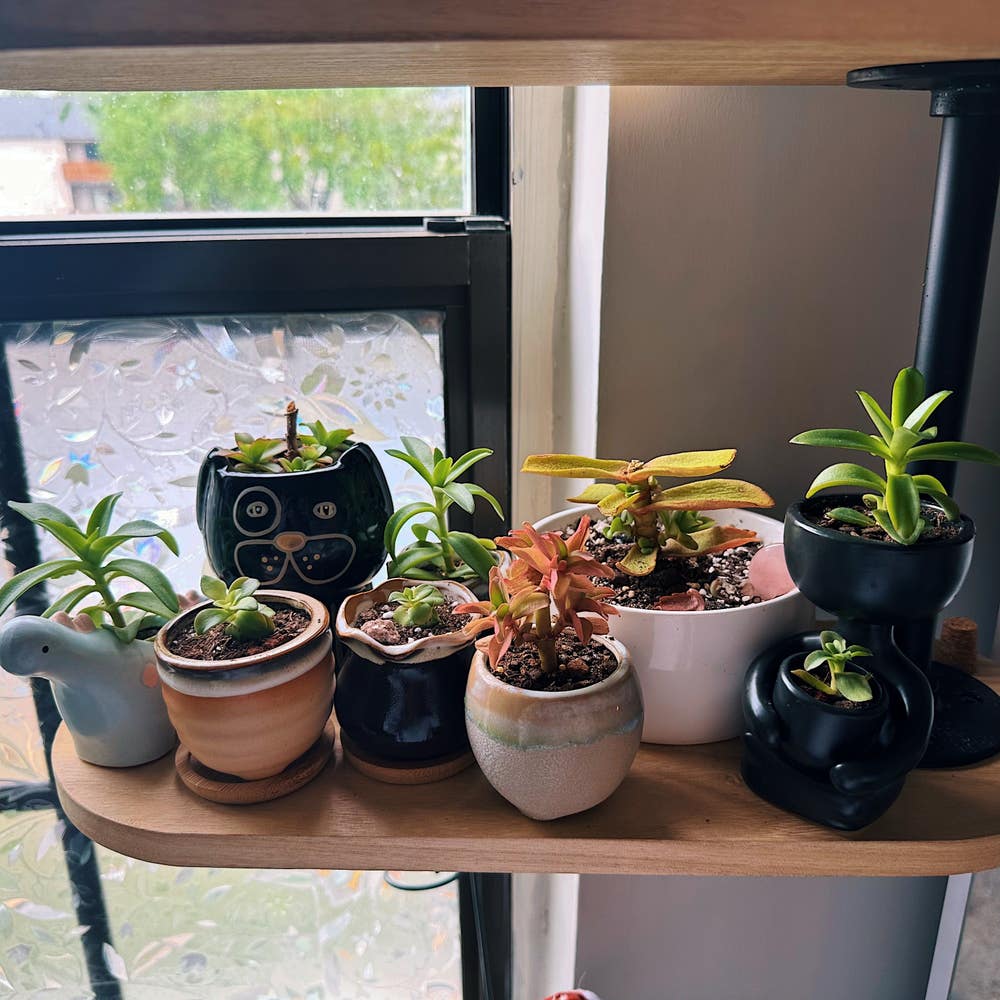
🌵 4 Tips for Choosing Soil for Your Pagoda Village Succulent
Crassula capitella 'Campfire'
By the Greg Editorial Team
Oct 04, 2024•5 min read
This article was created with the help of AI so we can cover more plants for you. May contain errors. See one? Report it here.
- 🌵 Start with cactus soil for excellent drainage in your Pagoda Village succulent mix.
- 🪴 Mix in 30% perlite and 20% coarse sand to enhance aeration and drainage.
- 🌱 Regularly rejuvenate soil every 6-12 months for optimal succulent health.
Ideal Soil Composition
Ingredients for Succulent Soil Mix 🌱
Creating the perfect soil mix for your Pagoda Village succulent is essential for its health. Start with cactus soil as the base component, which ensures excellent drainage.
Next, add perlite—aim for about 30% of your mix. This ingredient enhances aeration, allowing roots to breathe. Include coarse sand at 20% for additional drainage, preventing water from pooling around the roots. Finally, incorporate organic matter like coconut coir or compost, making up 10% of the mix to provide essential nutrients.
Ratios for Optimal Mix ⚖️
For an optimal succulent soil mix, follow these ratios: 50% cactus soil, 30% perlite, and 20% coarse sand. This combination strikes the right balance between drainage and nutrient retention.
Importance of Drainage and Aeration 💧
Good drainage and aeration are crucial for succulent health. They prevent root rot by allowing excess water to escape, which is vital for maintaining healthy roots.
Moreover, proper aeration promotes robust root development. When roots have access to air, they grow stronger and more resilient, ensuring your succulent thrives.
With the right soil composition in place, your Pagoda Village succulent will be well on its way to flourishing. Next, let’s explore how to identify and resolve unhealthy soil conditions.
Identifying and Resolving Unhealthy Soil
🕵️♂️ Signs of Unhealthy Soil
Moldy soil is a common issue, often appearing as white or gray fuzzy growth on the surface. This can result from overwatering, poor drainage, or insufficient air circulation.
Compaction is another red flag. If the soil feels hard and dense, and water pools on the surface, it limits root growth and water absorption, which can be detrimental to your succulent.
🔬 How to Test Soil Health
To ensure your Pagoda Village Succulent thrives, regular pH testing is essential. The ideal pH range is between 6.0 and 7.0, and you can use pH test strips or a digital pH meter for accurate readings.
Checking moisture levels is equally important. Simply insert your finger 1-2 inches into the soil; if it remains wet for extended periods, it’s a sign of overwatering.
🛠️ Solutions for Soil Issues
If you notice moldy soil, take immediate action by removing the affected top layer. Allow the soil to dry out before rewatering to prevent further issues.
For long-term solutions, improve drainage by adding perlite or coarse sand. If mold persists, consider using a fungicide to tackle the problem effectively.
To rejuvenate compacted soil, gently loosen it with a fork or chopstick. Incorporating perlite or pumice can significantly improve texture and drainage.
Rejuvenation should be done every 6-12 months, depending on the condition of your potting mix. Regular maintenance will keep your succulent healthy and thriving.
With these strategies, you can ensure your soil remains healthy, setting the stage for a vibrant Pagoda Village Succulent. Next, let’s explore how to create a homemade soil mix tailored to your succulent’s needs.
Creating a Homemade Soil Mix
🌱 Step-by-Step Guide to Making Your Own Succulent Soil
Creating the perfect soil mix for your Pagoda Village succulent is straightforward. Start by gathering your materials: cactus soil, perlite, coarse sand, and organic matter.
Next, measure your ingredients according to the ideal ratios. Combine 50% cactus soil, 30% perlite, and 20% coarse sand for optimal drainage and aeration.
Mix everything thoroughly in a large container until the blend is uniform. This ensures that each ingredient is evenly distributed, providing your succulent with the best environment.
Finally, test the soil texture. It should feel gritty and well-draining, allowing excess water to escape while retaining some moisture.
🥗 Recommended Ingredients and Their Benefits
Understanding the role of each ingredient can help you appreciate your homemade mix even more.
Cactus soil: This serves as the solid base, packed with essential nutrients to support growth.
Perlite: This lightweight material enhances aeration and drainage, preventing root rot.
Coarse sand: It prevents soil compaction and improves drainage, ensuring your succulent's roots can breathe.
Organic matter: This ingredient supplies nutrients while retaining some moisture, striking a balance that succulents love.
By using these ingredients, you create a thriving environment for your Pagoda Village succulent, setting the stage for healthy growth.
As you dive deeper into succulent care, understanding soil pH and nutrient needs will be essential for your plants' success.
Soil pH and Nutrient Needs
Ideal pH Range for Pagoda Village Succulent 🌱
Understanding soil pH is crucial for your Pagoda Village succulent. It directly influences nutrient availability and root health, ensuring your plant thrives.
To maintain optimal growth, aim for a pH range of 6.0 to 7.0. Regular testing is key; check your soil's pH every six months to keep it in check.
Nutrient Requirements and How to Amend Soil Accordingly 🌿
Succulents require essential nutrients to flourish, particularly nitrogen, phosphorus, and potassium (NPK). These nutrients support healthy growth and vibrant foliage.
To amend your soil, consider using slow-release fertilizers during the growing season. Additionally, incorporating worm castings or compost can provide organic nutrients, enriching your succulent's environment.
By paying attention to pH and nutrient needs, you set the stage for a thriving Pagoda Village succulent. With the right care, your plant will flourish, showcasing its unique beauty.
⚠️ Safety First
This content is for general information and may contain errors, omissions, or outdated details. It is not medical, veterinary advice, or an endorsement of therapeutic claims.
Always consult a qualified healthcare professional before using any plant as food, medicine, or supplement.
Never eat any plant (or feed one to pets) without confirming its identity with at least two trusted sources.
If you suspect poisoning, call Poison Control (800) 222-1222, the Pet Poison Helpline (800) 213-6680, or your local emergency service immediately.
Spotted an error? Please report it here.
Create the perfect soil mix for your Pagoda Village succulent 🌵 with Greg's tailored tips, ensuring your plant thrives with the right balance of nutrients and drainage!