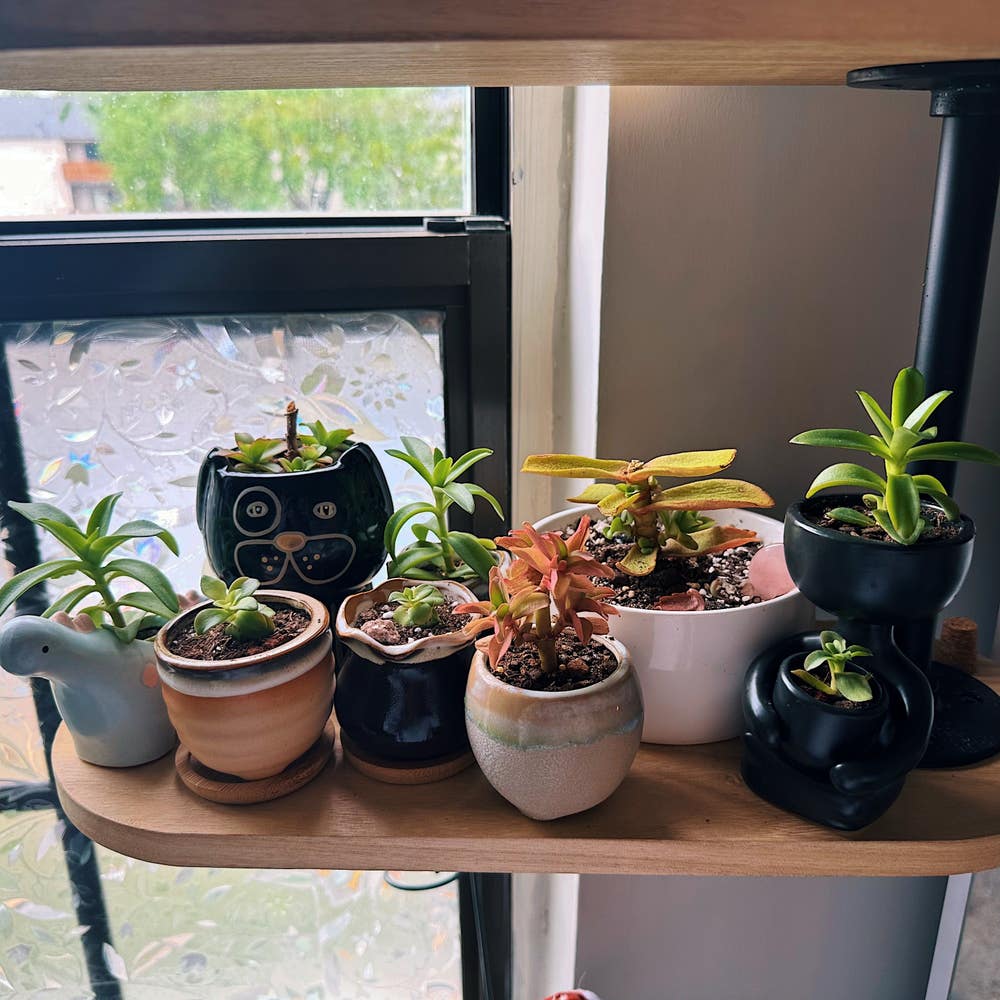
When to Repot Pagoda Village Succulent 🌵
Crassula capitella 'Campfire'
By the Greg Editorial Team
Oct 04, 2024•7 min read
This article was created with the help of AI so we can cover more plants for you. May contain errors. See one? Report it here.
- 🌱 Signs of root bound include roots out of drainage holes and quick soil drying.
- 🌞 Best time to repot is spring or early summer, avoiding dormancy periods.
- 🧰 Prepare tools and choose a pot 1-2 inches larger with drainage for success.
Signs That Your Succulent Needs Repotting
🌱 Root Bound Indicators
If your succulent's roots are growing out of the drainage holes, it's a clear sign that it's root-bound. Additionally, if the soil dries out too quickly after watering, your plant may be struggling for space.
Stunted growth or a lack of new leaves can also indicate that your succulent needs a new home. These signs suggest that the roots are cramped and unable to absorb nutrients effectively.
👀 Visual Signs
Keep an eye out for yellowing leaves or leaf drop. These visual cues often signal that your succulent is unhappy and may need repotting.
Distorted or elongated growth patterns can also indicate stress. If your plant looks like it's stretching for light or growing unevenly, it might be time to give it a larger pot.
⏰ Timing Considerations
The best time to assess your succulent for repotting is during the growing season, typically spring or summer. Generally, repotting every 2-3 years is advisable to keep your plant thriving.
Recognizing these signs early can help maintain the health and beauty of your succulent. With the right timing and care, your plant will flourish in its new environment.
Ideal Timing for Repotting
🌱 Seasonal Considerations
The ideal time to repot your Pagoda Village succulent is during spring or early summer. This is when the plant is actively growing, making it more resilient to the stress of repotting.
Avoid repotting during dormancy, which typically occurs in fall and winter. During these months, your succulent is conserving energy and may not recover well from the disturbance.
🌡️ Environmental Factors
Temperature stability is crucial when repotting. Ensure that temperatures are mild to prevent shock to your plant.
Moderate humidity levels are also preferable during this process. Too much humidity can lead to excess moisture, while too little can dry out the roots.
By considering these factors, you'll set your succulent up for a successful transition to its new pot. This careful timing will help ensure your plant thrives in its new environment.
Next, let’s dive into the step-by-step guide for repotting your succulent effectively.
Step-by-Step Guide to Repotting Succulent
Repotting your succulent can seem daunting, but with the right steps, it’s a straightforward process. Here’s how to do it effectively.
🛠️ Preparation Steps
Gather Necessary Tools: Start by collecting a clean pot, potting mix, trowel, and gloves. Having everything ready will streamline the process.
Choose a New Pot: Select a pot that is 1-2 inches larger in diameter than the current one. This gives your succulent room to grow without overwhelming it.
Prepare the New Pot: Ensure the new pot has drainage holes. Proper drainage is crucial to prevent root rot.
🌱 Repotting Process
Remove the Succulent: Carefully take the succulent out of its current pot. Gently wiggle it free to avoid damaging the roots.
Loosen and Trim Roots: Inspect the roots and gently loosen any that are tightly bound. Trim away any damaged roots to promote healthy growth.
Add Potting Mix: Place a layer of potting mix at the bottom of the new pot. This provides a stable base for your succulent.
Position the Succulent: Center the succulent in the pot and fill in around it with more potting mix. Make sure it’s upright and secure.
Firm the Soil: Lightly firm the soil around the base of the plant. Avoid compacting it too much, as succulents prefer loose soil.
Water Lightly: Finally, water the succulent lightly to help settle the soil. This also gives it a refreshing drink after the move.
Repotting doesn’t have to be stressful. Following these steps will ensure your succulent thrives in its new home. Next, let’s explore the best pot materials for your succulent to keep it happy and healthy.
Best Pot Materials for Succulent
🏺 Ceramic Pots
Ceramic pots are a popular choice for succulent enthusiasts. They offer aesthetic appeal with a variety of designs and colors, making them a stylish addition to any space.
However, they can be heavy and prone to cracking, especially in extreme temperatures. If not properly glazed, ceramic pots may retain moisture, which can lead to root rot.
🥤 Plastic Pots
Plastic pots are lightweight and easy to handle, making them ideal for those who frequently rearrange their plants. They are generally less expensive than other materials, making them budget-friendly.
On the downside, plastic pots are less breathable, which can trap heat and potentially overheat the roots. This can be a concern during hot summer months.
🍂 Terracotta Pots
Terracotta pots excel in drainage and breathability, essential for healthy succulent growth. They absorb excess moisture, helping to prevent root rot, which is a common issue for succulent owners.
However, they can dry out quickly, requiring more frequent watering. Additionally, terracotta pots are prone to cracking in extreme temperatures, so keep an eye on them during seasonal changes.
🚫 When to Avoid Certain Pot Materials
It's crucial to avoid non-draining pots, such as solid glass, as they can lead to water accumulation and root rot. Also, steer clear of overly decorative pots that lack drainage holes, as they can hinder your succulent's health.
Understanding the pros and cons of different pot materials can significantly impact your succulent's well-being. Choosing the right pot is a vital step in ensuring your plants thrive and flourish.
Next, let’s explore the recommended potting mix for your succulent to further enhance its growth.
Recommended Potting Mix for Succulent
Ideal Soil Composition 🌱
Choosing the right potting mix is crucial for your succulent's health. A cactus or succulent potting mix is your best bet, as it provides the right balance of drainage and nutrients.
For optimal results, look for a mix that includes coarse sand, perlite, and peat moss. These ingredients work together to create a well-aerated environment that promotes healthy root growth.
Importance of Drainage in Succulent Pots 🚿
Drainage is non-negotiable when it comes to succulent care. It prevents root rot by allowing excess water to escape, which is vital for maintaining a thriving plant.
A well-draining potting mix is essential for healthy root systems. Without it, your succulent could struggle, leading to stunted growth or even death.
In summary, investing in the right potting mix and ensuring proper drainage will set your succulent up for success. With these foundations in place, your plant will flourish and bring joy to your space.
Next, let’s explore the best pot materials for your succulent to ensure it thrives in its new home.
Post-Repotting Care
Initial Care Steps 🌱
After repotting, it's crucial to give your succulent a little TLC. Start by placing it in a shaded area for a few days to help it acclimate.
Avoid Direct Sunlight ☀️
Direct sunlight can stress your plant further. Keeping it in the shade allows it to recover without the added pressure of harsh rays.
Signs of Stress After Repotting 😟
Watch for signs that your succulent might be struggling. Common indicators include wilting or drooping leaves, which signal that it may need more care.
Leaf Discoloration or Drop 🍂
If you notice leaf discoloration or drop, it’s a clear sign your plant is feeling the effects of the transition. Addressing these issues promptly can help your succulent bounce back.
Timing for Watering After Repotting ⏳
Timing is everything when it comes to watering. Wait 1-2 weeks before giving your succulent any water to allow the roots to settle into their new environment.
Water Lightly 💧
When you do water, keep it light. Ensure the soil is dry before the next watering to prevent over-saturation, which can lead to root rot.
By following these post-repotting care steps, you set your succulent up for a successful recovery. Next, let’s explore the ideal potting mix to ensure your plant thrives in its new home.
⚠️ Safety First
This content is for general information and may contain errors, omissions, or outdated details. It is not medical, veterinary advice, or an endorsement of therapeutic claims.
Always consult a qualified healthcare professional before using any plant as food, medicine, or supplement.
Never eat any plant (or feed one to pets) without confirming its identity with at least two trusted sources.
If you suspect poisoning, call Poison Control (800) 222-1222, the Pet Poison Helpline (800) 213-6680, or your local emergency service immediately.
Spotted an error? Please report it here.
Repot your Pagoda Village succulent like a pro 🌿 with Greg's tailored tips and reminders, ensuring it thrives in its new home!