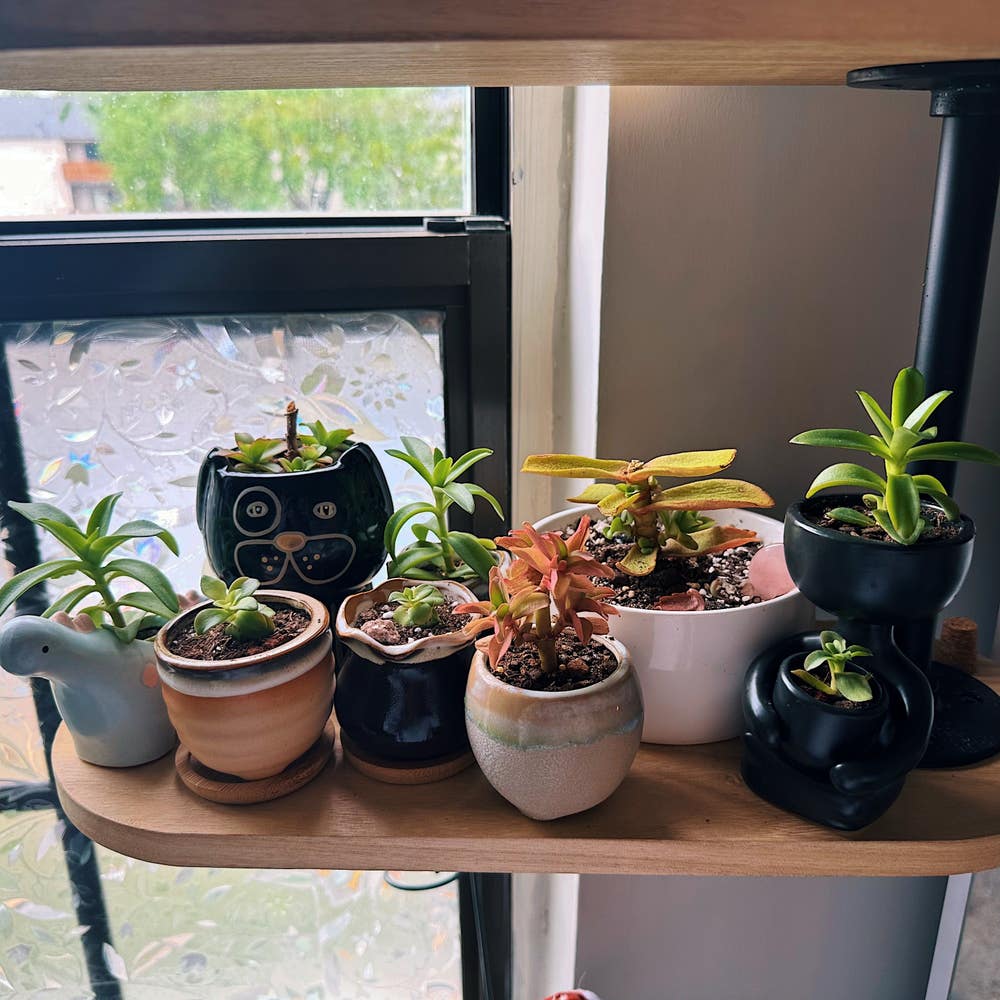
🌵 How to Cure Curling Leaves on Your Pagoda Village Succulent
Crassula capitella 'Campfire'
By the Greg Editorial Team
Oct 04, 2024•6 min read
This article was created with the help of AI so we can cover more plants for you. May contain errors. See one? Report it here.
- 🌊 Curling leaves indicate overwatering or underwatering; check soil moisture regularly.
- 🌞 Bright, indirect sunlight is essential; avoid direct light to prevent sunburn.
- 🐛 Inspect for pests like mealybugs; treat infestations promptly with neem oil.
Causes of Curling Leaves
💧 Overwatering and Its Effects
Curling leaves can often signal overwatering. Look for yellowing leaves and a mushy texture; these are clear indicators that your succulent is drowning.
Root rot is a serious consequence of overwatering, severely impacting leaf health. To prevent this, ensure your plant is in well-draining soil and adjust your watering frequency based on environmental conditions.
🚰 Underwatering and Dehydration
On the flip side, underwatering can also lead to curling leaves. Signs include wrinkled, shriveled leaves and dry soil, indicating your plant is thirsty.
To combat dehydration, regularly adjust your watering schedule to keep your succulent hydrated and healthy.
☀️ Sunburn and Excessive Light Exposure
Excessive light can cause sunburn, which manifests as brown, crispy leaf edges and discoloration. It's crucial to identify these symptoms early to protect your plant.
For optimal light conditions, place your succulent in a spot with bright, indirect sunlight. This will help prevent sunburn while still providing the light it craves.
🐛 Pest Infestations
Pests like mealybugs and aphids can wreak havoc on your succulent, leading to curling leaves. Look for signs of infestation, such as sticky residue or visible bugs on leaves.
Treatments vary from natural remedies to chemical solutions. Early detection is key for effective pest control, so keep an eye on your plant.
🌡️ Environmental Stress Factors
Temperature and humidity play significant roles in leaf health. Ideally, succulents thrive in temperatures between 60°F and 80°F.
Low humidity and temperature fluctuations can stress your plant, leading to curling leaves. To mitigate this, create a stable environment by avoiding drafts and using a humidifier if necessary.
Understanding these causes will help you diagnose and treat curling leaves effectively. Next, we’ll explore how to diagnose these symptoms accurately.
Diagnosing Curling Leaves
🌊 Identifying Symptoms of Overwatering
Overwatering can lead to significant issues for your Pagoda Village succulent. Look for key indicators like changes in leaf texture, such as a mushy feel, and check soil moisture levels; if the soil is consistently wet, it’s a sign of trouble.
To confirm overwatering, gently remove the plant from its pot and inspect the roots. If they appear brown and mushy, root rot is likely the culprit.
💧 Recognizing Signs of Underwatering
Underwatering presents its own set of challenges. Symptoms include wrinkled, shriveled leaves and dry soil that crumbles easily when touched.
To assess moisture levels, stick your finger about an inch into the soil. If it feels dry, it’s time to adjust your watering schedule.
☀️ Assessing Light Conditions and Their Impact
Light exposure is crucial for your succulent's health. Evaluate how much direct versus indirect light your plant receives throughout the day.
If your succulent is not thriving, consider relocating it to a spot with better light conditions. This simple adjustment can make a world of difference.
🐛 Checking for Pests and Damage
Pests can wreak havoc on your succulent. Conduct visual checks for common pests like mealybugs and aphids on leaves and stems.
Early detection is key for effective pest control. If you spot any pests, act quickly to prevent further damage.
🌱 Evaluating Soil Conditions and Moisture Levels
Soil quality plays a vital role in your plant's health. Check the drainage and moisture retention capabilities of your soil by observing how quickly water absorbs.
For optimal health, use well-draining soil types, such as cactus mix or a blend of potting soil and sand. This will help prevent both overwatering and underwatering issues.
By diagnosing these factors, you can take proactive steps to ensure your Pagoda Village succulent thrives. Next, let’s explore effective treatments for curling leaves.
Treatment for Curling Leaves
💧 Adjusting Watering Practices
To tackle curling leaves, start by assessing current moisture levels. This involves checking the soil's dampness to determine if it's too wet or too dry.
Next, establish an appropriate watering frequency based on your succulent's needs. Implementing a consistent watering routine will help maintain optimal moisture levels and prevent future issues.
☀️ Improving Light Conditions
Optimizing light exposure is crucial for your succulent's health. Consider relocating the plant to a brighter area where it can receive ample indirect sunlight.
If direct sunlight is too harsh, use sheer curtains to diffuse the light. This balance will protect your plant from sunburn while ensuring it gets the light it craves.
🐞 Treating Pest Infestations
Pest control is essential for maintaining healthy leaves. Natural remedies, like neem oil, can be effective against common pests, while chemical treatments may offer quicker results.
Follow a step-by-step application process for pest treatments. This ensures thorough coverage and maximizes the effectiveness of your chosen method.
🌱 Soil Amendments for Better Drainage
Soil composition plays a vital role in your succulent's health. Recommended soil mixes typically include a blend of potting soil, sand, and perlite for optimal drainage.
If your current soil retains too much moisture, amend it by mixing in additional perlite or sand. This adjustment will enhance drainage and promote healthier root systems.
✂️ Pruning Damaged Leaves
Pruning is a straightforward way to improve your succulent's appearance and health. Start by identifying which leaves are damaged or curling.
Use clean, sharp tools for cutting. This minimizes the risk of infection and helps your plant recover more quickly.
By addressing these treatment areas, you can restore your Pagoda Village succulent's vitality and prevent future curling leaves. Next, let’s explore how to prevent these issues from arising in the first place.
Preventing Future Curling Leaves
💧 Best Watering Practices
Establishing a consistent watering routine is crucial for your Pagoda Village succulent. Adjust your frequency based on the season and environmental conditions, ensuring the soil dries out between waterings.
☀️ Ideal Light Conditions and Placement
Optimal light exposure is key to preventing curling leaves. Place your succulent in a bright spot with indirect sunlight, and consider seasonal adjustments to ensure it receives the right amount of light year-round.
🐛 Regular Pest Inspections and Treatments
Routine checks for pests can save your plant from significant damage. Inspect your succulent every few weeks for signs of infestations, such as sticky residue or visible bugs.
🌱 Soil Selection and Care Tips
Choosing the right soil is essential for your plant's health. Look for well-draining soil mixes that promote airflow and prevent root rot, ensuring your succulent thrives.
🍂 Seasonal Care Adjustments
As seasons change, so should your care practices. Adjust your watering and light exposure based on the weather to keep your succulent healthy and happy throughout the year.
By following these preventive measures, you can maintain the health of your Pagoda Village succulent and enjoy its beauty for years to come. Next, let’s explore how to diagnose curling leaves effectively.
⚠️ Safety First
This content is for general information and may contain errors, omissions, or outdated details. It is not medical, veterinary advice, or an endorsement of therapeutic claims.
Always consult a qualified healthcare professional before using any plant as food, medicine, or supplement.
Never eat any plant (or feed one to pets) without confirming its identity with at least two trusted sources.
If you suspect poisoning, call Poison Control (800) 222-1222, the Pet Poison Helpline (800) 213-6680, or your local emergency service immediately.
Spotted an error? Please report it here.
Transform your Pagoda Village succulent's curling leaves into vibrant growth 🌿 by using Greg's tailored care reminders and expert tips for optimal watering and pest management!