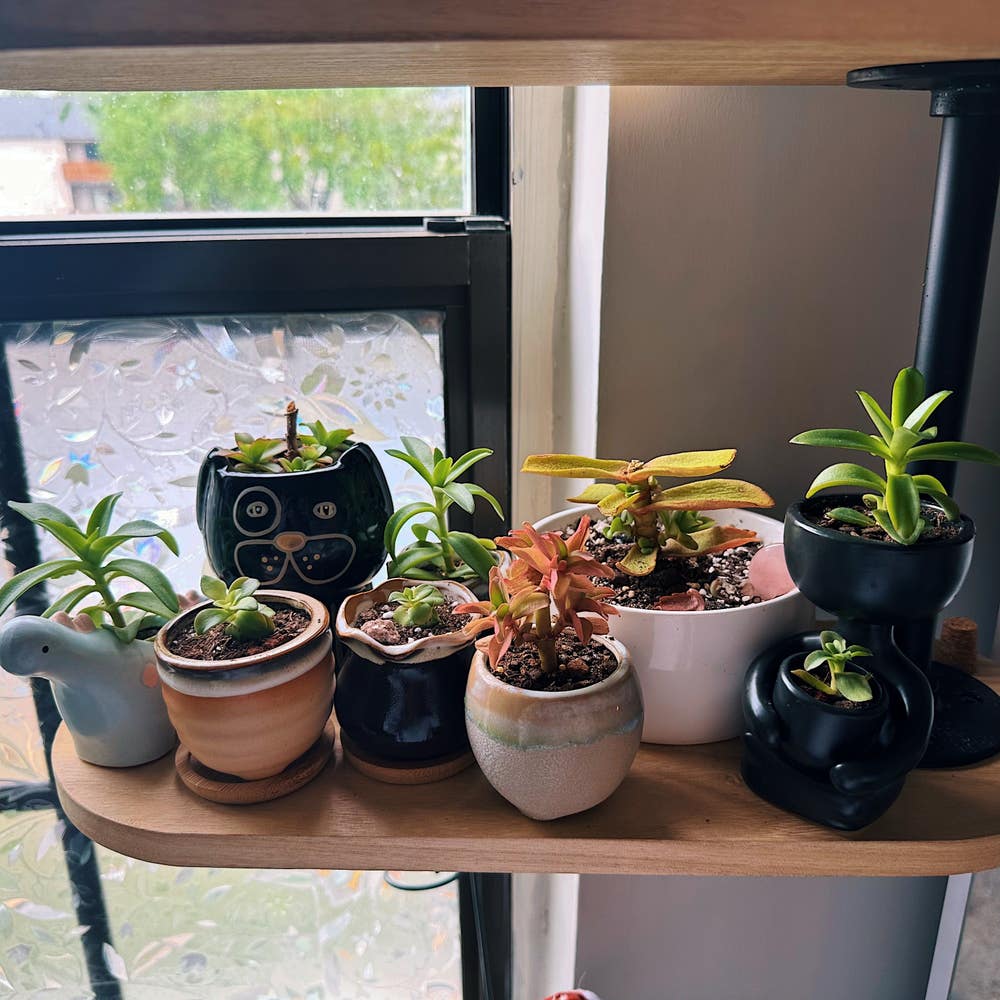
Your Pagoda Village Succulent's Light Requirements 🌵
Crassula capitella 'Campfire'
By the Greg Editorial Team
Oct 04, 2024•4 min read
This article was created with the help of AI so we can cover more plants for you. May contain errors. See one? Report it here.
- 🌞 Pagoda Village succulents need 6-8 hours of bright indirect light daily for optimal growth.
- 🪴 Use LED grow lights to supplement natural light, ensuring 12-14 hours exposure.
- 🌿 Monitor light levels with a meter to prevent issues like etiolation or leaf scorch.
Indoor Light Guidance
Best Light Conditions for Indoor Growth 🌞
To keep your Pagoda Village succulent thriving, aim for bright indirect light for 6-8 hours daily. This optimal exposure helps maintain healthy growth without the risk of leaf burn.
For placement, consider positioning your succulent near south or west-facing windows. This ensures maximum light while avoiding direct sunlight, which can scorch those delicate leaves.
To monitor light levels effectively, using a light meter can be a game-changer. It helps you ensure your plant is getting the right amount of light for its needs.
Recommended Grow Light Types and Usage 💡
When natural light isn't enough, grow lights can step in to save the day. LED grow lights are energy-efficient and long-lasting, making them a popular choice. Alternatively, fluorescent lights work well for supplemental lighting.
For best results, position your grow lights 12-24 inches above the plant. Aim for 12-14 hours of light per day to mimic natural conditions and promote optimal growth.
The benefits of using grow lights are significant. They provide consistent light exposure, regardless of the season, and help prevent etiolation, which is when your succulent stretches out due to insufficient light.
By understanding these indoor light requirements, you'll set your Pagoda Village succulent up for success. Next, let’s explore how to provide the ideal outdoor light conditions for your plant.
Outdoor Light Guidance
Ideal Outdoor Light Exposure 🌞
For your Pagoda Village succulent, full sun is essential. Aim for 6-8 hours of direct sunlight daily to keep it thriving.
Placement matters! Position your succulent on patios or balconies with southern exposure. This ensures it receives the maximum light it craves. Also, steer clear of shaded areas created by trees or buildings to avoid stunted growth.
Seasonal Considerations for Outdoor Placement 🍂
In spring and summer, basking in full sun is ideal for your succulent. However, as the seasons change, keep an eye on reduced sunlight during fall and winter. You might need to relocate your plant to a sunnier spot.
Temperature adjustments are also crucial. Protect your succulent from extreme heat or cold by providing partial shade during peak sun hours. This simple step can make a world of difference in its health and vitality.
With the right outdoor light exposure, your Pagoda Village succulent will flourish beautifully. Next, let’s explore the role of light in flowering and how it affects your plant's blooming potential.
Role of Light in Flowering
🌸 Does Pagoda Village Succulent Flower?
Pagoda Village succulents are not known for frequent flowering. However, with the right conditions, particularly adequate light exposure, you can encourage these beauties to bloom.
💡 Impact of Light on Flowering
Light intensity plays a crucial role in stimulating flowering. Higher light levels can significantly increase the chances of your succulent producing flowers.
⏳ Duration of Light Exposure
The length of light exposure is equally important. Longer days in spring can promote flower development, making it a key factor in your succulent's growth cycle.
Understanding these light dynamics can help you create the perfect environment for your Pagoda Village succulent. With the right care, you might just witness a rare bloom!
Next, let’s explore troubleshooting light issues to ensure your succulent thrives.
Troubleshooting Light Issues
Signs of Insufficient Light 🌑
When your Pagoda Village succulent isn't getting enough light, it will show clear signs.
- Etiolation: This is when the stems become elongated and the leaves sparse, as the plant stretches toward the light.
- Leaf Drop: Lower leaves may start to fall off, signaling that the plant lacks the energy it needs to thrive.
To remedy this, consider moving your succulent to a brighter location. Alternatively, you can supplement its light exposure with grow lights for a boost.
Signs of Too Much Light ☀️
On the flip side, too much light can also harm your succulent.
- Leaf Scorch: Look for brown, crispy edges on the leaves, which indicate that the plant is getting burned.
- Wilting: Leaves may droop or appear limp, a sign that the plant is struggling to cope with excess light.
If you notice these symptoms, try relocating your succulent to a shadier spot. Providing partial shade during peak sun hours can also help protect it from harsh sunlight.
By keeping an eye on these signs, you can ensure your Pagoda Village succulent gets just the right amount of light it needs to flourish. Next, let’s explore the role of light in flowering and how it affects your succulent's blooming potential.
⚠️ Safety First
This content is for general information and may contain errors, omissions, or outdated details. It is not medical, veterinary advice, or an endorsement of therapeutic claims.
Always consult a qualified healthcare professional before using any plant as food, medicine, or supplement.
Never eat any plant (or feed one to pets) without confirming its identity with at least two trusted sources.
If you suspect poisoning, call Poison Control (800) 222-1222, the Pet Poison Helpline (800) 213-6680, or your local emergency service immediately.
Spotted an error? Please report it here.
Ensure your Pagoda Village succulent thrives in bright light 🌞 by using Greg's tailored care tips to monitor its needs and create the ideal environment for blooming!