💧 Humidity Needs for Your Pagoda Village Succulent
Crassula capitella 'Campfire'
By the Greg Editorial Team
Oct 04, 2024•5 min read
This article was created with the help of AI so we can cover more plants for you. May contain errors. See one? Report it here.
- 🌬️ Ideal humidity for Pagoda Village Succulents is 40%-60% for healthy growth.
- 🌱 Low humidity causes leaf curling and stunted growth; monitor levels closely.
- 💧 High humidity risks root rot and fungal issues; ensure proper air circulation.
Ideal Humidity Levels for Pagoda Village Succulent
Recommended Humidity Range 🌬️
For your Pagoda Village Succulent, the ideal relative humidity is between 40% and 60%. This range is crucial because it mimics the succulent's natural habitat, allowing it to thrive without stress.
Maintaining this humidity level helps the plant absorb moisture effectively, promoting healthy growth and vibrant leaves. Too low or too high can lead to various issues, so keeping it within this sweet spot is key.
Effects of Humidity on Growth 🌱
Humidity plays a significant role in shaping the leaf structure and color vibrancy of your succulent. When humidity is optimal, leaves tend to be plump and rich in color, showcasing their natural beauty.
Moreover, adequate humidity aids in moisture retention within the plant. This means your succulent can better withstand dry spells, ensuring it remains healthy and robust.
Understanding these dynamics will help you create the perfect environment for your Pagoda Village Succulent, setting the stage for a flourishing plant.
Effects of Low and High Humidity
🌵 Symptoms of Low Humidity
Low humidity can lead to noticeable symptoms in your Pagoda Village Succulent. You might see leaf curling and browning, which are clear indicators that your plant is struggling.
Stunted growth and reduced vigor are also common signs. If your succulent looks less lively, it may be time to assess the humidity levels in its environment.
⏳ Long-term Consequences of Low Humidity
Over time, low humidity can make your succulent more susceptible to pests and diseases. This increased vulnerability can lead to a cascade of issues that affect the overall health of your plant.
Additionally, prolonged low humidity can result in dehydration, which may ultimately lead to the death of your succulent. Keeping an eye on humidity is crucial for its long-term survival.
🌧️ Symptoms of High Humidity
On the flip side, high humidity can also spell trouble for your Pagoda Village Succulent. You may notice fungal growth and rot, which can quickly become a serious issue.
Leaf spots and discoloration are other symptoms of excessive moisture. If your plant starts looking off, humidity could be the culprit.
⚠️ Long-term Consequences of High Humidity
If high humidity persists, root rot can set in, leading to a significant decline in plant health. This condition can be devastating, as it often goes unnoticed until it's too late.
Overall, maintaining the right humidity balance is essential for the vitality of your succulent. A little attention can go a long way in ensuring your plant thrives.
As you navigate the complexities of humidity, understanding your local conditions will help you tailor your care strategies effectively.
Local Humidity Considerations
🌧️ Assessing Your Local Humidity Levels
To care for your Pagoda Village Succulent effectively, start by measuring your local humidity levels. Use tools like hygrometers or weather apps to get accurate readings.
Understanding your local climate is crucial. Factors such as temperature and geography can significantly impact humidity, affecting how you care for your succulent.
📅 Seasonal Variations in Humidity
Humidity levels fluctuate with the seasons, which can influence your succulent's health. For instance, winter often brings drier air, while summer may increase humidity.
Adjust your care routine accordingly. During dry months, you might need to increase humidity, while in more humid seasons, you may need to monitor moisture levels closely.
🌿 Adapting Care Based on Local Conditions
Tailor your watering and humidity management strategies to your local conditions. If you live in a humid area, reduce watering frequency to prevent over-saturation.
Always observe how your plant responds to changes in humidity. This attentiveness will help you fine-tune your care approach, ensuring your Pagoda Village Succulent thrives.
As you adapt to local humidity, you’ll set the stage for a healthy, vibrant plant. Next, let’s explore effective strategies for managing humidity levels.
Strategies for Managing Humidity
🌧️ Boosting Humidity for Pagoda Village Succulent
Using Humidifiers
To create a cozy environment for your Pagoda Village Succulent, consider using a humidifier. Look for ultrasonic or evaporative models, as they efficiently add moisture to the air.
Place the humidifier near your plants but not directly on them. Regular maintenance, like cleaning the tank, ensures optimal performance and prevents mold growth.
Grouping Plants Together
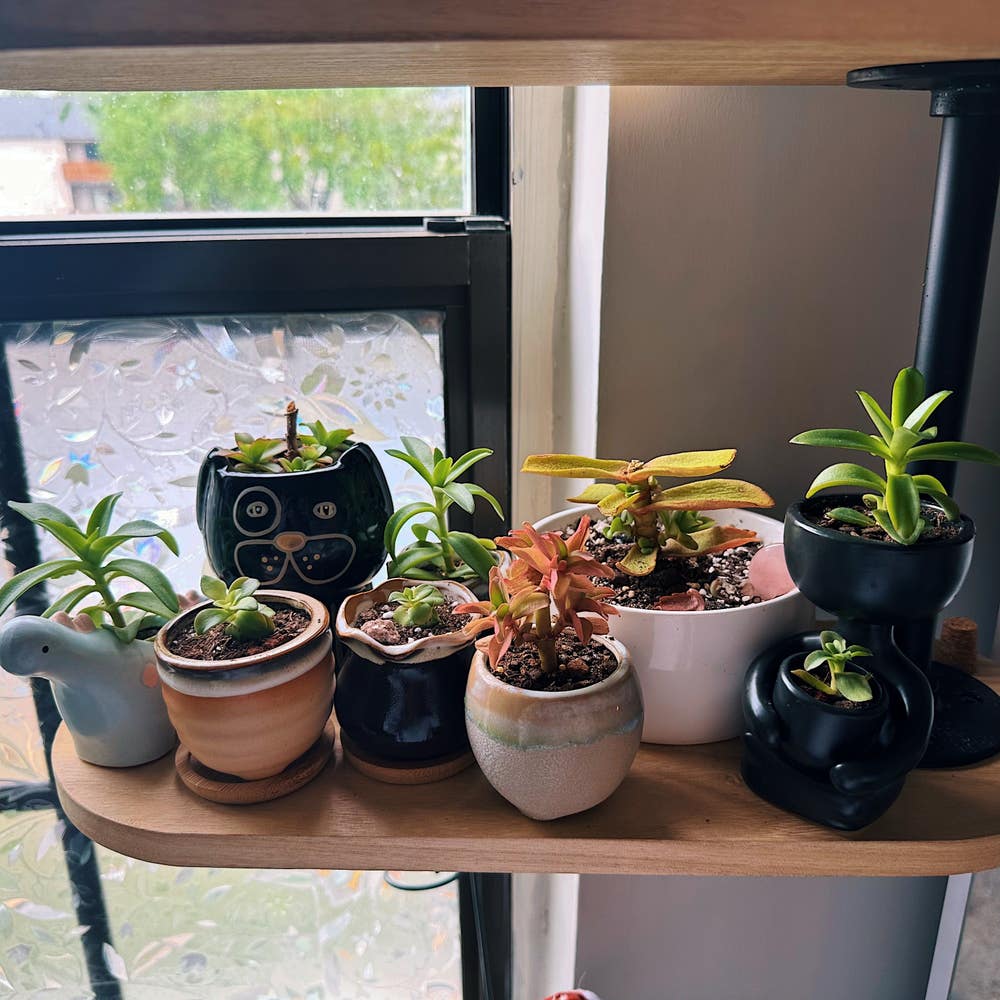
Clustering your succulents can create a mini-humidity haven. When plants are close, they share moisture, which can significantly boost humidity levels.
Aim for a spacing of about 2-3 inches between plants. This arrangement allows for airflow while maximizing humidity retention.
Pebble Trays and Water Bowls
Creating pebble trays is a simple yet effective way to enhance humidity. Fill a shallow tray with pebbles and add water until it just touches the pebbles.
Place your succulent pot on top of the pebbles. This setup allows for evaporation, which increases humidity around the plant.
🌬️ Reducing Humidity for Pagoda Village Succulent
Proper Air Circulation
Good airflow is crucial in preventing excess humidity. Ensure your Pagoda Village Succulent is in a well-ventilated area to promote healthy growth.
Consider using a small fan to enhance air circulation, especially in humid conditions. This will help keep the environment balanced.
Avoiding Overwatering
Overwatering can lead to increased humidity levels, which is detrimental to your succulent. Watch for signs like yellowing leaves or a mushy stem.
To maintain ideal humidity, water only when the top inch of soil feels dry. This practice keeps your plant happy and healthy.
Choosing the Right Potting Mix
Selecting a well-draining potting mix is essential for your Pagoda Village Succulent. Look for mixes that contain perlite or sand to promote drainage.
A good potting mix reduces humidity retention, ensuring your plant thrives without the risk of root rot. This choice is vital for long-term health.
By managing humidity effectively, you can create the perfect environment for your Pagoda Village Succulent. Next, let’s explore how local humidity conditions can impact your succulent care.
⚠️ Safety First
This content is for general information and may contain errors, omissions, or outdated details. It is not medical, veterinary advice, or an endorsement of therapeutic claims.
Always consult a qualified healthcare professional before using any plant as food, medicine, or supplement.
Never eat any plant (or feed one to pets) without confirming its identity with at least two trusted sources.
If you suspect poisoning, call Poison Control (800) 222-1222, the Pet Poison Helpline (800) 213-6680, or your local emergency service immediately.
Spotted an error? Please report it here.
Keep your Pagoda Village Succulent thriving 🌿 by using Greg's tailored humidity tips and reminders to create the perfect environment for vibrant growth!