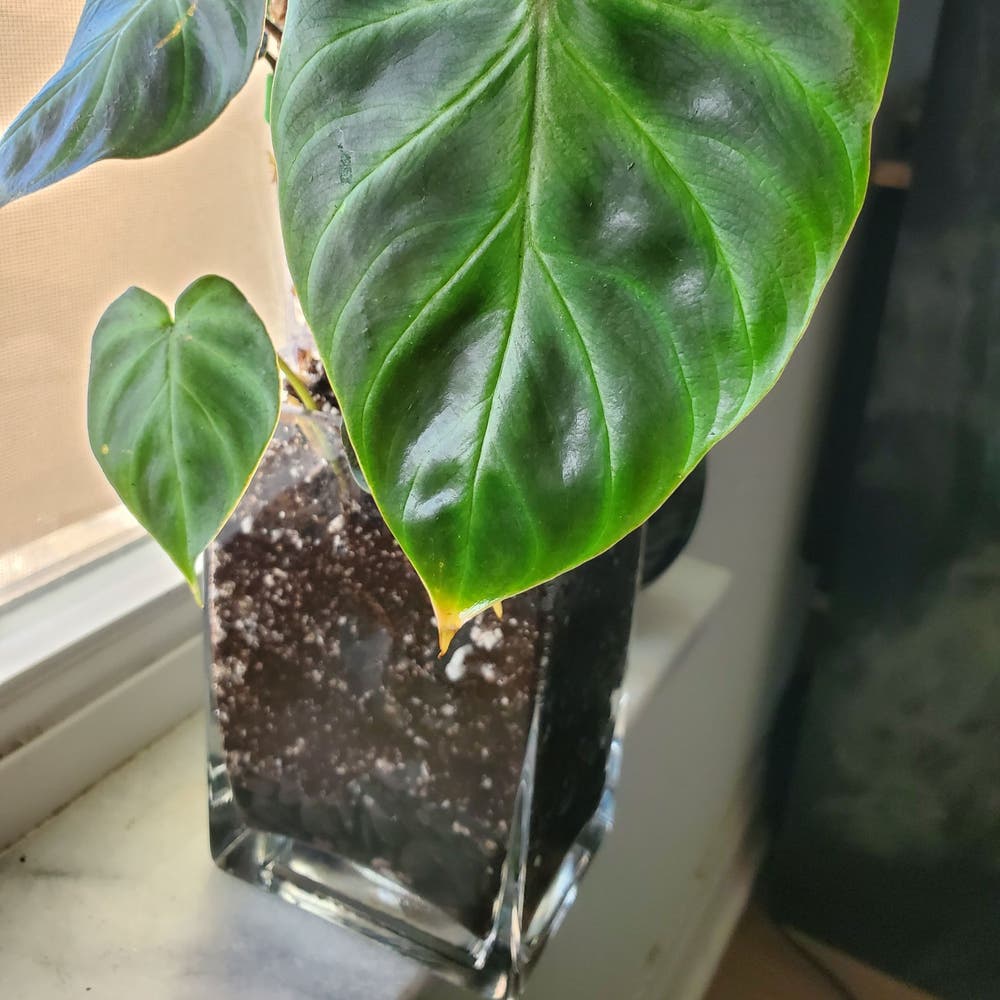
How to Cure Droopy Leaves on Your Philodendron 😢
Philodendron verrucosum
By the Greg Editorial Team
Oct 04, 2024•6 min read
This article was created with the help of AI so we can cover more plants for you. May contain errors. See one? Report it here.
- 💧 Overwatering and underwatering cause droopy leaves; balance moisture for health.
- 🌞 Indirect light is essential; adjust exposure to prevent stress and drooping.
- 🌿 Humidity levels of 60%-80% are crucial for vibrant, healthy Philodendrons.
Causes of Droopy Leaves
💧 Overwatering and Its Effects
Overwatering is a common culprit behind droopy leaves. Symptoms include yellowing leaves, mushy stems, and, of course, drooping.
Root rot often follows excess moisture, leading to decay that can severely damage your plant. Maintaining appropriate soil moisture levels is crucial for a healthy Magnificent Philodendron.
🚰 Underwatering and Its Effects
On the flip side, underwatering can also cause droopy leaves. Look for crispy leaf edges, wilting, and drooping as telltale signs.
If you catch it in time and provide proper watering, your plant can bounce back in just a few days.
🌱 Environmental Stress Factors
Light Requirements
Your Philodendron thrives in indirect light. Too much or too little light can lead to stress, manifesting as leaf discoloration and drooping.
Keep an eye on your plant's light conditions to ensure it stays vibrant and healthy.
🌡️ Temperature Preferences
The ideal temperature range for a Magnificent Philodendron is between 65°F to 80°F (18°C to 27°C). Fluctuations outside this range can negatively impact leaf health.
Maintaining a stable environment helps your plant flourish.
💨 Humidity Needs
Humidity plays a vital role in your plant's well-being. Aim for humidity levels between 60% to 80% for optimal growth.
Low humidity can lead to leaf curling and drooping, so consider ways to boost moisture in the air.
🌿 Soil Quality and Drainage Issues
Well-draining soil is essential for moisture retention and root health. Poor drainage can lead to water pooling on the surface and slow drainage, both of which can stress your plant.
Choosing the right soil mix can make all the difference.
🐛 Pests and Diseases Affecting Leaf Health
Common pests like spider mites and aphids can wreak havoc on your Philodendron, leading to drooping leaves.
Additionally, fungal infections can cause symptoms such as discoloration and wilting, further impacting leaf health.
Understanding these causes will help you diagnose and treat droopy leaves effectively. Next, we’ll explore how to diagnose the specific issues affecting your plant.
Diagnosing Droopy Leaves
🚰 Signs of Overwatering vs. Underwatering
To diagnose droopy leaves, start by examining the leaf texture and color. Overwatered leaves often appear yellow and mushy, while underwatered ones may have crispy edges and a dull appearance.
Next, inspect the roots. Healthy roots should be firm and white, while brown, mushy roots indicate overwatering and potential root rot.
🌪️ Identifying Environmental Stress Symptoms
Observe your plant’s leaves closely. Curling, yellowing, and drooping can signal environmental stress, often linked to inadequate light or temperature fluctuations.
Additionally, monitor your plant's surroundings. Ensure that light, temperature, and humidity levels align with the needs of your Magnificent Philodendron.
🐛 Checking for Pests and Diseases
Regularly inspect your plant for pests. Look closely at the leaves and stems for signs of spider mites or aphids, which can cause drooping.
Identify disease symptoms by checking for fungal spots or discoloration. Wilting leaves can also indicate a more serious underlying issue.
🌱 Soil Moisture Testing Methods
Testing soil moisture is crucial for maintaining plant health. Use the finger test by inserting your finger into the soil; if it feels dry up to your first knuckle, it’s time to water.
Alternatively, a moisture meter can provide a more precise reading. Aim for soil moisture levels that are consistently moist but not soggy for your Magnificent Philodendron.
With these diagnostic techniques, you’ll be well-equipped to identify the causes of droopy leaves and take action. Next, let’s explore effective treatments to revive your plant.
Treating Droopy Leaves
🌊 Step-by-Step Guide to Adjusting Watering Practices
Assess Current Watering Schedule: Start by evaluating how often and how much you water your Magnificent Philodendron. This initial step is crucial for understanding your plant's needs.
Adjust Watering Frequency: Based on your assessment, modify your watering routine according to the soil moisture levels. If the soil feels soggy, cut back; if it’s dry, increase your watering.
Implement a Consistent Routine: Use the Greg plant care app to set reminders for watering. Consistency is key to keeping your plant healthy and vibrant.
💧 How to Improve Humidity Levels
Methods to Increase Humidity: Consider misting your plant, using pebble trays filled with water, or investing in a humidifier. These methods can significantly enhance the moisture in the air around your Philodendron.
Ideal Placement for Humidity: Grouping your plants together can create a microclimate with higher humidity. This simple trick can make a big difference in their overall health.
🌱 Soil Amendment Techniques for Better Drainage
Recommended Soil Amendments: To improve drainage, mix in perlite, orchid bark, or sand. These materials help prevent water from pooling and promote healthy root growth.
Step-by-Step Soil Mixing Guide: Start with a base of potting soil, then add 20-30% of your chosen amendments. This blend will ensure your plant has the right balance of moisture retention and drainage.
🐞 Pest Control Methods for Affected Plants
Organic Pest Control Options: If pests are a problem, consider using neem oil, insecticidal soap, or introducing beneficial insects. These methods are effective and environmentally friendly.
Step-by-Step Pest Management Plan: Begin by inspecting your plant for signs of infestation. Once identified, apply your chosen treatment according to the product instructions, and monitor your plant closely for improvement.
By following these steps, you can effectively treat droopy leaves and restore your Magnificent Philodendron to its former glory. Next, let’s explore how to prevent future droopy leaves through best practices and regular maintenance.
Preventing Future Droopy Leaves
🌱 Best Practices for Philodendron Care
Establishing a regular watering routine is crucial for your Magnificent Philodendron. Water when the top inch of soil feels dry, ensuring you don’t let it sit in soggy conditions.
Proper light and humidity levels are equally important. Aim for bright, indirect light and maintain humidity between 60% to 80% for optimal growth.
🌦️ Seasonal Care Adjustments
As seasons change, so should your care practices. In warmer months, increase watering frequency, while in winter, reduce it to prevent overwatering.
Preparing for winter is essential. Protect your plant from cold drafts by moving it away from windows or using a plant cover.
🔍 Regular Monitoring and Maintenance Tips
Routine inspections can save your plant from potential issues. Check for pests and monitor moisture levels regularly to catch problems early.
Keeping a care journal is a great way to track changes in your plant's health. Documenting your observations can help you identify patterns and adjust care accordingly.
🪴 Choosing the Right Potting Mix
Opt for well-draining potting mixes to support your Philodendron's health. Look for mixes containing perlite or orchid bark to enhance drainage.
Repotting is vital for growth. Consider repotting every couple of years or when you notice roots emerging from the drainage holes, ensuring your plant has room to thrive.
By following these best practices, you can keep your Magnificent Philodendron healthy and vibrant, preventing those pesky droopy leaves. Next, let’s explore how to treat droopy leaves effectively.
⚠️ Safety First
This content is for general information and may contain errors, omissions, or outdated details. It is not medical, veterinary advice, or an endorsement of therapeutic claims.
Always consult a qualified healthcare professional before using any plant as food, medicine, or supplement.
Never eat any plant (or feed one to pets) without confirming its identity with at least two trusted sources.
If you suspect poisoning, call Poison Control (800) 222-1222, the Pet Poison Helpline (800) 213-6680, or your local emergency service immediately.
Spotted an error? Please report it here.
Keep your Magnificent Philodendron perky and vibrant 🌿 by using Greg's tailored watering reminders and moisture checks to ensure it gets just the right care!