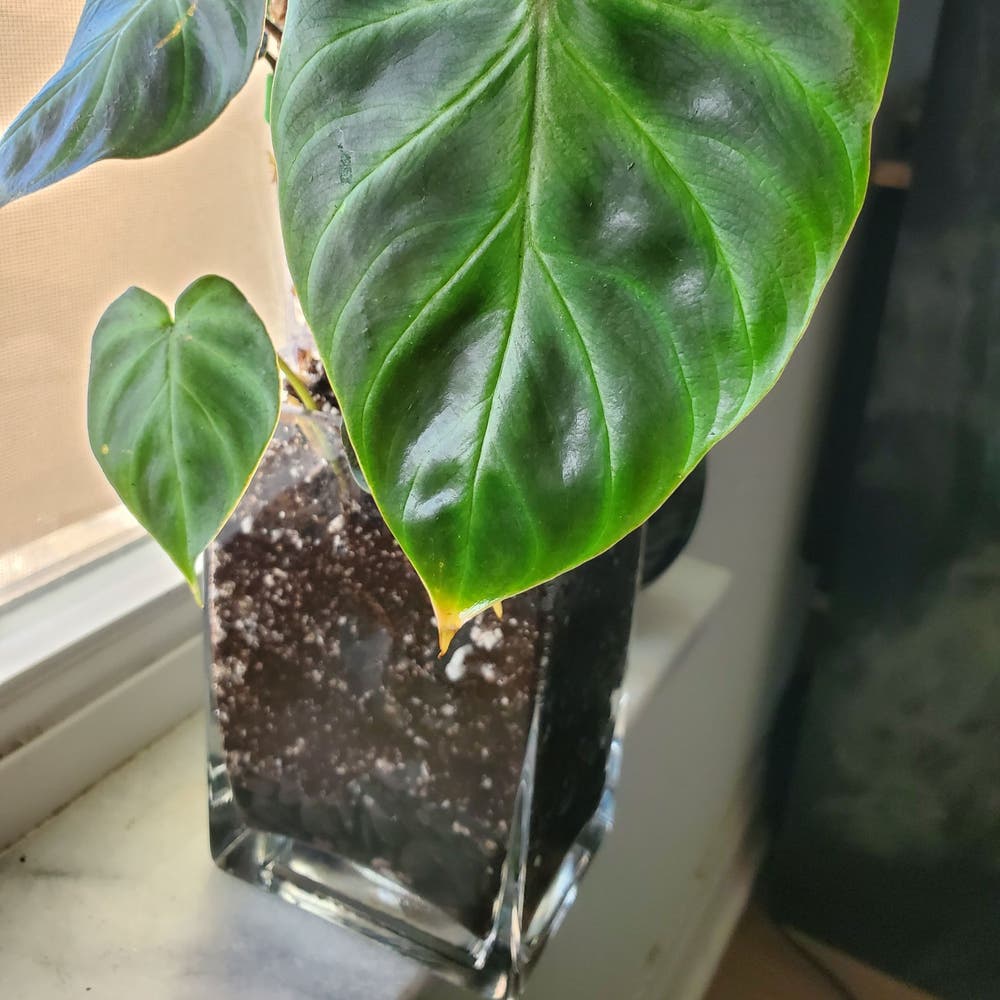
💧 How Do I Know When My Ecuador Philodendron Needs Water?
Philodendron verrucosum
By the Greg Editorial Team
Jun 18, 2024•3 min read
This article was created with the help of AI so we can cover more plants for you. May contain errors. See one? Report it here.
- Drooping leaves mean thirst; check the top inch of soil with your finger.
- Water thoroughly, avoid waterlogging, and use lukewarm water.
- Adjust for light, temperature, and seasons; observe your plant's feedback.
Spotting a Parched Philodendron
🚨 Visual SOS signals from your plant
Your Ecuador Philodendron is not shy about asking for a drink. Drooping leaves are its way of waving a white flag. If the soil feels like a forgotten cactus's home, it's time to hydrate. And when leaf edges start looking like they've been toasting in the sun, your plant's begging for moisture.
💧 The finger test and other soil moisture tricks
Moisture meters are like plant whisperers, telling you exactly when to water. But if you're more hands-on, the finger test is your go-to – if the top inch of soil feels like a dry martini, it's time to water. Don't forget to eyeball the soil surface; if it's pulling away from the pot like a bad breakup, your Philodendron needs some TLC.

Quenching the Thirst: Watering Your Philodendron Right
💦 The art of the perfect pour
Thorough watering is key, but overdoing it invites trouble. Imagine giving your plant a full meal rather than a snack – saturate the soil until water runs free from the drainage holes. Avoid waterlogging; your philodendron isn't auditioning for a role in a swamp.
The ideal water temperature for your tropical amigo? Lukewarm – think room temperature. Cold water can shock the roots, and hot water is a definite no-go unless you're brewing tea, not tending plants.
🚰 Ensuring proper drainage
Drainage holes are non-negotiable. They're the escape route for excess water, like a fire exit for your plant's roots. Without them, you're setting the stage for root rot, and nobody wants that.
To prevent a soggy disaster, elevate your pot or use a saucer to catch runoff. Root rot is a stealthy killer; it's easier to prevent than to cure. Remember, your philodendron craves a drink, not a bath.

Factors That Sway Your Watering Schedule
🌞 Home environment and its sneaky effects
Light, temperature, and humidity aren't just small talk topics; they're critical to your plant's hydration. A sun-drenched room can turn your philodendron into a thirsty beast, while a cool, dim corner might mean it barely sips water.
🍽️ The pot and soil dynamic
Pot size and soil type aren't just about aesthetics. They're the unsung heroes in your plant's life story. A snug pot and fast-draining mix might have you watering more often, while a larger pot with moisture-retentive soil tells a different tale.
🌦️ Seasonal shifts in plant hydration
As the seasons change, so does your plant's drinking habits. Summer might see it chugging water like there's no tomorrow, but come winter, it's all about moderation. Adjust your watering routine as if you're tuning an instrument—gently and with precision.

Tailoring Your Watering Routine
🌱 Observing and adapting to your plant's needs
Your Ecuador Philodendron is a living barometer for its own needs. Watch closely; the plant will exhibit tell-tale signs when it's time to adjust your watering approach.
Learning from your plant's feedback Leaves drooping like a disappointed parent? Time to hydrate. Conversely, if the leaves start to yellow, you might be drowning your green buddy in love. Your plant's feedback is more reliable than a weather forecast, so pay attention.
When to tweak your watering habits Got a change in your home environment? Maybe you've cranked up the heat or the sun's decided to play hide and seek. Your watering routine should be as dynamic as the weather. If your Philodendron could talk, it would probably tell you to ease up on the aqua in winter and go for a splash more in summer. Keep your eyes peeled for these cues.
⚠️ Safety First
This content is for general information and may contain errors, omissions, or outdated details. It is not medical, veterinary advice, or an endorsement of therapeutic claims.
Always consult a qualified healthcare professional before using any plant as food, medicine, or supplement.
Never eat any plant (or feed one to pets) without confirming its identity with at least two trusted sources.
If you suspect poisoning, call Poison Control (800) 222-1222, the Pet Poison Helpline (800) 213-6680, or your local emergency service immediately.
Spotted an error? Please report it here.
Keep your Ecuador Philodendron perky 🌿 with Greg's tailored reminders, ensuring you water perfectly every time, just like the finger test suggests!