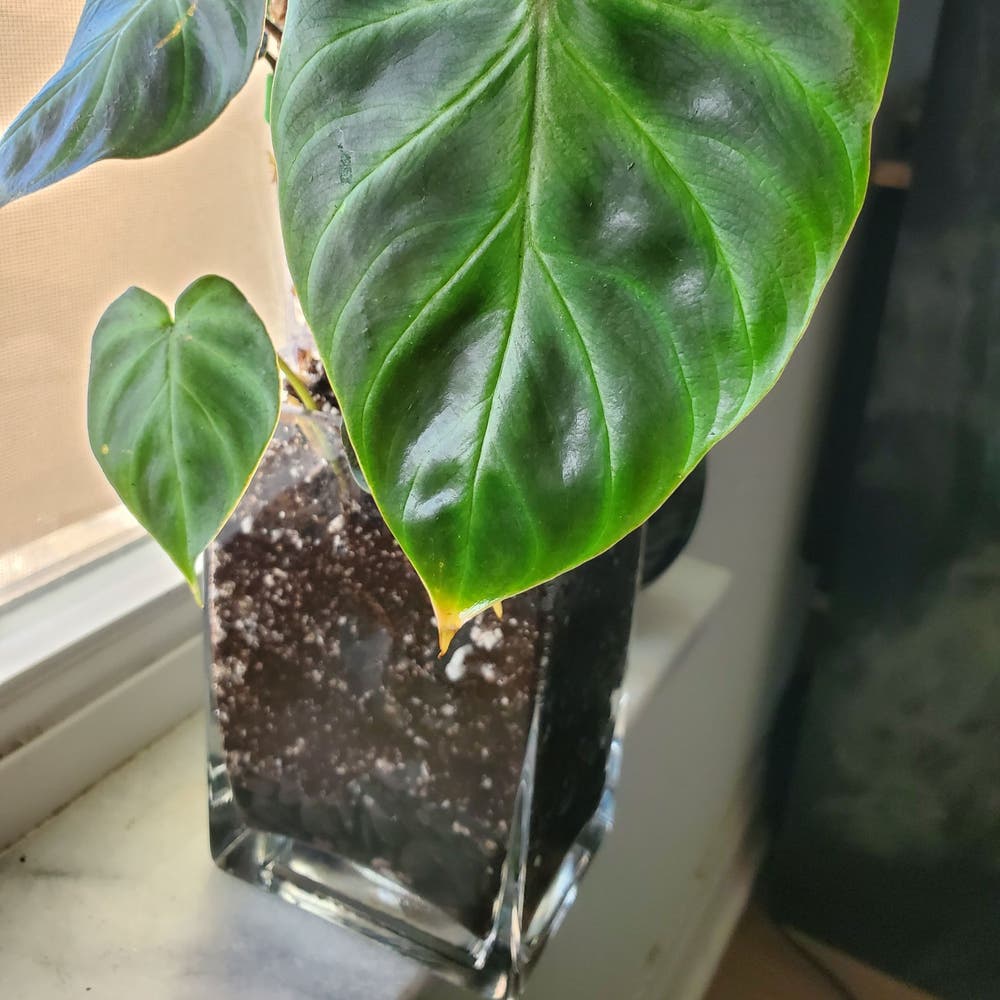
Why Are My Ecuador Philodendron Leaves Droopy? 😔
Philodendron verrucosum
By the Greg Editorial Team
Jun 18, 2024•5 min read
This article was created with the help of AI so we can cover more plants for you. May contain errors. See one? Report it here.
- Overwatering and underwatering both lead to droopy leaves.
- 🌞 Bright, indirect light is essential for healthy foliage.
- Consistent watering and light monitoring prevent future droopiness.
Spotting the Signs: When Droopiness Strikes
Identifying droopy leaves in your Ecuador Philodendron is crucial. They should stand tall, not sag.
🚨 Quick Symptoms Checklist for Droopy Leaves
- Leaves hanging lower than usual
- Firmness gone, leaves feeling flimsy
- Yellowing leaves paired with wet soil suggest overwatering
- Brown tips or edges indicate dehydration
- Leaf drop is more than a seasonal issue; it's a distress signal
- Soil moisture: swampy or bone-dry soil is a bad sign
- Check for water blisters on leaves, a symptom of overwatering
- Crisp leaves? Your plant might be as thirsty as a desert
- Papery leaves are crying out for a drink
- Leggy stems and sparse leaves hint at insufficient light
- Cold drafts or temperatures below 12°C (54°F) can cause droopiness
- Look for pest evidence like speckles or webbing
- Brown, limp leaves can signal disease
Remember, a droopy Philodendron is a plant in distress. Act swiftly to correct care routines and revive your plant's perky posture.

The Usual Suspects: Pinpointing the Culprits
💧 Too Much H2O: The Overwatering Effect
Overwatering can turn your Ecuador Philodendron into a soggy mess. Leaves droop like they've given up on life itself. Yellowing or browning leaves are waving a white flag, and if the soil feels like a wet sponge, it's time to back off the watering can.
🌱 Signs of Waterlogged Roots
Roots need to breathe, and too much water drowns the conversation. Signs of root rot include a stench of decay when you lift the pot, and roots that are as mushy as overripe bananas. Mold on the soil surface is nature's way of saying, "Ease up on the H2O, buddy."
🏜️ Not Enough Sips: The Underwatering Issue
Conversely, underwatering leaves your plant as thirsty as a marathon runner without a water station. Leaves that are as crisp as fall foliage are silently screaming for hydration. If the soil is drier than a stand-up comedian's wit, it's time to quench that thirst.
🚱 Clues that Your Plant is Parched
When leaves curl tighter than a miser's fist, it's a cry for help. New growth turning yellow faster than traffic lights is a sure sign your Philodendron is on a water strike. A pot lighter than your last paycheck? Definitely time to water.
💡 Let There Be (The Right Amount of) Light!
The Goldilocks zone for your Philodendron is bright, indirect light. Too much sun and your leaves will crisp up like they're ready for a summer BBQ. Not enough, and they'll stretch out, thin and weak, like they're trying to catch the last rays of a setting sun.
🌿 Symptoms of Light-Related Leaf Languish
Leaves that are bleached out or scorched are victims of a light overdose. If they're reaching out like they're trying to escape the dark, you're probably under-lighting. Aim for that sweet spot where the leaves bask in the light without frying in it.

The Rescue Mission: Reviving Your Philodendron
💧 Fine-Tuning the Waterworks
Balancing your plant's hydration needs is like being a barista for your green buddy—precision is key. Overwatering can lead to a soggy mess, while underwatering turns your Philodendron into a wilted wallflower.
Signs of Water Woes
Yellowing leaves? That's the plant's SOS for help. Check the soil before you water—stick your finger in up to the knuckle. If it's dry, it's time to quench your plant's thirst. If it's damp, hold off to avoid drowning the roots.
Moisture Monitoring Tricks
Forget fancy gadgets; your finger is the best tool. But if you're tech-inclined, a moisture meter won't hurt. Remember, the goal is to mimic the moist, but not swampy, floor of a rainforest.
💡 Light It Up (Or Tone It Down)
Sunlight for your Philodendron should be just right—think of it as the plant's Goldilocks zone. Too much sun and your leaves will throw shade by turning brown; too little, and they'll stretch out like they're reaching for the last cookie.
Finding the Sweet Spot
Rotate your plant regularly to ensure even growth and prevent it from doing the Leaning Tower of Pisa impression. If the leaves are fading or the stems are elongating, it's time to play musical chairs with your plant's location.
Change of Scenery
Sometimes, all your Philodendron needs is a new perspective. If adjusting the blinds doesn't cut it, consider moving your plant to a different room where the lighting is just right—like finding the perfect spot at a coffee shop for your mood.

Future-Proofing Your Foliage: Prevention Tactics
💧 Consistency is Key: Watering Wisdom
Crafting the perfect watering rhythm for your Ecuador Philodendron is like tuning a guitar – it's got to be just right. Use a moisture meter or the finger test to gauge the soil's wetness. If it clings to your finger like a needy pet, hold off on the water. Set calendar alerts as a nudge, but trust your touch over tech.
🌤 Keeping an Eye on the Sky: Light Monitoring
Your plant's light needs will shift with the seasons, kind of like your mood on a Monday versus a Friday. Regular light checks are as essential as your morning scroll through social media. If your Philodendron could talk, it would beg for bright, indirect light – think of it as the plant equivalent of a perfect selfie spot.
🌱 Soil Savvy: Ensuring Drainage and Aeration
Well-draining soil is the unsung hero in the plant world. It's like a good support system – essential for growth. If your Philodendron's feet are constantly wet, it's time to rethink your soil situation. Consider a soil refresh or repot when the mix feels more like a swamp than a bed. Remember, aeration is like giving your plant room to breathe – and who doesn't need a little space now and then?
⚠️ Safety First
This content is for general information and may contain errors, omissions, or outdated details. It is not medical, veterinary advice, or an endorsement of therapeutic claims.
Always consult a qualified healthcare professional before using any plant as food, medicine, or supplement.
Never eat any plant (or feed one to pets) without confirming its identity with at least two trusted sources.
If you suspect poisoning, call Poison Control (800) 222-1222, the Pet Poison Helpline (800) 213-6680, or your local emergency service immediately.
Spotted an error? Please report it here.
Ensure your Ecuador Philodendron's leaves stay perky and healthy 🌿 with Greg's personalized watering reminders and light metering for that just-right environment.