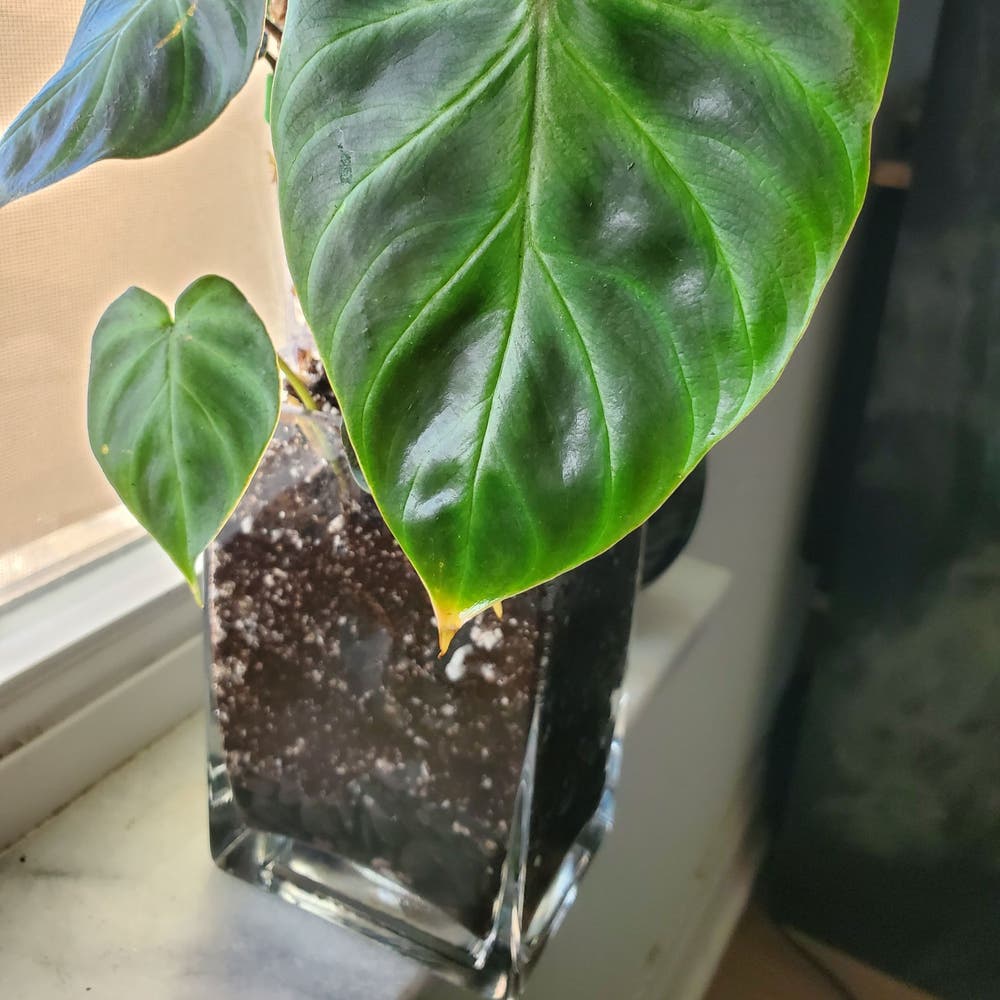
💧 Why Are My Ecuador Philodendron Leaves Curling?
Philodendron verrucosum
By the Greg Editorial Team
Jun 18, 2024•4 min read
This article was created with the help of AI so we can cover more plants for you. May contain errors. See one? Report it here.
- Persistent curling indicates distress, signaling water issues or environmental factors.
- 🌡️💧 Temperature, humidity, and pests majorly influence leaf health.
- Consistent care prevents curling, focus on watering, pests, and environment.
Spotting the Signs: Leaf Curling in Action
Leaf curling in Ecuador Philodendron can be as subtle as a whisper or as blatant as a shout. Recognizing the signs early is key to plant health.
🍃 When to Worry: Curling vs. Natural Movement
Understanding the normal growth patterns of Ecuador Philodendron leaves is crucial. While some movement is natural, persistent curling often signals distress.
Look for leaves that stay curled without unfurling, as this is not typical behavior. If the leaves resemble a closed book for extended periods, it's time to investigate.
📸 Visual Guide to Curling Leaves
Visual cues are your allies. Leaves curling upwards might be crying out for water, while those curling downwards could be drowning in it.
Crispy edges or leaves that feel like parchment are broadcasting a need for attention. These are not just aesthetic issues but signs of an unhappy Philodendron.

The Usual Suspects: Common Causes of Curling Leaves
In the world of Ecuador Philodendron care, leaf curling is the equivalent of a cryptic crossword clue. Let's crack the code.
💨 Environmental Culprits
Temperature tantrums and humidity huffs can turn Philodendron leaves into curly fries. Airflow is another silent player; stagnant air is to leaves what a dead zone is to cell reception.
🐜 Pests and Pathogens
Your plant's leaves might be throwing a curling party for pests like spider mites and aphids. Diseases like powdery mildew and root rot are the uninvited guests that overstay their welcome.
💧 Watering Woes
Watering is a high-stakes game of balance. Too much, and roots drown; too little, and leaves curl up tighter than a rolled yoga mat. The finger test doesn't lie—if the soil feels like a wet sponge, put the watering can down.

First Aid for Curly Leaves
Leaf curling in your Ecuador Philodendron can be a real head-scratcher. Let's dive into a step-by-step guide to straighten things out.
🌡️ Adjusting the Environment
Temperature and humidity can throw your Philodendron into a tizzy. Keep the thermostat steady, ideally between 65-75°F (18-24°C). As for humidity, think tropical—aim for a 40-60% sweet spot. If your air is drier than a stand-up comedian's wit, consider a humidifier or a pebble tray to up the ante.
🐜 Pest Control and Disease Management
Pests are like uninvited party crashers. At the first sign of leaf munchers, show them the door with insecticidal soap or neem oil. Keep an eye out for fungal party poopers too; they love a moist leaf. Keep things dry where it counts to avoid unwanted fungal raves.
💧 Watering Revamp
Your Philodendron's thirst level should be consistent, not a rollercoaster. If the soil's as dry as a desert, give it a drink. But if it's damp, put the watering can down—overwatering leads to more drama than a soap opera. A moisture meter can be your best friend here, helping to avoid any watering guesswork.

Keeping It Straight: Prevention Strategies
💪 Consistent Care Routine
Routine checks and tweaks keep your plant in top form. Water when the top inch of soil is dry, and give it the bright, indirect light it craves. Think of it as a regular health check-up for your green buddy.
🛡️ Proactive Pest and Disease Measures
Be the hawk that spots trouble before it starts. Regular inspections for pests and discoloration are your first line of defense. If you do find freeloaders, show them the door with neem oil or insecticidal soap. Keep your tools clean; they're potential Trojan horses for disease.
💦 Mastering Moisture Management
Watering is an art form. Adjust for humidity and temperature changes, and make sure your Philodendron's pot has proper drainage. It's like setting the right tempo in a symphony—get it wrong, and the whole performance suffers.
⚠️ Safety First
This content is for general information and may contain errors, omissions, or outdated details. It is not medical, veterinary advice, or an endorsement of therapeutic claims.
Always consult a qualified healthcare professional before using any plant as food, medicine, or supplement.
Never eat any plant (or feed one to pets) without confirming its identity with at least two trusted sources.
If you suspect poisoning, call Poison Control (800) 222-1222, the Pet Poison Helpline (800) 213-6680, or your local emergency service immediately.
Spotted an error? Please report it here.
Ensure your Ecuador Philodendron thrives with unfurled leaves 🌿 by letting Greg tailor your watering and environmental care, preventing those pesky curls.