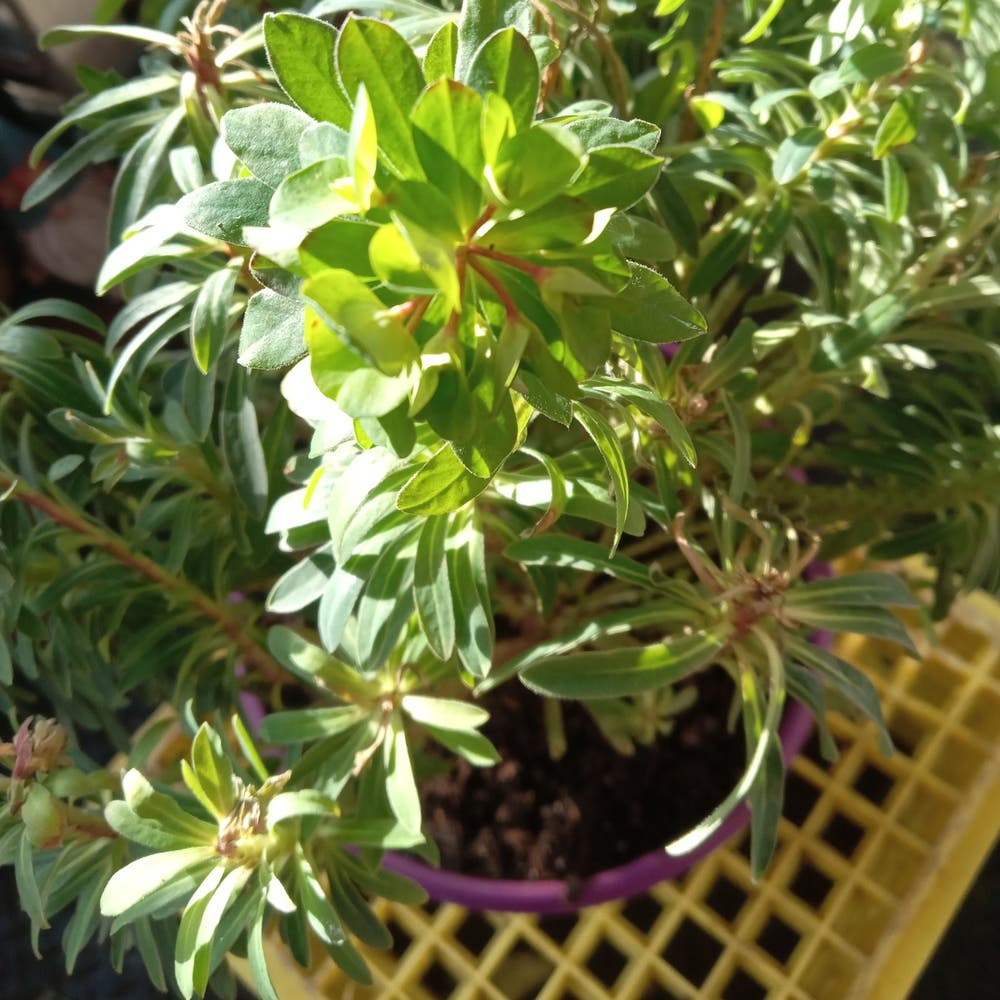
Why Are My Albanian Spurge Leaves Falling Over?
Euphorbia characias
By the Greg Editorial Team
Jun 18, 2024•3 min read
This article was created with the help of AI so we can cover more plants for you. May contain errors. See one? Report it here.
Prevent your Albanian Spurge's slump and secure leafy triumph with this vital care guide. 🌿✨
- Overwatering leads to droopy leaves; let soil dry out before watering.
- 🌞🌱 Bright, indirect light is ideal to prevent sad, slouchy leaves.
- Nutrients and pest control are crucial for leaf strength and vigor.
When Water Gets Too Cozy: Overwatering Woes
🚱 Spotting the Signs of Overwatering
Overwatered Albanian Spurge leaves are drama queens; they droop, yellow, and fall off like overplayed pop songs. Soggy soil clings to your fingers with a desperation that screams "help!" If the plant's base smells like a forgotten gym locker, root rot may have set in.
Drying Out the Drama
To prevent your Albanian Spurge from turning into a botanical sob story, let the soil dry out like a good sense of humor—partially, but not bone-dry. Watering moderation is key; think of it as a watering can with an attitude problem—it should only make an appearance when absolutely necessary.

Light: The Balancing Act
🌞 Too Little Sun, Too Much Slouch
Albanian Spurge leaves droop when they're starved of light. They need that sweet spot of brightness without the burn, like a plant's version of a perfect day at the beach—sun-kissed but not sunburned.
🌟 Let There Be Light (But Just Enough)
Finding the ideal sunlight for Albanian Spurge is like setting the perfect room temperature—not too hot, not too cold. Aim for bright, indirect light; it's the plant equivalent of a cozy sweater on a chilly day. Too much sun, and you're dealing with leaf scorch; too little, and you'll see a sad, slouchy Spurge. Rotate your plant regularly to ensure even exposure, avoiding the greenhouse effect of a one-sided tan.

The Hunger Games: Nutrient Deficiency and Leaf Strength
🌱 Decoding the Droop: Is It a Nutrient Call for Help?
Albanian Spurge leaves drooping like a disappointed parent? It's time to investigate. Nutrient deficiencies can make your plant look like it's on a hunger strike. Yellow leaves often signal a nitrogen deficiency, while a general lack of vigor might mean phosphorus is playing hooky.
🌿 Feeding for Vigor
To get those leaves standing at attention, think of fertilizer as a plant protein shake. A balanced, water-soluble fertilizer can be like a pep talk for your plant's roots. But remember, moderation is key—over-fertilizing is the botanical equivalent of a sugar crash. Schedule feedings according to your plant's growth cycle, and keep an eye out for signs of improvement or distress. Adjust your approach like a plant whisperer tuning into subtle green vibes.

Bug Battles and Disease Defenses
🐜 Unwanted Guests: Pests and Diseases Causing Collapse
Pests are the party crashers of the plant world, and diseases are the silent whispers of doom for your Albanian Spurge. Mealybugs, spider mites, and fungal issues like root rot can lead to the heartbreak of droopy leaves. Look out for the telltale signs: yellowing leaves, webbing, or brown spots that scream "uninvited guests."
🛡️ Fortifying Foliage: Treatment and Prevention Tactics
Eviction notices for pests might include a blast of water or insecticidal soap. For the stubborn squatters, bring out the big guns: a miticide. Fungal diseases? They hate dry leaves, so keep the foliage as moisture-free as a desert. Prune like a pro to stop the spread, as if you're cutting out the bad parts of a movie. Prevention is your best bet: embrace regular inspections like they're part of your morning ritual. And remember, the best offense is a good defense—create a utopia for your plants that's a no-go zone for pests.
⚠️ Safety First
This content is for general information and may contain errors, omissions, or outdated details. It is not medical, veterinary advice, or an endorsement of therapeutic claims.
Always consult a qualified healthcare professional before using any plant as food, medicine, or supplement.
Never eat any plant (or feed one to pets) without confirming its identity with at least two trusted sources.
If you suspect poisoning, call Poison Control (800) 222-1222, the Pet Poison Helpline (800) 213-6680, or your local emergency service immediately.
Spotted an error? Please report it here.
Keep your Albanian Spurge from drooping with confidence 🛡️ as Greg guides you in perfecting the watering, lighting, and feeding routine for your plant's best posture.