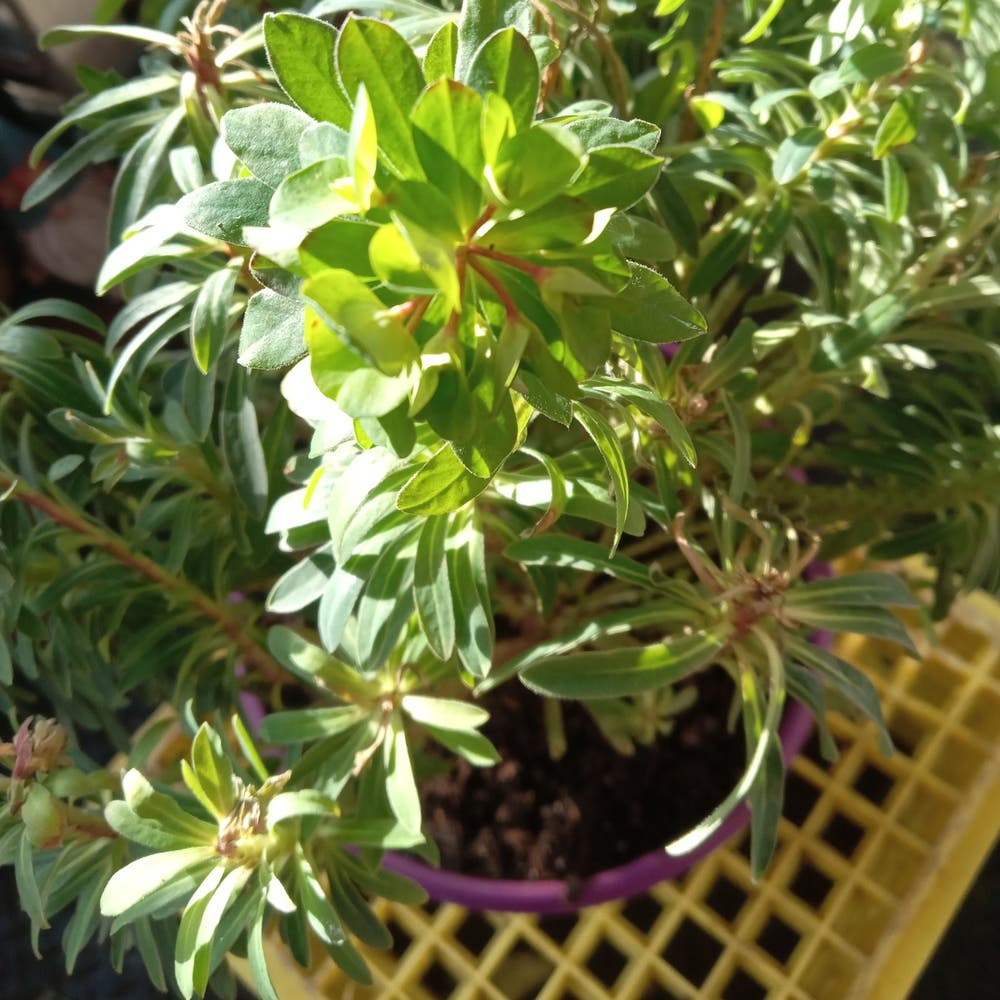
Why Are My Albanian Spurge Leaves Droopy?
Euphorbia characias
By the Greg Editorial Team
Jan 18, 2024•5 min read
This article was created with the help of AI so we can cover more plants for you. May contain errors. See one? Report it here.
Rescue your Albanian Spurge from droopiness 🍂 and unlock the secrets to its perkiness with expert care tips!
- Droopy leaves signal neglect; look for yellowing, spots, and texture changes.
- Water wisely: too little causes wilting, too much leads to mushy roots.
- Sunlight and temperature matter: aim for 18-24ºC and bright, indirect light.
Spotting the Signs of Droopy Leaves
🍂 Visual cues: What does a droopy Albanian Spurge look like?
Droopy Albanian Spurge leaves are the plant's white flag of surrender to unfavorable conditions. They hang with a certain sadness, their usual perkiness replaced by a wilted, lifeless demeanor. Color fades, and the leaves' once crisp edges may now resemble a deflated balloon post-celebration.
🚨 Beyond the droop: Other symptoms to watch for
But it's not just about the droop. Look for companions to this despair: yellowing, perhaps, or a brittle texture that speaks of neglect. Leaves might develop spots, a sign they're losing the battle against disease or pests. If they're dropping like flies at a swatter convention, it's a clear distress call. Keep an eye out for sticky substances or webbing, telltale signs of uninvited insect guests. And if the leaves seem to mimic a zombie's complexion, it's high time for an intervention.
The Thirst Quench: Watering Woes Unraveled
🏜️ Underwatering: The Wilt that Warns
Wilting leaves and soil that's as dry as a humorist's monologue are your plant's SOS. If the pot feels lighter than your post-holiday guilt, it's time to act.
Spotting the Signs of Thirst
Crispy leaves and shrinking soil are the plant's equivalent of a parched throat. Browning tips are like sad little flags, signaling a desperate need for water.
Quenching the Need: Hydration Tips
Give the soil a drink until water escapes the drainage holes, mimicking a generous rain shower. Then, let the soil dry out a bit before the next watering—think of it as a mini drought-and-downpour cycle.
💦 Overwatering: When Too Much Love Drowns
Overwatering is the helicopter parent of plant care. Leaves turning yellow or black, and roots that feel like overboiled pasta, are signs you need to ease up on the H2O.
Root Rot and Its Soggy Signals
Root rot sneaks up like a ninja, attacking from below. Mushy roots and a permanent state of soil sogginess are the tell-tale signs of this silent assassin.
Finding the Balance: Watering Best Practices
Mulch is your ally, keeping soil moisture consistent without creating a swamp. A balanced fertilizer is like a plant's multivitamin, but don't overdo it—too much and you'll deal with the aftermath of a nutrient binge. Regularly check the soil's moisture; if it clings to your finger, it's not yet time for another round. Remember, the goal is damp, not drenched.
Light and Temperature: The Balancing Act
🌞 Too Much Sun or Not Enough? Understanding Light Needs
Sunburn or shade dweller? Your Albanian Spurge's droop might be a cry for the perfect light. Bright, indirect sunlight is the sweet spot, but too much direct exposure can lead to a crispy disaster. If your plant's leaves are sporting brown or white spots, it's time to rethink its sunbathing routine.
Identifying Light-Related Droopiness
Leaves that look more fried than a beachgoer without sunscreen? That's a sign of too much light. On the flip side, if your spurge is stretching out like it's doing yoga for the sun, it's probably starved for light.
Adjusting Your Spurge's Sunbathing Routine
Rotate your plant to ensure even exposure without playing favorites. If it's getting too much direct light, introduce some shade or move it to a spot with filtered light. Remember, it's like a Goldilocks scenario—not too much, not too little, just right.
🌡️ Feeling the Heat: Temperature Troubles
Your spurge's droop could be a temperature tantrum. It prefers a climate more consistent than your mood on a Monday morning.
Signs of Temperature Stress
If your plant's leaves are dropping like they're too tired to stand up, it might be feeling the heat. Aim for a stable range, ideally between 18-24ºC (64-75ºF).
Keeping Your Cool: Ideal Temperature Settings
Avoid placing your spurge near drafty windows or next to heat sources. Consistent temperature is key—think of it as setting the thermostat for a guest who can never tell you if they're too hot or too cold.
Soil and Roots: The Underground Story
🌊 Drainage Dilemmas: When Water Won't Waltz Away
Diagnosing Drainage Issues
If your Albanian Spurge is sitting in soil that's more waterlogged than a marshland, drainage is your issue. Check if water pools on the surface or if the pot feels heavier than it should. These are telltale signs that your plant's roots are throwing a lifeline, but the soil's just not cooperating.
Fixing the Flow: Enhancing Soil Drainage
To get the water moving, make sure your pot has holes at the bottom—no holes, no hope. If the soil is denser than a packed subway car, it's time to lighten it up. Mix in some perlite or coarse sand to give those roots the breathing room they're gasping for. Regularly unclog those drainage holes to prevent any unwanted water build-up.
🌱 The Root of the Problem: Ensuring Healthy Roots
Spotting Unhealthy Roots
Roots should be the color of healthy foliage, not dark and limp like overcooked noodles. If they're sticking out of the soil like they're trying to escape, that's a cry for help. A bad smell is another red flag—healthy soil doesn't smell like a damp basement.
Root Revival: Steps to Encourage Root Health
First, give your plant a proper home. Repot with a well-draining mix and a pot that's cozy but not cramped. When transplanting, be gentle with the roots—think of it as untangling the world's most important headphone cord. Finally, consider adding a layer of gravel at the bottom of the pot to keep the water from getting too clingy with the roots.
⚠️ Safety First
This content is for general information and may contain errors, omissions, or outdated details. It is not medical, veterinary advice, or an endorsement of therapeutic claims.
Always consult a qualified healthcare professional before using any plant as food, medicine, or supplement.
Never eat any plant (or feed one to pets) without confirming its identity with at least two trusted sources.
If you suspect poisoning, call Poison Control (800) 222-1222, the Pet Poison Helpline (800) 213-6680, or your local emergency service immediately.
Spotted an error? Please report it here.
Turn your Albanian Spurge's frown upside down with Greg's tailored care reminders 🔄, ensuring your plant gets just the right amount of water, light, and love.