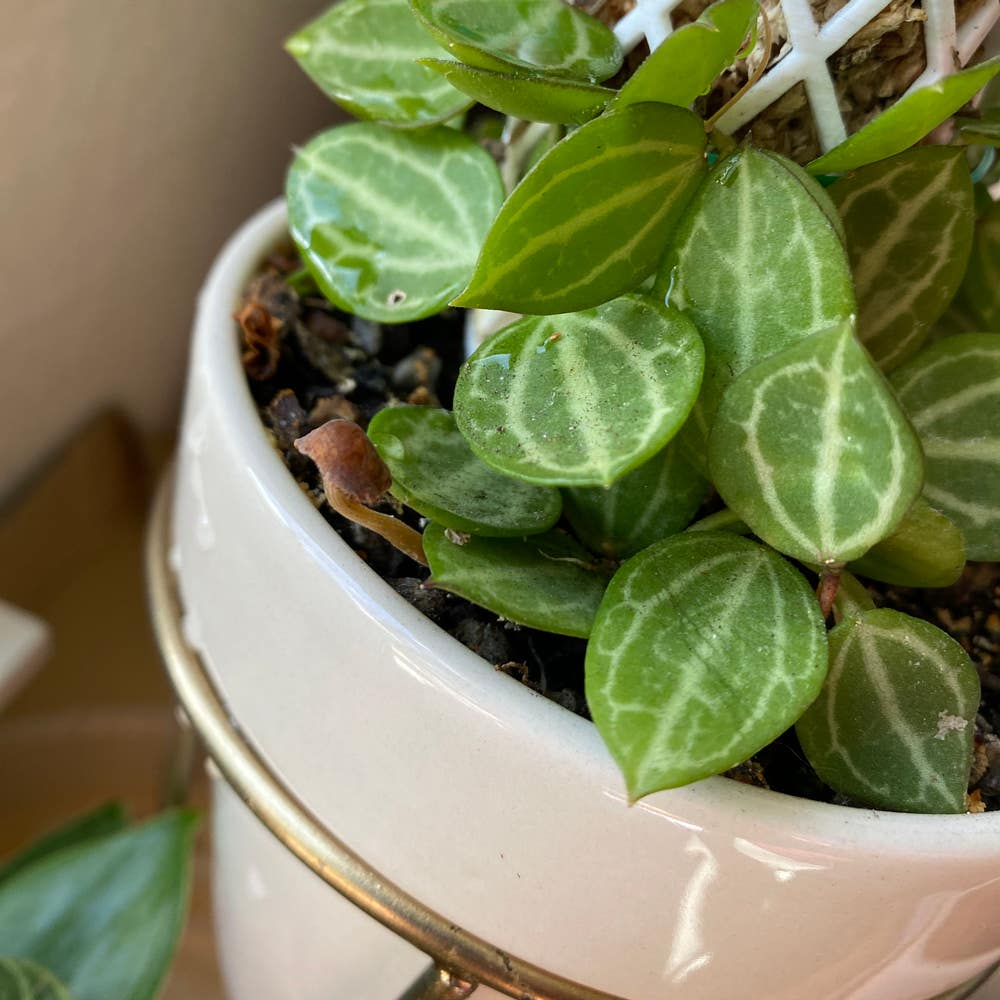
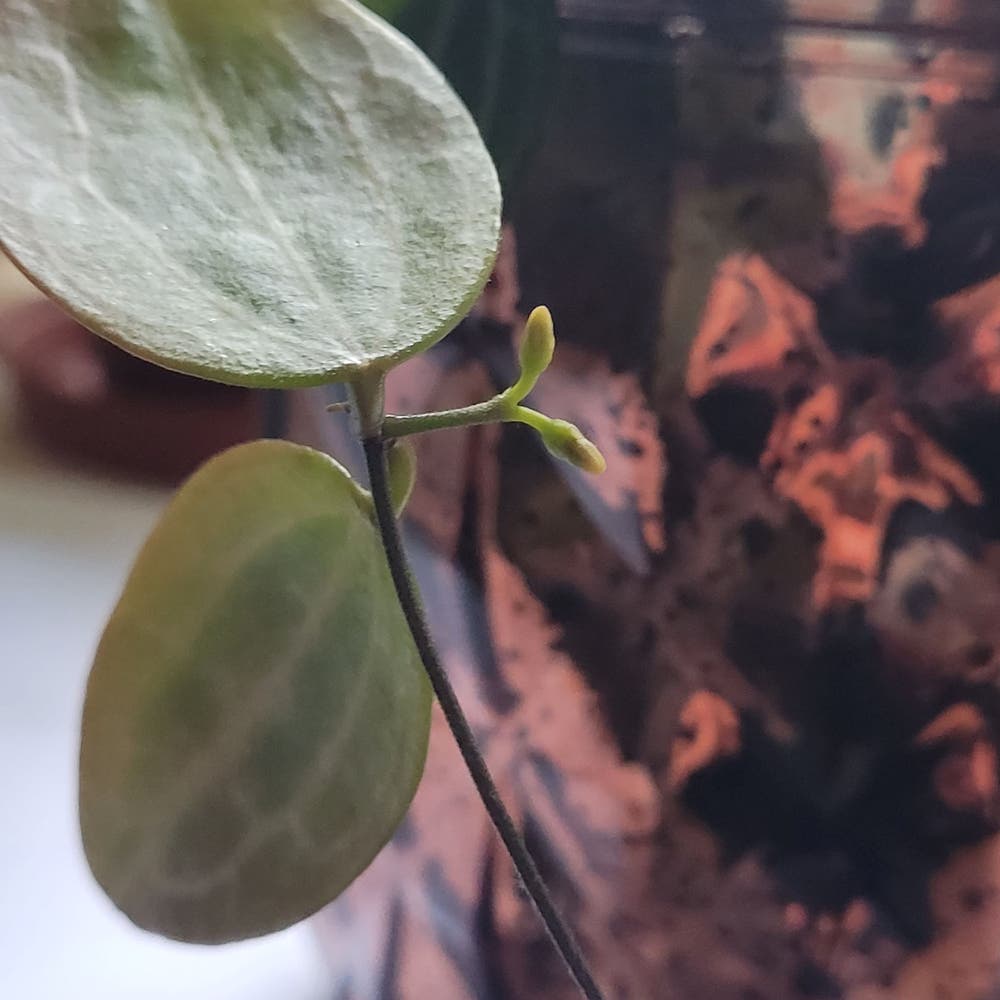
🍉 Why Are My Watermelon Dischidia Leaves Turning Yellow?
Dischidia ovata
By the Greg Editorial Team
Jun 18, 2024•3 min read
This article was created with the help of AI so we can cover more plants for you. May contain errors. See one? Report it here.
Turn yellow leaves 🍂 to vibrant green with foolproof care tips for your Watermelon Dischidia! 🌿
- 🌞 Insufficient light? Move to bright, indirect sunlight or use a grow light.
- 💦 Watering woes? Let top inch of soil dry before rewatering.
- 🌱 Nutrient balance and pests - use balanced fertilizer and insecticidal soap.
Pinpointing the Culprits Behind Yellow Leaves
💡 Insufficient Light and Its Effects
Watermelon Dischidia's leaves turn yellow when they're starved of light. It's like the plant's way of throwing a tantrum for more sun.
- Quick fix: Move your plant closer to a window or introduce a grow light to banish those yellow hues.
🚰 Water Woes: Overwatering vs. Underwatering
Yellow leaves can scream "I'm drowning!" or "I'm parched!" depending on whether you're over or underwatering.
- Sweet spot: Water when the top inch of soil feels like a dry martini – not too wet, not too dry.
🍽️ The Nutrient Balancing Act
Nutrient deficiencies make leaves lose their mojo and go yellow. It's like the plant's crying out for a vitamin pill.
- Fertilization tips: A balanced feed can be a game-changer. Think of it as a green smoothie for your plant's leaves.
🛡️ Pests and Diseases: Silent Leaf Yellowing Agents
Unseen critters and creepy crawlies can turn leaves yellow faster than a banana left in the sun.
- Effective treatments: Show no mercy. Use insecticidal soap for bugs and remove infected parts to stop diseases in their tracks.

Turning Over a New Leaf: Remedies and Prevention
💡 Light Level Optimization
Watermelon Dischidia thrives in bright, indirect light. Too little light, and you're signing up for a yellow leaf autograph session. To prevent future yellowing, place your plant in a spot where it can bask in plenty of light without getting scorched by direct sunlight. Rotate the plant periodically to ensure even exposure, promoting straight growth and preventing the one-sided tan look.
🚰 Watering Wisdom
Mastering the art of watering is like learning the perfect handshake—not too weak, not too strong. Your Watermelon Dischidia craves consistency. Let the top inch of soil dry out before rewatering. And when you do water, make it count—thoroughly soak the soil and ensure proper drainage. It's like giving your plant a good gulp of water after a long hike, then letting it rest before the next one.
🍽️ Nutrient Know-How
Yellow leaves can scream "feed me!" if your plant is starving for nutrients. Stick to a balanced fertilizer and follow the mantra of less is more. Overfeeding is like force-feeding cake to your plant—it doesn't end well. Keep an eye out for signs of nitrogen deficiency, like a yellow tinge on the leaves, and respond with a nutrient boost if needed.
🛡️ Keeping Pests and Diseases at Bay
Pests and diseases are the ninjas of the plant world—silent but deadly. Keep your plant's immune system robust with good air circulation and cleanliness. Think of it as giving your plant its daily vitamins and a bubble bath. If pests do sneak in, be ready to show them the door with a rinse or an alcohol wipe-down. For diseases like powdery mildew, prevention is key. Stay vigilant and act fast; it's the difference between a minor hiccup and a full-blown plant flu.


⚠️ Safety First
This content is for general information and may contain errors, omissions, or outdated details. It is not medical, veterinary advice, or an endorsement of therapeutic claims.
Always consult a qualified healthcare professional before using any plant as food, medicine, or supplement.
Never eat any plant (or feed one to pets) without confirming its identity with at least two trusted sources.
If you suspect poisoning, call Poison Control (800) 222-1222, the Pet Poison Helpline (800) 213-6680, or your local emergency service immediately.
Spotted an error? Please report it here.
Banish the yellow and embrace a lush green by using Greg to nail the perfect balance of light, water, and nutrients 🌱 for your Watermelon Dischidia.