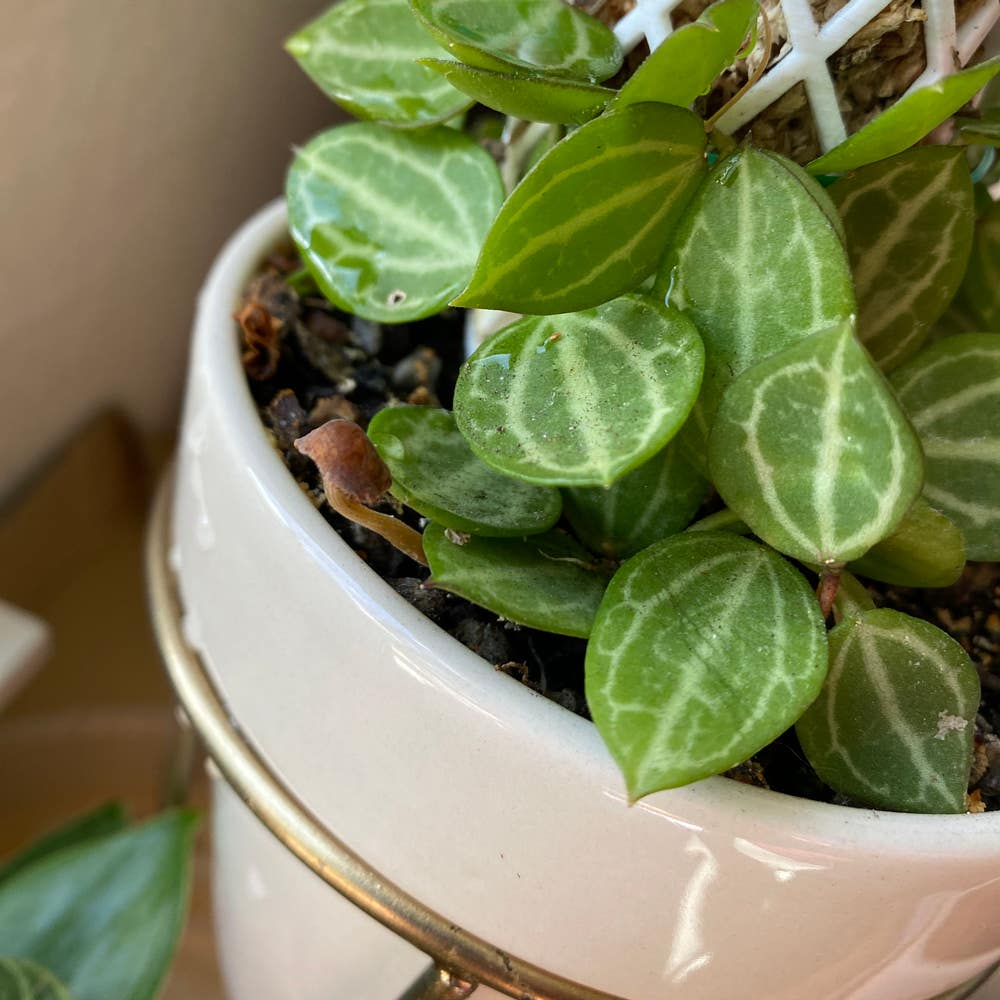
🍉 What Temperature Should My Watermelon Dischidia Be Kept At?
Dischidia ovata
By the Greg Editorial Team
Jun 18, 2024•4 min read
This article was created with the help of AI so we can cover more plants for you. May contain errors. See one? Report it here.
Discover the perfect climate 🌡️ for your Watermelon Dischidia to prevent wilting woes and ensure vibrant vitality. 🌿
- Ideal range 60-85°F (15-29°C) for Watermelon Dischidia's health.
- Consistency matters to prevent leaf discoloration and wilting.
- 🌡️💧 Pair with 50% humidity and monitor with a hygrometer.
The Sweet Spot: Watermelon Dischidia's Ideal Temperature Range
♨️ What's Too Hot or Too Cold?
Watermelon Dischidia thrives in a temperature sweet spot that's neither the Sahara nor the Arctic. Aim for a balmy 60-85°F (15-29°C) to keep this tropical plant in its comfort zone. Anything above or below, and you're flirting with foliage drama.
🌡️ Consistency is Key
Stability isn't just a virtue in relationships; it's a must for Watermelon Dischidia's well-being. Consistent temperatures prevent the plant equivalent of a cold sweat or heatstroke. Avoid placing your leafy friend near drafty windows or radiators, as they're not fans of temperature roller coasters.

When Temperatures Turn Sour: Recognizing Stress in Your Plant
🌡️ Telltale Signs of Temperature Trouble
Leaf discoloration and wilting are the silent alarms of temperature distress in your Watermelon Dischidia. If you notice leaves turning a crispy brown or developing mushy patches, it's time to reassess your plant's environment. Stunted growth is another red flag, indicating that your plant is not in its happy place, temperature-wise.
🌬️ Common Culprits of Temperature Tantrums
Drafts and direct heat sources are the main offenders causing temperature fluctuations. Placing your Watermelon Dischidia near an open window or a radiator can trigger a stress response, manifesting in droopy leaves and a general decline in health. Sudden changes in temperature, akin to a shock to the system, can also lead to a variety of symptoms including leaf drop and discoloration. Keep a vigilant eye on your plant's surroundings to ensure it remains in its ideal climate.

Turning Up the Heat on Growth: The Effects of Temperature Extremes
🌡️ Short-term Setbacks
Immediate impacts of incorrect temperatures can be as subtle as a leaf's color fading or as dramatic as a full-on leaf drop. It's like your Watermelon Dischidia is tossing its possessions overboard in a bid to stay afloat. High heat can dehydrate your plant, leaving it thirstier than a marathon runner without a water station. Conversely, cold snaps slow growth to a crawl, making your tropical gem more sluggish than a sloth on a lazy Sunday.
🥶 Long-term Lethargy
Ongoing temperature neglect can lead to lasting damage, with your plant's vitality on the line. It's not just about stunted growth or delayed flowering; it's about the plant's very ability to bounce back. Think of it as the difference between a minor scrape and a deep wound – one heals quickly, the other may leave a scar. Cellular damage from cold is particularly brutal, turning leaves from vibrant green to a mournful brown, a clear sign of a plant in distress. And let's not forget, low humidity can amplify these effects, tightening leaves up as if they're bracing for impact.

A Quick Nod to Humidity
💦 Temperature's Partner in Crime
Humidity and temperature are the dynamic duo in plant care, especially for the Watermelon Dischidia. This tropical plant doesn't just enjoy a warm hug from the sun; it also thrives on the moist caress of the air around it.
50% humidity is the sweet spot, where this plant can flourish without the drama of dry tips or the horror of root rot. To keep this balance, a hygrometer isn't just a suggestion—it's a must-have. It's your secret weapon against the guesswork in maintaining that perfect humidity level.
Remember, higher temperatures can hold more moisture, so if your place is warmer, you might need to up the humidity game. Conversely, if the air feels like a desert, it's time to whip out the humidity tray or position your plant in a more bathroom-esque environment.
Grouping plants together can create a microclimate of shared transpiration joy, boosting humidity naturally. It's like a plant potluck where everyone brings a dish of moisture to the table. And if you're aiming for precision, humidifiers are the secret weapon in the plant enthusiast's arsenal, allowing for precise control over the moisture in the air.
Avoid drafts from air conditioning or heaters, as they can mess with both temperature and humidity. Keep an eye on your plant; it'll tell you, without words, how you're doing. If you see crispy leaf tips, that's your Watermelon Dischidia crying out for a more humid embrace. Too much humidity, though, and you're inviting a fungal free-for-all. Balance is key.
⚠️ Safety First
This content is for general information and may contain errors, omissions, or outdated details. It is not medical, veterinary advice, or an endorsement of therapeutic claims.
Always consult a qualified healthcare professional before using any plant as food, medicine, or supplement.
Never eat any plant (or feed one to pets) without confirming its identity with at least two trusted sources.
If you suspect poisoning, call Poison Control (800) 222-1222, the Pet Poison Helpline (800) 213-6680, or your local emergency service immediately.
Spotted an error? Please report it here.
Ensure your Watermelon Dischidia enjoys the ideal 60-85°F 🌡 habitat by relying on Greg's custom reminders for temperature and humidity, keeping your plant vibrant and healthy!