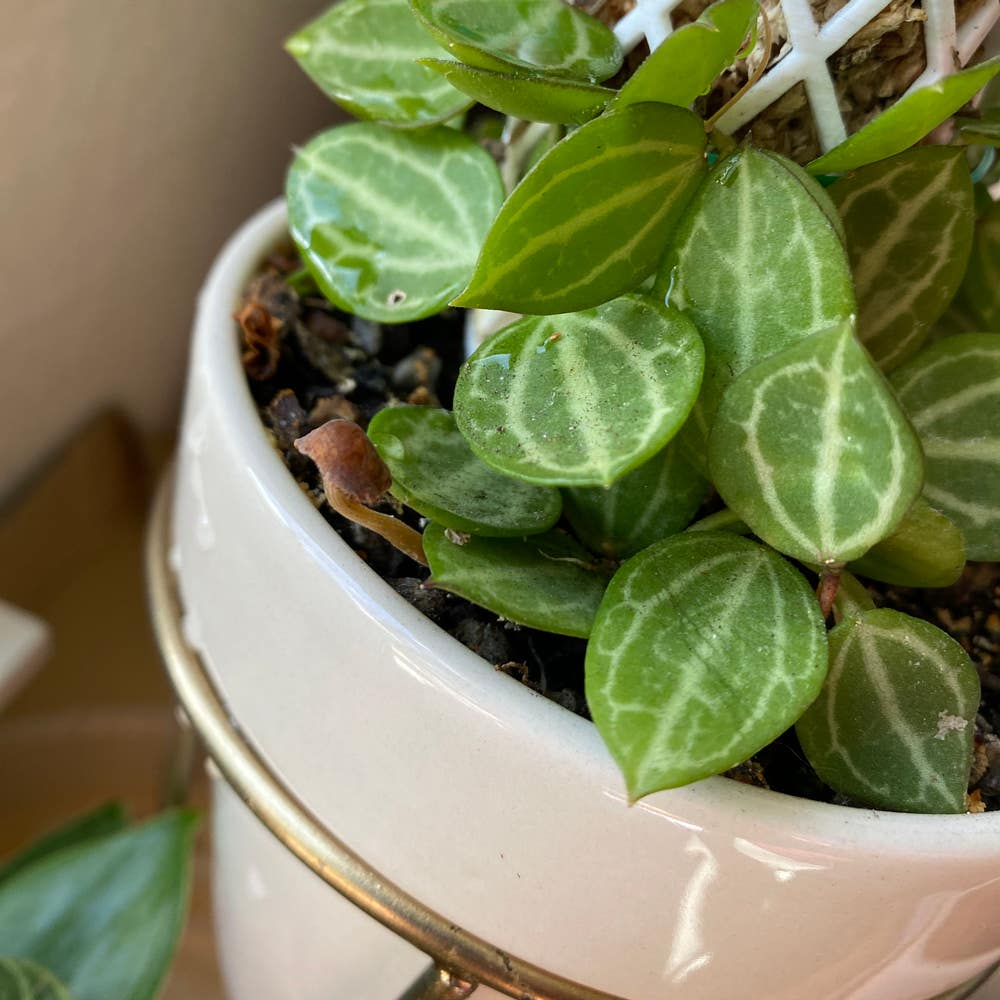
🍉 Why Are My Watermelon Dischidia Leaves Droopy?
Dischidia ovata
By the Greg Editorial Team
Jun 18, 2024•4 min read
This article was created with the help of AI so we can cover more plants for you. May contain errors. See one? Report it here.
Say goodbye to droopy leaves 🍉—learn the art of perfect Watermelon Dischidia hydration and care!
- 💧 Overwatering and underwatering both lead to droopy leaves.
- 🌱 Proper pot and soil ensure good drainage and prevent water issues.
- 🔄 Establish a consistent watering routine to maintain plant health.
Why Your Watermelon Dischidia Might Be Down in the Dumps
💧 Too Much Love: The Perils of Overwatering
Spotting the signs of soggy soil syndrome
If your Watermelon Dischidia is looking more like a sad salad than a vibrant vine, overwatering might be the culprit. A pot heavier than your last breakup and soil that's perpetually wet are classic signs. Leaves turning yellow or pale are your plant's way of saying, "Help, I'm drowning!"
The root of the problem: How overwatering affects roots and leaves
Roots need to breathe, and too much water suffocates them, leading to root rot. This not only makes the roots mushier than a romance novel's ending but also hampers the plant's ability to absorb water and nutrients, leaving the leaves droopy.
🏜️ Thirsty Plant Problems: The Underwatering Equation
Wilting away: How lack of water leads to limp leaves
On the flip side, if your Dischidia's leaves are as limp as a forgotten linguine, it's likely thirsty. Underwatering can cause leaves to shrivel up in a desperate attempt to conserve moisture, making them look more wrinkled than a linen shirt at a summer wedding.
Balancing act: Finding the sweet spot for watering
The key is finding that sweet spot where the soil's as moist as a perfectly baked cake—neither soggy nor bone-dry. Water when the top inch of soil feels dry, and make sure your plant gets a thorough drink, but don't let it sit in water like it's lounging in a hot tub.
🏡 Home Sweet Home: The Impact of Pot and Soil Setup
Drainage drama: Why your pot and soil choice matters
Choosing the right pot and soil is like picking a good life partner—it's all about drainage. A pot without proper drainage is like a relationship without trust—it's bound to get messy. And soil that's too dense is like a clingy partner—it doesn't give roots the space they need.
Making a switch: When to consider repotting
If your Dischidia's home is more water-retentive than a camel, it's time to repot. Switch to a pot that understands boundaries—like terracotta, which wicks away excess moisture—and a soil mix that's as supportive as a best friend, with ingredients like perlite or sand that promote good drainage.

Bouncing Back: Reviving Your Droopy Dischidia
💧 Fine-Tuning Your Watering Technique
The Soak-and-Dry Method
To ensure happy, hydrated leaves, adopt the soak-and-dry method. Water thoroughly, then allow the top inch of soil to dry out before the next watering. This mimics natural rainfall and drought cycles, promoting strong root growth.
Watering Wisdom
Consistency is key. Establish a routine that reflects your Dischidia's thirst, not your schedule. Use tools like a moisture meter or the trusty finger test to avoid guesswork. Remember, your plant isn't a camel; it can't store water for the long haul.
🌡️ Creating the Ideal Environment
Temperature and Humidity Tweaks
Keep it comfy. Dischidia thrives in warm, humid conditions. If your home resembles the Sahara or the Arctic, consider investing in a humidifier or moving your plant to a happier spot.
Draft Dodging
Protect your Dischidia from drafts. Sudden temperature changes are like cold showers for your plant—unpleasant and stressful. Position it in a stable environment, away from vents and drafty windows, to prevent those leaves from drooping.

Keeping It Perky: Prevention Is Better Than Cure
💧 Watering Routines That Work
Watering your Watermelon Dischidia shouldn't be guesswork. Establish a watering routine that's as regular as your morning coffee. But don't just set it and forget it; adapt to your plant's changing needs.
🌱 Listening to your plant
Your Dischidia's leaves will tell you when it's thirsty. Check the soil before watering—aim for moist, not a marshland. Adjust for seasonal changes; your plant drinks differently in summer than it does in winter.
🏺 The Right Stuff: Choosing Your Plant's Partners Wisely
🌿 Picking pots with purpose
Choose a pot for your Dischidia that's more than just eye candy. Drainage holes are a must to prevent water from overstaying its welcome. Terra cotta pots are MVPs here, letting soil breathe and dry out efficiently.
🌱 Soil selection
The right soil mix is like a good support system—essential for growth. Opt for a blend that's well-draining and rich in organic matter. This isn't just dirt; it's the foundation of your plant's health.
Remember, proactive care is the secret handshake in the plant world. It's about setting the stage for your Watermelon Dischidia to not just survive, but thrive.

⚠️ Safety First
This content is for general information and may contain errors, omissions, or outdated details. It is not medical, veterinary advice, or an endorsement of therapeutic claims.
Always consult a qualified healthcare professional before using any plant as food, medicine, or supplement.
Never eat any plant (or feed one to pets) without confirming its identity with at least two trusted sources.
If you suspect poisoning, call Poison Control (800) 222-1222, the Pet Poison Helpline (800) 213-6680, or your local emergency service immediately.
Spotted an error? Please report it here.
Ensure your Watermelon Dischidia stays upright and vibrant 🌱 with Greg's custom watering reminders, tailored to keep the soil's moisture just right.