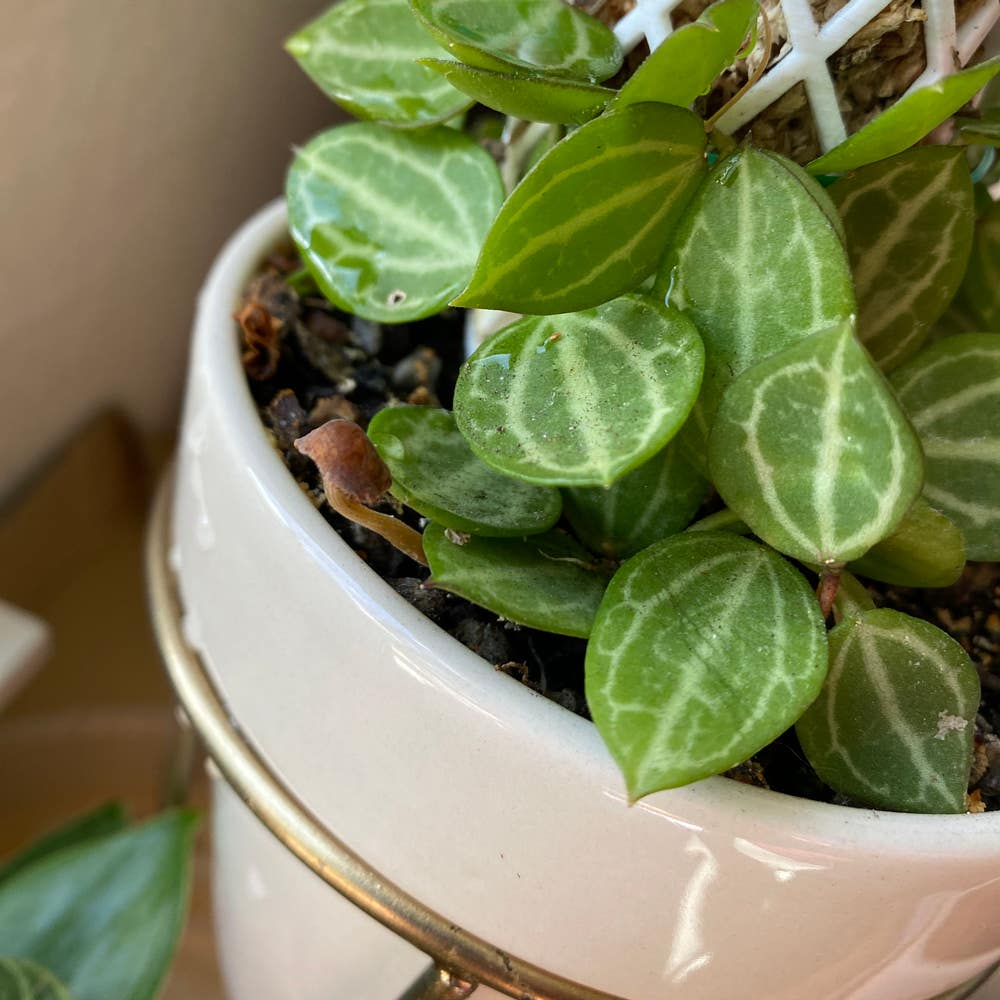
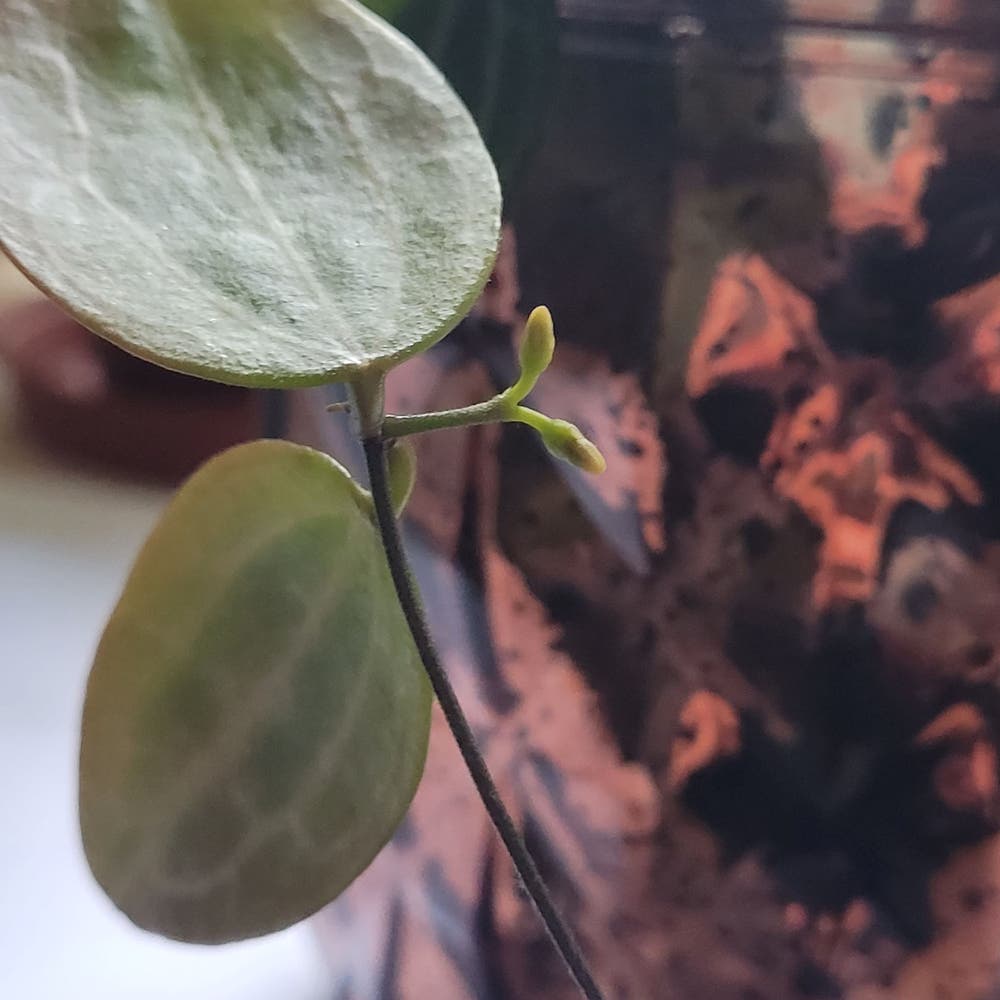
🍉 Why Is My Watermelon Dischidia Dropping Leaves?
Dischidia ovata
By the Greg Editorial Team
Jun 18, 2024•4 min read
This article was created with the help of AI so we can cover more plants for you. May contain errors. See one? Report it here.
Prevent your Watermelon Dischidia from shedding tears (and leaves) 🍉 by mastering its ideal care routine!
- Overwatering and underwatering both lead to leaf drop; check soil moisture.
- 🌞🌱 Bright, indirect light is best; too much or too little light harms leaves.
- Consistent humidity and temperature between 60-75°F (15-24°C) prevent leaf drop.
When Watering Goes Wrong: The Top Culprit
🚱 Signs You're Overdoing It
Wilting and yellow leaves might look like a plant's cry for more water, but root rot is the real assassin here. If your Watermelon Dischidia's base feels like a wet sponge, it's a red flag that you're overwatering.
Mushy roots are a telltale sign of overwatering. When the soil is consistently soggy, it's an invitation for root rot to set in, leading to the inevitable leaf drop.
🏜️ Underwatering Under the Microscope
On the flip side, leaves that are as crispy as toast are your Watermelon Dischidia's way of saying, "I'm thirsty!" If the soil is pulling away from the pot, it's a clear sign you've been neglecting the watering can.
Drought stress manifests as leaves dropping like flies. When your plant's new growth turns as yellow as a rubber duck and wilts faster than your enthusiasm on a Monday morning, it's time to up the hydration game.

Light and Shade: Finding the Sweet Spot
🌞 Too Much Sun
Scorching rays can turn your Watermelon Dischidia's leaves into crispy critters. Just like us, plants can get sunburned, especially when exposed to the midday sun's relentless glare. Leaf drop is a plant's SOS signal, a clear indication that it's time to dial down the direct sunlight. Consider rotating the plant or using sheer curtains to soften the light.
🌥️ Not Enough Glow
Conversely, depriving your Watermelon Dischidia of sufficient light is like keeping it in a perpetual state of twilight. Leggy stems and yellowing leaves are the plant's way of telling you it's stuck in the shadows, yearning for more light. To prevent a gloomy fate and the ensuing leaf drop, find a spot that offers bright, indirect light. Remember, it's all about balance—too much sun leads to a sunburned plant, too little to a light-starved one.

Temperature and Humidity: Creating a Cozy Home
🌡️ Weathering the Temperature Swings
Temperature fluctuations are the drama queens of the plant world, causing your Watermelon Dischidia more mood swings than a teenager. To keep your plant from throwing a fit, maintain indoor temperatures between 60-75°F (15-24°C). Steer clear of drafty windows in winter and avoid placing your plant near heaters or air conditioners, as these can lead to an unwanted leaf-dropping performance.
💦 Humidity Harmony
Watermelon Dischidia craves humidity like a social media influencer craves likes. If your home's air is drier than a stand-up comedian's wit, consider using a humidifier to dial in that tropical vibe. Grouping plants together can also create a microclimate, turning your living room into a mini rainforest without the need for a poncho. Keep a hygrometer handy to monitor the humidity levels and adjust as needed to prevent your plant from going crispier than overdone bacon.

Bouncing Back: Revival and Prevention Strategies
💧 Water Wisdom
Overwatering is the plant equivalent of eating until you're sick; it's just too much of a good thing. To avoid this, water only when the soil feels dry to the touch about an inch deep. Embrace the soak and dry method—let your plant drink up, then give it a break. Think of it as a watering tango, where the rhythm is dictated by the dryness of the soil, not the calendar.
🌞 Light, Temperature, and Humidity Tweaks
Light is like a plant's coffee—it needs the right amount to thrive. Place your Watermelon Dischidia where it can bask in bright, indirect light. Too much direct sunlight is a no-go; it's like a sunburn waiting to happen. As for temperature, keep it as steady as a surgeon's hand—away from drafts and sudden changes. Humidity-wise, aim for a consistent level that mimics a tropical breeze, not a desert wind. Use a pebble tray or misting to achieve that sweet spot. Remember, your plant's comfort is key to keeping its leaves firmly attached.
⚠️ Safety First
This content is for general information and may contain errors, omissions, or outdated details. It is not medical, veterinary advice, or an endorsement of therapeutic claims.
Always consult a qualified healthcare professional before using any plant as food, medicine, or supplement.
Never eat any plant (or feed one to pets) without confirming its identity with at least two trusted sources.
If you suspect poisoning, call Poison Control (800) 222-1222, the Pet Poison Helpline (800) 213-6680, or your local emergency service immediately.
Spotted an error? Please report it here.
Keep your Watermelon Dischidia leafy and lush 🍃 by letting Greg's custom care plan guide you to the sweet spot of watering, lighting, and humidity.