🍉 Is My Watermelon Dischidia Getting Too Much Direct Sunlight?
Dischidia ovata
By the Greg Editorial Team
Jun 18, 2024•5 min read
This article was created with the help of AI so we can cover more plants for you. May contain errors. See one? Report it here.
Shield your Watermelon Dischidia 🌿 from harsh rays and maintain its lush patterns with savvy sunlight tips!
- 🌞 Sunburnt leaves and wilting signal too much direct sunlight.
- North-facing windows provide the best light for Watermelon Dischidia.
- Use sheer curtains or relocate to protect from excessive sun exposure.
Spotting the Signs: When Your Watermelon Dischidia Has Had Too Much Sun
🌞 Sunburnt Leaves: What They Look Like
Sunburnt leaves on your Watermelon Dischidia are the silent screams of your plant. They'll exhibit a crispy texture, akin to overcooked bacon, and may display a range of colors from pale yellow to a scorched brown. If you spot leaves that look like they've been in a tanning bed too long, it's time to rethink your plant's sunbathing habits.
📉 Growth Changes: Slowed Growth and Wilting
When your Watermelon Dischidia's growth slows to a snail's pace or the plant starts wilting like a forgotten salad, it's a clear sign of distress. Wilting is the plant's way of waving a white flag, and slowed growth is its protest against the solar onslaught it's enduring. Keep an eye out for these symptoms, as they're a plant's version of a distress call.
🎨 Color Fading: Loss of Vibrant Patterns
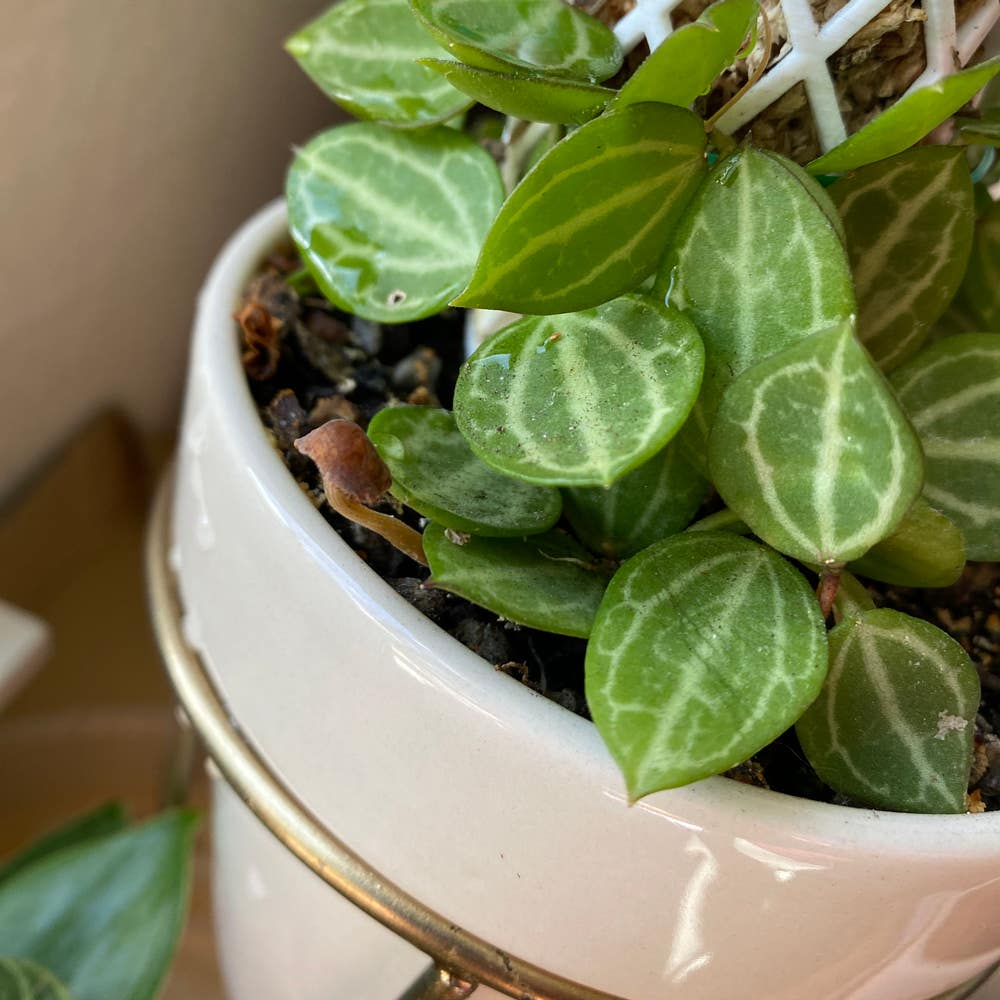
The vibrant patterns on your Watermelon Dischidia's leaves are its pride and joy. If you notice the once vivid green lines fading to a dull green or the overall color losing its luster, it's likely due to too much direct sunlight. It's like watching the color drain from a once-vibrant painting—definitely not what you want for your botanical masterpiece.

The Perfect Spot: Finding the Right Light for Watermelon Dischidia
🌞 Window Wise: Which Direction is Best?
North-facing Windows: The Safe Bet. These windows provide consistent, gentle light that won't overwhelm your Watermelon Dischidia. Think of it as a steady diet of ambient light, perfect for these stripey beauties.
South-facing Windows: The Sun Shield Strategy. In the Northern Hemisphere, these windows are like a beach vacation—lots of sun. Use sheer curtains to protect your plant from getting a sunburn.
East and West-facing Windows: The Balancing Act. East gives your plant a mild morning wake-up call with soft sunlight. West, on the other hand, is the afternoon party spot—bright and intense. Position your Dischidia a few feet away to avoid the harshest rays.
🌍 Hemisphere Hints: Adjusting for Your Location
Northern Hemisphere Nuances: Aim for south-facing windows to catch peak brightness. It's like hitting the jackpot on a slot machine, but for light.
Southern Hemisphere Sun Care: Flip it and reverse it—north-facing windows are your go-to for that sweet, sweet sunlight. It's all about the angle and intensity of the sun's rays down under.
Remember, your Watermelon Dischidia doesn't need a tan; it craves the right amount of sun-kissed love. Keep an eye on the plant's response to its light source and be ready to shuffle it around. It's like a dance, and you're the choreographer.

Shielding Strategies: Protecting Watermelon Dischidia from Direct Sunlight
🕶️ Sheer Genius: Using Curtains and Blinds
Sheer curtains are the unsung heroes when it comes to plant sun protection. They act like sunglasses for your Watermelon Dischidia, filtering out the harshest rays while still letting through that sweet, sweet light. Think of them as a sunscreen; they allow your plant to enjoy the sun without getting a nasty burn.
🏡 Relocation, Relocation, Relocation: Moving Your Plant to a Better Spot
Sometimes, the best defense is a good offense. If your Dischidia is getting too much sun, don't be afraid to move it. A spot with indirect light, like a few feet away from a south-facing window, could be the sweet spot. It's like a game of musical chairs, but with higher stakes—your plant's well-being.
🔦 Reflecting on Reflective Surfaces: Using Mirrors and Other Reflectors
Reflective surfaces can be a game-changer. Positioning a mirror to bounce light away from your Watermelon Dischidia can reduce the intensity of direct sunlight. It's like redirecting a spotlight in a stage play—dramatic, but it works. Just make sure you're not accidentally frying your other plants with your new sunbeam laser.

Emergency Care: Helping a Sun-Struck Watermelon Dischidia Recover
🚑 First Aid for Sunburn: Immediate Steps to Take
When your Watermelon Dischidia gets too much sun, act fast. First, move the plant out of direct sunlight. This isn't a beach vacation gone wrong; it's a rescue mission. Trim any crispy, sunburnt leaves with sterilized scissors—think of it as giving your plant a haircut to help it forget a bad day.
🌱 Long-Term Recovery: Adjusting Care Post-Sun Damage
After the initial triage, it's time for the long haul. Watermelon Dischidia isn't a drama queen, but it will need some TLC. Water carefully; overhydration is not the answer to sunburn. Keep the soil moist but not soggy—like a well-made sponge cake. Hold off on fertilizer; your plant isn't ready for a full-course meal just yet.
🕵️ Monitoring and Adapting: Keeping an Eye on Your Plant's Progress
Keep a close eye on your recovering Dischidia. It's like being on plant ICU watch—monitor for new growth, which is a sign of recovery. If your plant is still struggling, it might need a change of scenery. Consider a spot with bright, indirect light—think of it as a plant spa retreat. Remember, recovery is a marathon, not a sprint, so be patient and adjust care as needed.
⚠️ Safety First
This content is for general information and may contain errors, omissions, or outdated details. It is not medical, veterinary advice, or an endorsement of therapeutic claims.
Always consult a qualified healthcare professional before using any plant as food, medicine, or supplement.
Never eat any plant (or feed one to pets) without confirming its identity with at least two trusted sources.
If you suspect poisoning, call Poison Control (800) 222-1222, the Pet Poison Helpline (800) 213-6680, or your local emergency service immediately.
Spotted an error? Please report it here.
Prevent crispy leaves on your Watermelon Dischidia by letting Greg auto-magically 🪄 pinpoint the ideal lighting in your home and remind you when it's time for a drink or a shade adjustment.