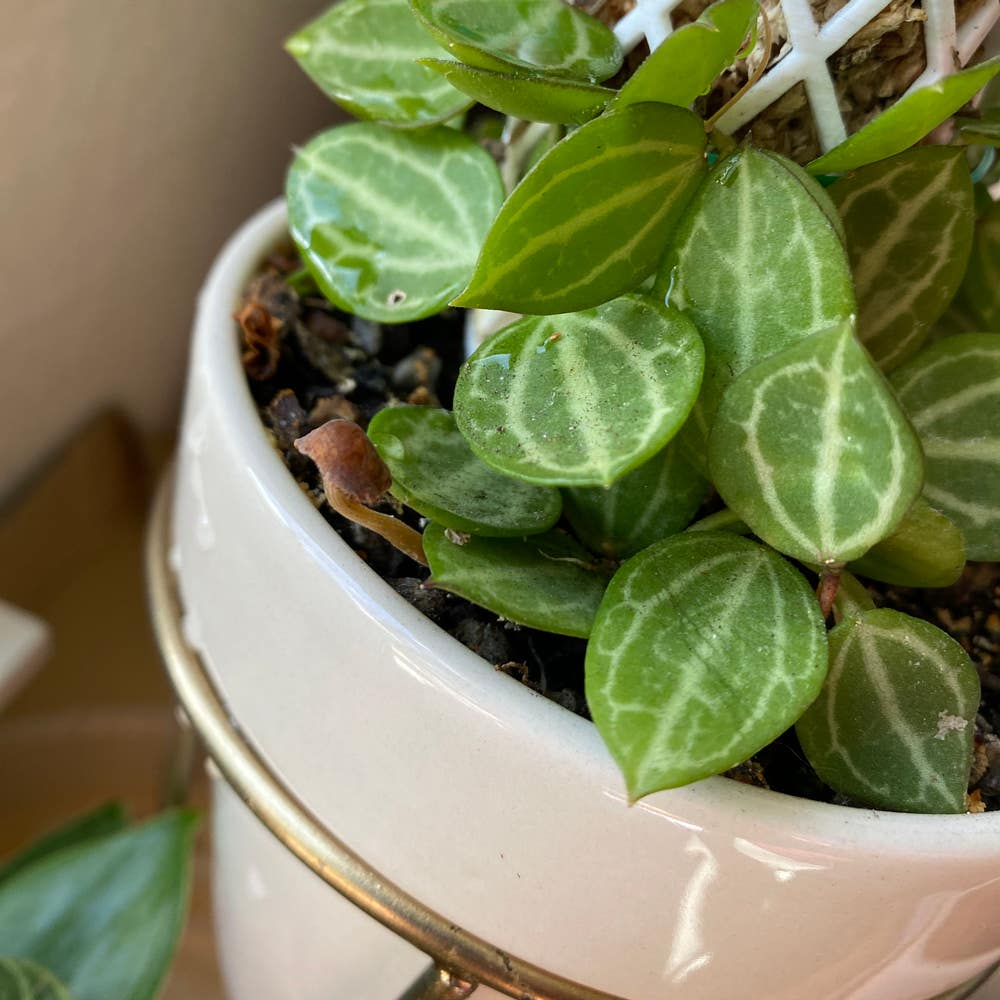
Choosing the Best Pot for Your Watermelon Dischidia 🍉
Dischidia ovata
By the Greg Editorial Team
Oct 17, 2024•5 min read
This article was created with the help of AI so we can cover more plants for you. May contain errors. See one? Report it here.
Unlock vibrant growth for your Watermelon Dischidia 🌱 with expert potting tips that ensure thriving health and beauty! 🌼
- 🌱 Start with a 4-6 inch pot for seedlings to maintain moisture levels.
- 🪴 Choose 10-12 inch pots for mature plants to support growth and stability.
- 🚫 Ensure drainage holes to prevent root rot and promote healthy development.
Importance of Pot Size
🌱 Seedling Stage
For your Watermelon Dischidia, starting with a pot size of 4-6 inches in diameter is ideal. Smaller pots help maintain moisture levels and prevent the risk of overwatering, which can be detrimental to young plants.
🌿 Juvenile Stage
As your plant grows, transition to a pot that measures 6-8 inches in diameter. This size allows for root expansion while still retaining adequate moisture, ensuring your plant thrives during this critical growth phase.
🌼 Mature Stage
When your Watermelon Dischidia reaches maturity, opt for a larger container, ideally 10-12 inches in diameter. Larger pots support trailing growth and provide the stability your plant needs to flourish.
📏 General Guidelines
A good rule of thumb is to increase the pot size by 2 inches in diameter as your plant grows. Regularly monitor root health and adjust the pot size accordingly to keep your plant healthy and vibrant.
By paying attention to pot size at each growth stage, you can set your Watermelon Dischidia up for success. This proactive approach not only promotes healthy growth but also enhances your overall gardening experience.
Pot Materials
🌱 Comparison of Clay vs. Plastic
When choosing pots for your Watermelon Dischidia, the material can significantly impact growth. Let's break down the pros and cons of clay and plastic pots.
Clay Pots
Clay pots are a favorite among many plant enthusiasts. Their breathable material allows for excellent air circulation, which is crucial for healthy root development.
However, they come with some drawbacks. Clay pots are heavier and can retain moisture longer, increasing the risk of root rot if not monitored closely.
Plastic Pots
On the other hand, plastic pots offer a lightweight and easy-to-move option. They typically have better drainage options, making them a practical choice for many gardeners.
Yet, they aren't without their issues. Plastic pots are less breathable, which can lead to moisture retention and potential root problems.
🌬️ Benefits of Breathable Materials
Air circulation is vital for plant health. It reduces the risk of root rot and promotes vigorous growth.
For optimal breathability, consider using terracotta and unglazed clay pots. These materials strike a balance between moisture retention and airflow, creating a healthier environment for your Watermelon Dischidia.
In summary, the choice between clay and plastic pots depends on your gardening style and the specific needs of your plant. Understanding these materials will help you create the best conditions for your Watermelon Dischidia to thrive.
Next, let’s explore the importance of drainage considerations to ensure your plant remains healthy and vibrant.
Drainage Considerations
Importance of Drainage Holes 🌧️
Drainage holes are crucial for preventing water accumulation in your pots. They significantly reduce the risk of root rot, a common issue that can devastate your Watermelon Dischidia.
For optimal drainage, ensure the holes are at least 1/4 inch in diameter. This size allows excess water to escape, keeping the soil healthy and your plant thriving.
How Drainage Affects Root Health 🧑🌾
Poor drainage can lead to waterlogged soil, which suffocates roots and stunts growth. When roots are deprived of oxygen, they struggle to absorb nutrients, leading to a host of problems.
Watch for signs of drainage issues, such as yellowing leaves, wilting, and stunted growth. These indicators signal that your plant may be suffering from excess moisture, prompting a need for immediate action.
In summary, proper drainage is vital for the health of your Watermelon Dischidia. Ensuring adequate drainage holes and monitoring soil conditions will keep your plant vibrant and flourishing.
Next, let's explore the signs that it's time to repot your plant for continued growth and health.
Repotting
Signs That It's Time to Repot 🌱
Recognizing when to repot your Watermelon Dischidia is crucial for its health. Look for root-bound indicators, such as roots growing out of drainage holes or circling the pot.
Stunted growth is another telltale sign. If your plant shows little to no new growth despite optimal care, it’s likely time for a larger home.
Step-by-Step Guide to Repotting 🛠️
Repotting doesn’t have to be daunting. Follow these steps for a smooth transition:
Choose the right size: Select a pot that is 2 inches larger in diameter than the current one.
Prepare potting soil: Use a well-draining mix suitable for Watermelon Dischidia.
Remove the plant: Gently loosen the root ball and take it out of the old pot.
Inspect roots: Trim any dead or damaged roots before placing the plant in the new pot.
Fill with soil: Add potting soil to the new pot, ensuring the plant is at the same depth as before.
Water thoroughly: Ensure the soil is moist but not waterlogged.
By following these steps, you can ensure your Watermelon Dischidia continues to thrive in its new environment. Proper repotting not only supports growth but also enhances the overall health of your plant.
Next, let’s explore some potting tips to keep your plant flourishing!
Potting Tips
Best Practices 🌱
Choosing the right pot is crucial for your Watermelon Dischidia's health. Always opt for pots with adequate drainage holes to prevent water accumulation, which can lead to root rot.
Air circulation is equally important. Select pots that allow for airflow around the roots, promoting a healthy growing environment.
Recommended Soil and Amendments 🪴
For the ideal potting mix, combine peat moss, perlite, and orchid bark. This blend ensures optimal drainage while providing the necessary nutrients.
Consider adding slow-release fertilizers to your mix. These amendments support growth and keep your plant thriving over time.
By following these potting tips, you set your Watermelon Dischidia up for success. Now, let’s explore how to recognize when it’s time to repot your plant for continued growth.
⚠️ Safety First
This content is for general information and may contain errors, omissions, or outdated details. It is not medical, veterinary advice, or an endorsement of therapeutic claims.
Always consult a qualified healthcare professional before using any plant as food, medicine, or supplement.
Never eat any plant (or feed one to pets) without confirming its identity with at least two trusted sources.
If you suspect poisoning, call Poison Control (800) 222-1222, the Pet Poison Helpline (800) 213-6680, or your local emergency service immediately.
Spotted an error? Please report it here.
Choose the perfect pot for your Watermelon Dischidia 🌱 and let Greg guide you with tailored care tips and reminders to keep your plant thriving!