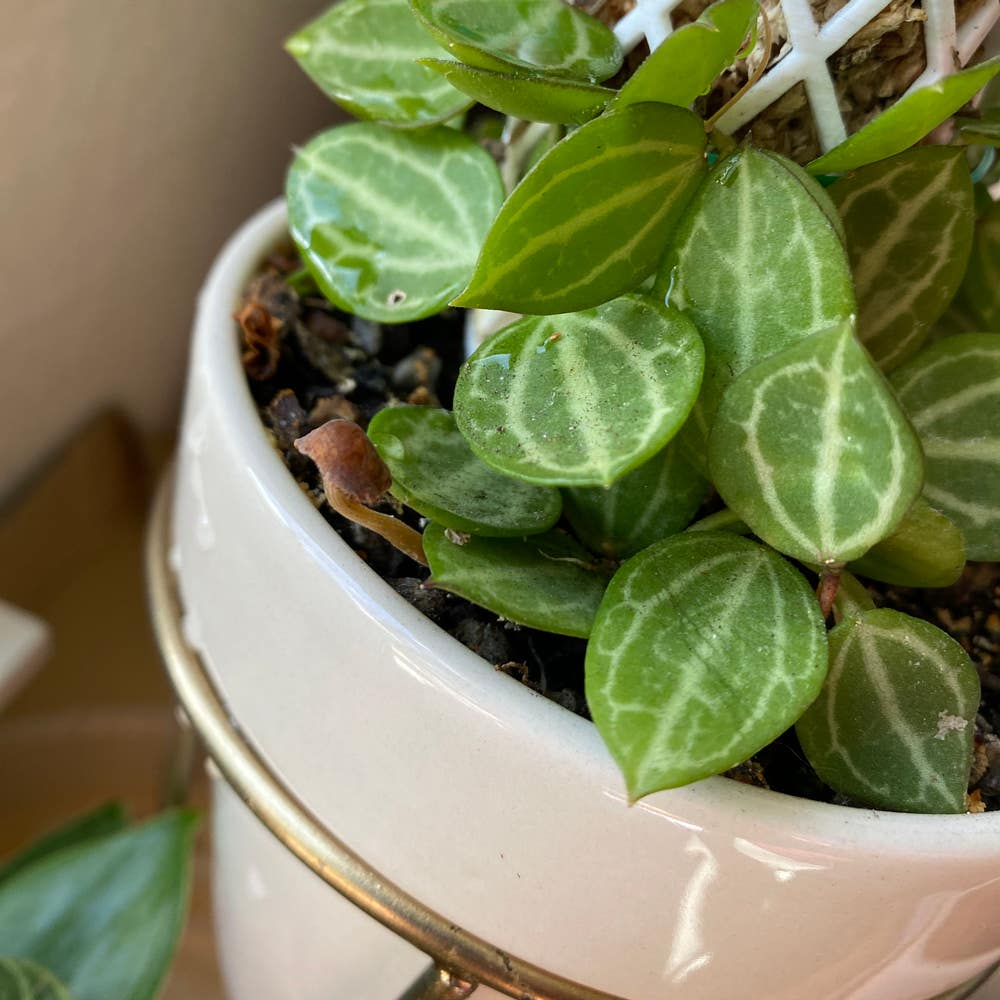
Best Soil Potting Mix for Watermelon Dischidia
Dischidia ovata
By the Greg Editorial Team
Jun 18, 2024•5 min read
This article was created with the help of AI so we can cover more plants for you. May contain errors. See one? Report it here.
Thrive your Watermelon Dischidia with a perfect DIY soil mix recipe tailored to its unique needs. 🪴🌿
- 🚩 Mold and bad smell signal it's time to repot with a fresh mix.
- 🌱 Ideal mix: perlite, orchid bark, sphagnum moss for pH and aeration.
- 🔄 DIY or commercial mix? Tailor to Dischidia's needs and your environment.
Spotting and Fixing Unhappy Watermelon Dischidia Soil
🚰 Recognizing Trouble
Mold on your Dischidia's soil isn't a new home decor trend; it's a red flag. If your plant's leaves are more brown than a well-done steak, it's likely due to poor drainage or a fungal fiesta. A pot that's holding water like a camel's hump needs immediate attention.
🛠️ Quick Fixes
When your Dischidia's soil smells worse than last week's leftovers, it's time for a repotting party. Swap out that soggy mess for a fresh, well-draining mix. If the roots are mushier than overcooked noodles, snip the rot and give the survivors a pep talk with some fungicide. Adjust your watering habits like you're tuning a guitar—aim for the sweet spot where the top inch of soil dries out before the next watering encore.

The Perfect Soil Mix Ingredients
🌱 The Basics
Crafting the ideal soil mix for Watermelon Dischidia begins with a trinity of components: perlite, orchid bark, and sphagnum moss. These ingredients are the backbone of a mix that promotes drainage and moisture retention, without suffocating the roots.
Perlite, the aeration ace, ensures that the roots get enough air, preventing the dreaded root rot. Orchid bark is the chunky hero that prevents compaction, allowing roots to breathe and grow freely. Sphagnum moss, the moisture maestro, holds onto just enough water for the roots to hydrate without becoming waterlogged.
🌿 Fine-Tuning for Watermelon Dischidia
To fine-tune this mix for the specific needs of Watermelon Dischidia, pH balance and aeration are key. This plant prefers a slightly acidic environment, so incorporating ingredients like sphagnum moss helps achieve the right pH level.
For enhanced aeration, don't shy away from adding a bit more perlite or even pumice into the mix. It's like giving your Dischidia's roots a personal bubble of breathing space. Remember, roots need air almost as much as they need water.
Adjusting the proportions of these ingredients can cater to the unique environment your Watermelon Dischidia calls home. If you're living in a humid climate, consider reducing the moss content to prevent excess moisture. Conversely, in drier conditions, a little extra moss can help retain that precious moisture.
Remember, creating the perfect soil mix is less about following a strict recipe and more about understanding the needs of your Watermelon Dischidia. It's a bit of science and a dash of art, with a sprinkle of intuition for good measure.

Mixing It Up: DIY Soil for Your Dischidia
🌱 The Recipe
Creating the ideal soil mix for your Watermelon Dischidia doesn't require a PhD in botany—just a bit of elbow grease and the right ingredients. Here’s a straightforward guide to concocting the perfect homebrew for your plant.
- Start with a base of equal parts orchid bark and cactus mix; these provide structure and support drainage.
- Add perlite to the mix for increased aeration—think of it as the lungs for your plant's roots.
- For moisture retention without waterlogging, mix in some sphagnum moss. It's like a sponge, holding onto just enough water and letting the rest drain away.
- Mix thoroughly to ensure even distribution of all components. Your Dischidia will thank you.
🌍 Tailoring to Your Environment
Your Watermelon Dischidia's soil mix should be as unique as its growing environment. Here's how to tweak the recipe:
- In humid climates, cut back on the sphagnum moss. Too much moisture retention can lead to root rot.
- If your space is on the drier side, consider adding a bit more moss or even some coco husk chips to help hold onto moisture.
- Light conditions also play a role. More light can mean faster drying soil, so adjust your mix to retain more moisture if your Dischidia basks in the sun.
- Remember, the key is balance. Observe your plant and adjust as needed; it's not rocket science, but it does require attention.

When to Go Pro: Commercial Mixes vs. Homemade
🌱 Pros and Cons
Navigating the soil aisle can be as daunting as choosing the right wine. Commercial mixes offer a no-fuss solution for the time-pressed gardener. They're like a ready meal – just open and serve. But, like fast food, they may not suit the discerning palate of your Watermelon Dischidia. These mixes boast convenience and consistency, yet they can lack the personal touch your plant craves.
On the flip side, DIY mixes are the gourmet option, tailored to the specific tastes of your green companion. They can be a labor of love, though, requiring time and a bit of soil savvy. Plus, there's always the risk of getting the recipe wrong – a dash too much perlite and you've got a drainage disaster.
🕵️ What to Look for in a Commercial Mix
When eyeing commercial mixes, think of yourself as a detective. The label is your clue sheet. Perlite, pumice, and sphagnum moss should be on the suspect list – they're the good guys, ensuring your Dischidia doesn't drown in excess moisture.
Weight matters too. A lighter mix hints at better aeration, like a breathable fabric for roots. And don't forget about pH balance – limestone is a telltale sign the mix is trying to keep things neutral.
Lastly, consider the seasons. Some mixes adjust like a thermostat, catering to your plant's needs whether it's basking in the summer sun or shivering through winter.
In the end, whether you go pro with a commercial mix or get your hands dirty with a homemade concoction, it's all about what makes your Watermelon Dischidia sing.
⚠️ Safety First
This content is for general information and may contain errors, omissions, or outdated details. It is not medical, veterinary advice, or an endorsement of therapeutic claims.
Always consult a qualified healthcare professional before using any plant as food, medicine, or supplement.
Never eat any plant (or feed one to pets) without confirming its identity with at least two trusted sources.
If you suspect poisoning, call Poison Control (800) 222-1222, the Pet Poison Helpline (800) 213-6680, or your local emergency service immediately.
Spotted an error? Please report it here.
Craft the perfect soil mix for your Watermelon Dischidia and let Greg personalize 🌱 your watering schedule, ensuring your plant prospers in its unique home environment.