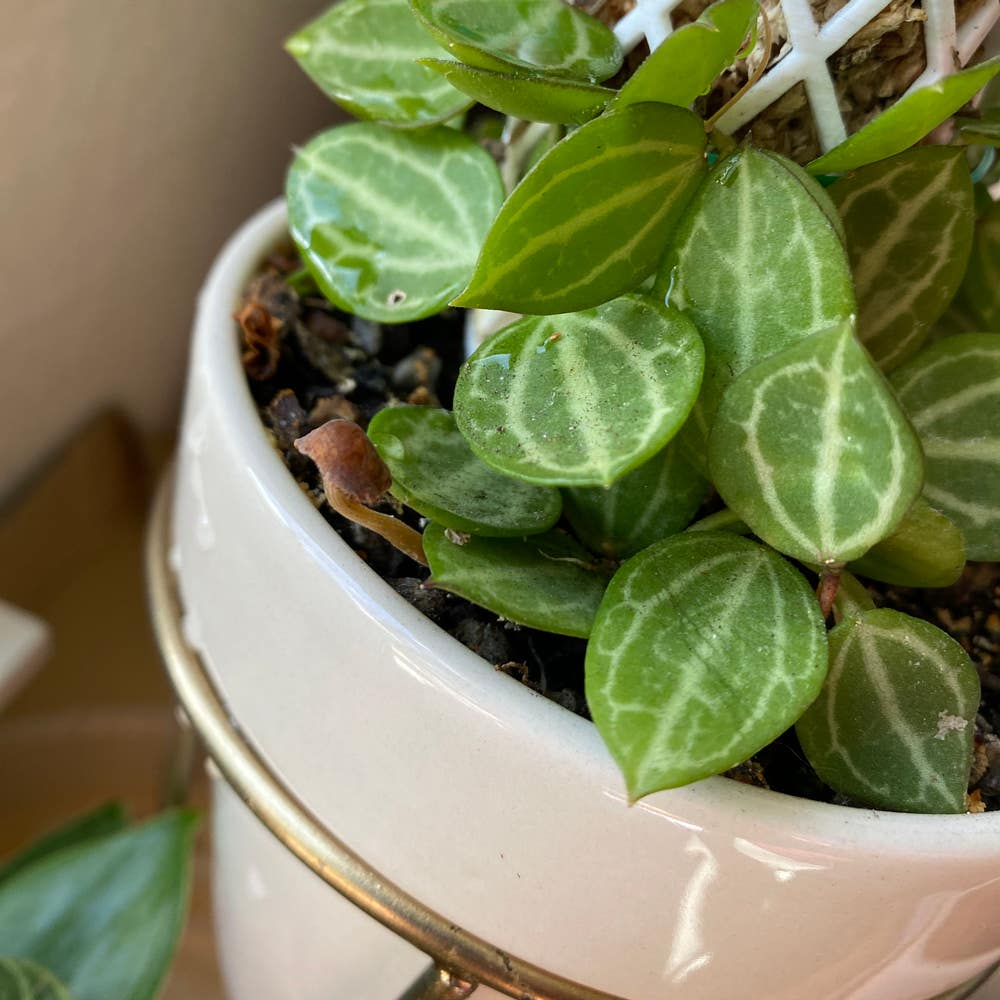
🍉 Should I Repot My Watermelon Dischidia?
Dischidia ovata
By the Greg Editorial Team
Jun 18, 2024•4 min read
This article was created with the help of AI so we can cover more plants for you. May contain errors. See one? Report it here.
Discover the secret to a flourishing Watermelon Dischidia with the right repotting tips 🌱🌟!
- Roots peeking out? Time to repot your Watermelon Dischidia.
- Choose the right pot: Ceramic for style, terracotta for breathability.
- Post-repot care: Water, indirect light, and monitor for distress.
When Your Watermelon Dischidia Craves a New Home
🚀 Spotting the Telltale Signs
Roots making a break for it outside the pot? That's your Dischidia's version of a white flag. If you notice sluggish drainage or your plant's growth has hit the brakes, it's not just being dramatic—it's time for a change of scenery.
🌿 Listening to Your Plant
Leaves don't lie. If they're sending out SOS signals like discoloration or puffiness, your Dischidia is dropping hints it's time to repot. And remember, timing is key—spring is the season of new beginnings, even for your plant's pot.

Picking the Perfect Pot
🏺 Material Matters
When it comes to material, you've got options, each with its own set of quirks. Ceramic pots are the sophisticates of the pot world; they're stylish and retain moisture like a pro. But, they can be as heavy as your last relationship and just as likely to crack under pressure. Plastic pots are the lightweights—cheap, cheerful, and won't break your back or your bank. They're moisture misers, though, so watch out for waterlogging. Terracotta is the old reliable; it's porous, letting roots breathe and preventing your Dischidia from drowning in excess water. But it's thirsty, so you'll be watering more often than you text your bestie.
Size and Space
Now, for size, think of Goldilocks—get a pot that's just right. Too small and your Dischidia's roots will be begging for mercy. Too large and the soil stays wet longer than a rain-soaked weekend. Aim for a pot that's about 2 inches larger in diameter than the current one; it's the sweet spot for growth without going overboard.
🚰 Drainage: The Lifeline of Dischidia
Let's talk drainage, the lifeline of any potted plant. Your pot must have drainage holes, non-negotiable. If it doesn't, you're setting up your Watermelon Dischidia for a soggy demise. If you fall in love with a hole-less pot, get ready to play handyman and drill some yourself, or double pot—use a functional pot with holes nestled inside the pretty one. Remember, good drainage is not just a feature; it's a rescue line for your green buddy.

The Repotting Rodeo: A Step-by-Step Guide
🛠️ Preparing the Stage
Before diving in, make sure you've got all your tools on deck. You'll need a new pot with drainage holes—slightly bigger than the old one—a trowel, gloves, and a watering can. Don't forget to block those holes with coffee filters to prevent a soil escape.
🎪 The Main Event
Gently Removing Your Plant
First up, water your Watermelon Dischidia a couple of days before the big move. It's like giving it a pep talk. When it's time, ease the plant out; if it plays hard to get, use a knife along the pot's edge. Check the roots for a health report—trim any drama queens that are dead or overgrown.
Choosing the Right Soil Mix
Soil mix is like a good mattress—get it wrong, and there'll be complaints. Aim for a well-draining mix; think rich, like a decadent chocolate cake, but for roots. Layer it at the bottom of the new pot so your Dischidia doesn't get the bends.
🏠 Settling into the New Abode
Now, introduce your plant to its new crib. Make sure the root ball sits comfortably, with the top half an inch below the rim. Fill in the gaps with more soil, but don't pack it down like you're stuffing a suitcase. Water thoroughly—it's the housewarming drink of the plant world. And there you have it, your Watermelon Dischidia's new pad is ready to turn heads.

Post-Repotting Care: The First Few Weeks
💧 The First Drink
After the repotting dance, water is your Dischidia's first encore. Give it a thorough drink to help it settle, but then play it cool—let the top inch of soil dry before the next watering. Overwatering is the helicopter parent of plant care; it means well but can smother with soggy love.
🌥️ Finding the Sweet Spot
Your Dischidia isn't a sun worshipper, so keep it in indirect light to avoid post-repotting sunburn. It's like moving into a new apartment; you wouldn't throw a housewarming party before you've unpacked. Give it time to acclimate.
👀 Monitoring and Adjusting
Act like a plant detective—keep an eye out for droopy leaves or a general look of "I'm not okay." If your Dischidia is more dramatic than a reality TV star, it might need a watering schedule tweak or a shift away from that bright window. Remember, patience is a virtue, and with the right care, your plant will soon be back to flaunting its watermelon-striped leaves.
⚠️ Safety First
This content is for general information and may contain errors, omissions, or outdated details. It is not medical, veterinary advice, or an endorsement of therapeutic claims.
Always consult a qualified healthcare professional before using any plant as food, medicine, or supplement.
Never eat any plant (or feed one to pets) without confirming its identity with at least two trusted sources.
If you suspect poisoning, call Poison Control (800) 222-1222, the Pet Poison Helpline (800) 213-6680, or your local emergency service immediately.
Spotted an error? Please report it here.
Repot your Watermelon Dischidia with confidence and ease 🪴 by letting Greg remind you when it's time to give your plant a new home and the perfect amount of water.